Carbon compliance built for food & beverage manufacturers
Retailer ESG scorecards, the UK Green Claims Code, and CSRD reach are turning agricultural Scope 3 data into a listing requirement. Greenly gives you the data — continuously, not at sprint time.
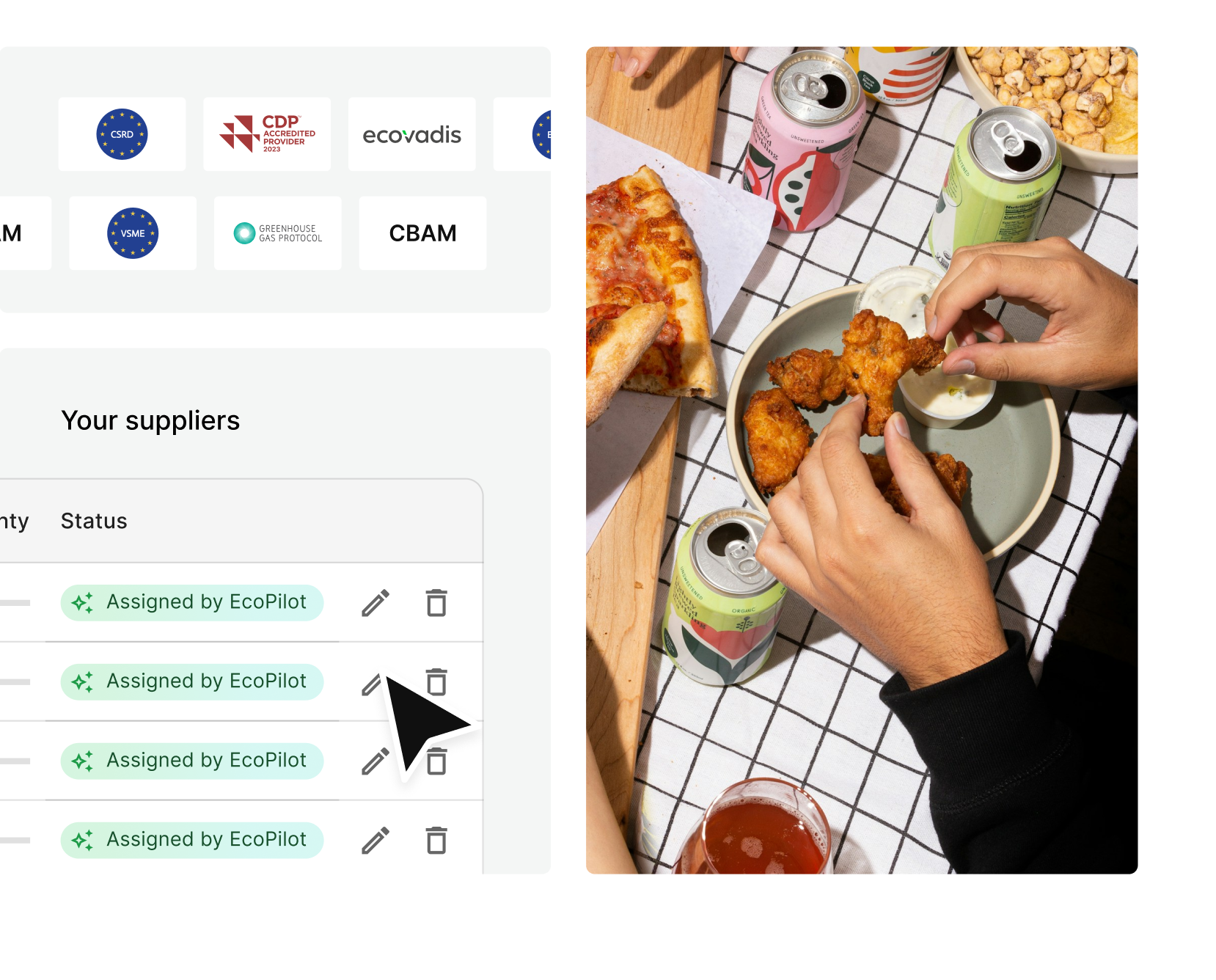
TRUSTED BY 4,000 CLIENTS, FROM SMB TO ENTERPRISE




Why food & beverage manufacturers can't out-spreadsheet this

Retailer scorecards are the new listing gate
Carrefour, Leclerc, Walmart, and Lidl all issue ESG supplier scorecards. No data means delisting or category-review risk, and the UK Green Claims Code raises the evidence bar for any sustainability claim on pack.

Agricultural Scope 3 category 1 is the hardest measurement problem in the sector
Livestock, crops, fertiliser, and land-use change make up 60–80% of total footprint. Spend-based estimates don't survive a CSRD audit.

One-off product LCAs don't scale to your SKU count
Consultant LCAs run £15,000–50,000 per product and take 3–6 months. They can't be updated the next time a recipe changes.
From farm to footprint,
 étape 1
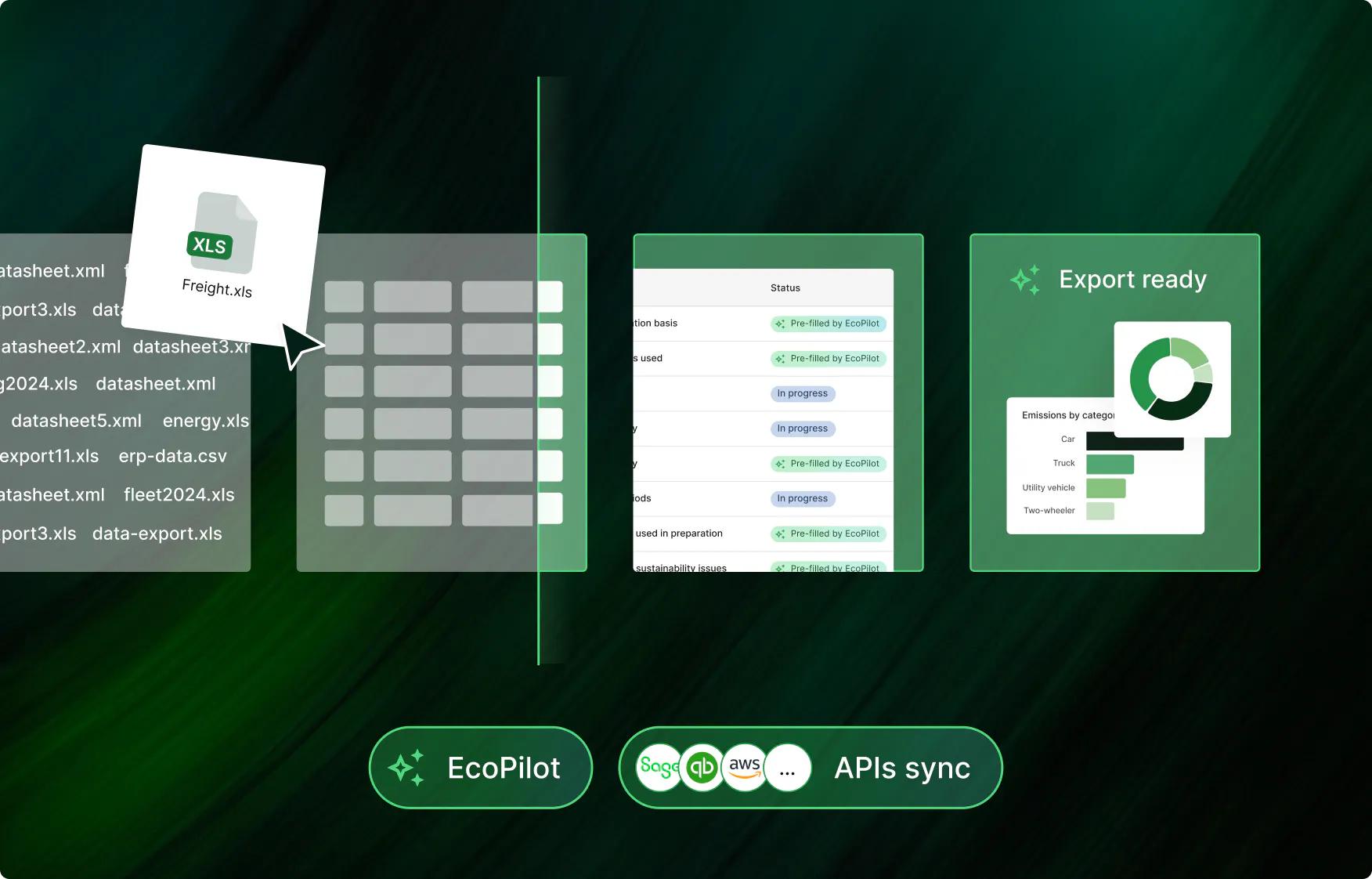
Consolidate carbon data across sites and suppliers
 Each site and business unit reports into one structure; boundaries and emission factors set once, applied across the group.
- Group dashboard shows consolidated Scope 1/2 with site-level drill-down.
- Supports multi-entity, multi-country rollout without restarting the calculation.
 étape 2
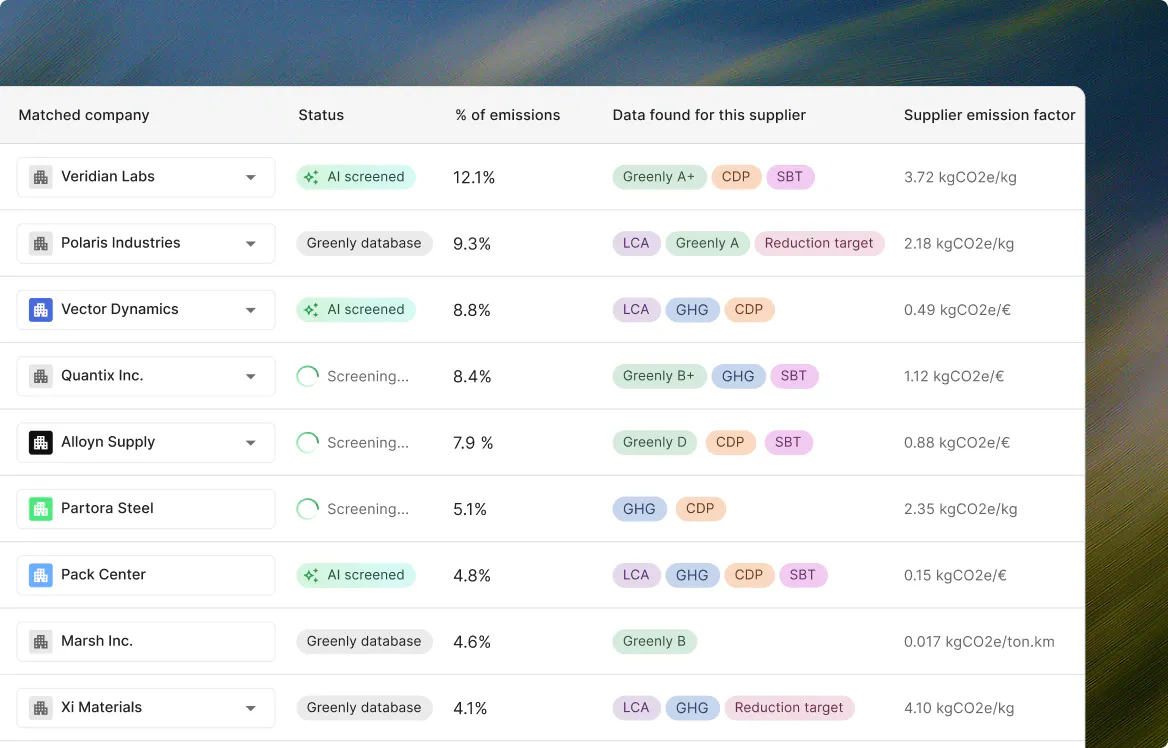
Pull primary data from your agricultural supply chain
- Automated supplier questionnaires with scoring, evidence capture, and audit trail, for Scope 3 category 1 closing.
- Food-specific emission factor libraries (Agribalyse, Ecoinvent food databases) with automated matching.
- Land-use change emissions separated at source, ready for FLAG modelling.
 étape 3
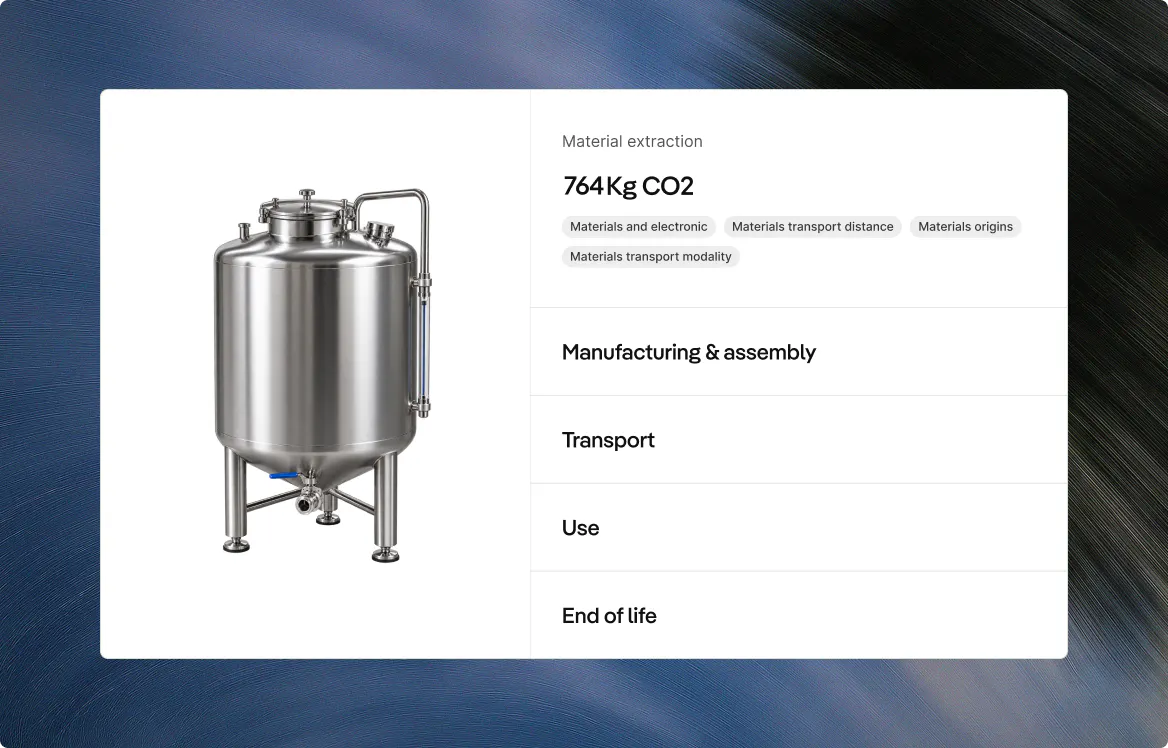
Run your product LCAs
- Model food products at SKU level, including ingredient-level substitution scenarios.
- Automated LCA output feeds eco-labelling (Planet Score and equivalents) and reformulation decisions.
- Updates automatically when a recipe or supplier changes, unlike a static consultant report.
 étape 4
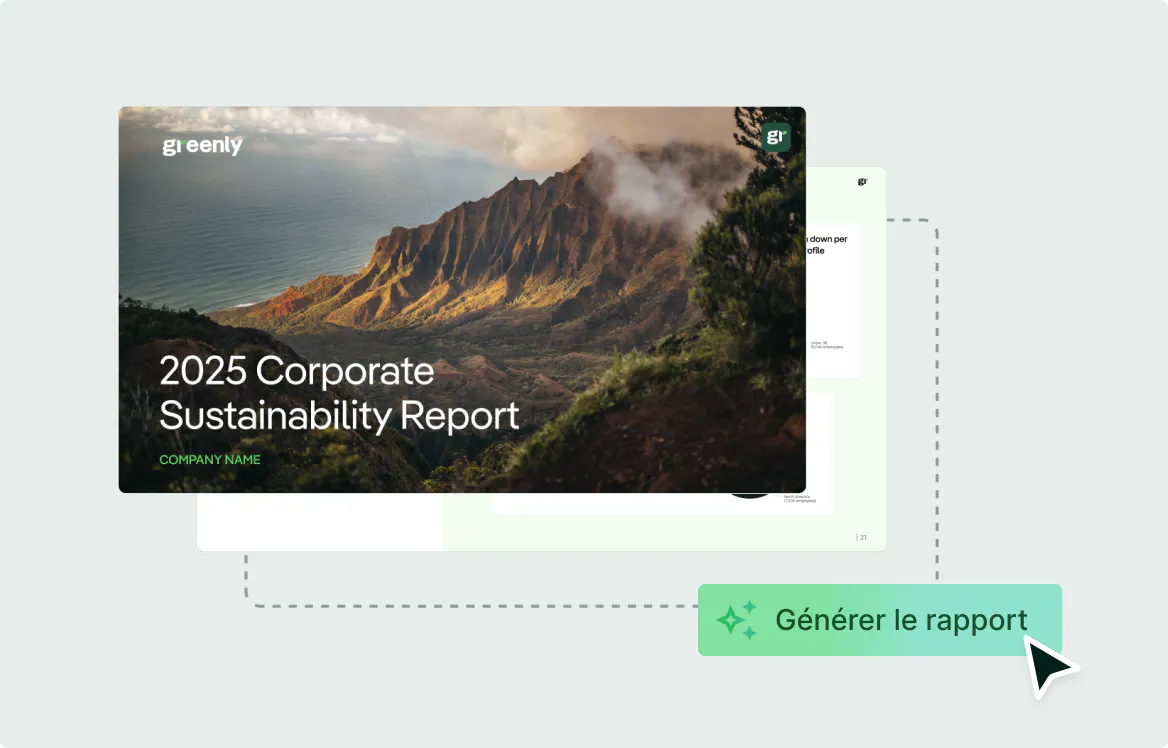
Generate audit-ready outputs
- GHG Protocol Corporate Standard + Scope 3 Standard.
- CSRD ESRS E1 module. CDP Supply Chain and EcoVadis exports. Retailer scorecard formats.
- SBTi FLAG-ready target submission. Auditor read-only mode. Version history per data point.
COMPLY WITH THE WORLD’S TOP STANDARDS


Frequently Asked Questions
Still have questions? Check out our complete FAQs to get the answers you’re looking for.
Yes. Greenly uses activity-based data and food-specific emission factor databases (ADEME Base Empreinte, Ecoinvent food) rather than spend-based estimates, and combines this with a primary supplier data collection module for livestock, crop, fertiliser, and land-use emissions.
Yes. Data is entered once and published across CDP Supply Chain, EcoVadis, and proprietary retailer scorecard formats, replacing the separate manual response typically required for each scorecard cycle.
Yes. Greenly's methodology separates land-use change and agricultural emissions from the rest of the footprint, which is the specific requirement for any food company submitting a science-based target under SBTi's FLAG guidance. Most generic GHG platforms don't disaggregate this.
Yes. LCAs are automated across portfolios of hundreds to thousands of food SKUs, rather than commissioned product by product, and update automatically when a recipe or supplier changes.
Greenly draws on food-specific factors from ADEME Base Empreinte and Ecoinvent, alongside its broader database of more than 500 000 emission factors, with automated matching and full version control.
Greenly's CSRD module covers GHG inventory across Scope 1, 2, and 3, double materiality inputs, and audit-grade traceability, with particular depth on the Scope 3 category 1 agricultural data that auditors scrutinise most closely in this sector.
Product-level LCA output gives a documented, auditable basis for any on-pack or marketing sustainability claim, with version history and evidence attached per data point, rather than a claim resting on an internal estimate.
