 LIFE CYCLE ASSESSMENT
A Robust Climate Strategy Starts at the Product Level
Doing LCAs allow for betterScope 3 calculations and action plans at product-level. Configurable by design and compliant by default. Run ISO-aligned Product Carbon Footprints at scale.



TRUSTED BY 4,000 CLIENTS, FROM SMB TO ENTERPRISE


Case Study


Generate ISO 14040/14044/14067 audit-ready PCF assessments at scale

Win Customers
Providing robust LCAs across your full catalog is increasingly becoming a stakeholder requirement: client bidding, financial institutions, and more.

Innovate Sustainably
LCAs are the cornerstone of an eco-design strategy, delivering insights at the component and process level, fed directly into your GHG assessment.

Anticipate Compliance
LCAs are a primary tool to reach compliance objectives: EU Ecodesign Directive, ISO 14040/44 or 14067, EPD, PEP, PEF, or DPP.
Three levers to customize your LCA solution

From expert-only to everyday eco-design
Feature: EcoPilot Environmental Engineer (LCA Assistant): an LCA tool that you can talk to.

Save time, save money, and cover your full catalog
Feature: Mass LCA, including Supplier x LCA for data collection.

Independently audited data that holds up to any scrutiny
One-click report generation for any LCA regulation like ISO 14040/44 or 14067, EPD, PEP, PEF or DPP.
Your LCA doesn't wait for perfect data - Greenly adapts to what you have to get you to a compliant LCA.
 STEP 1
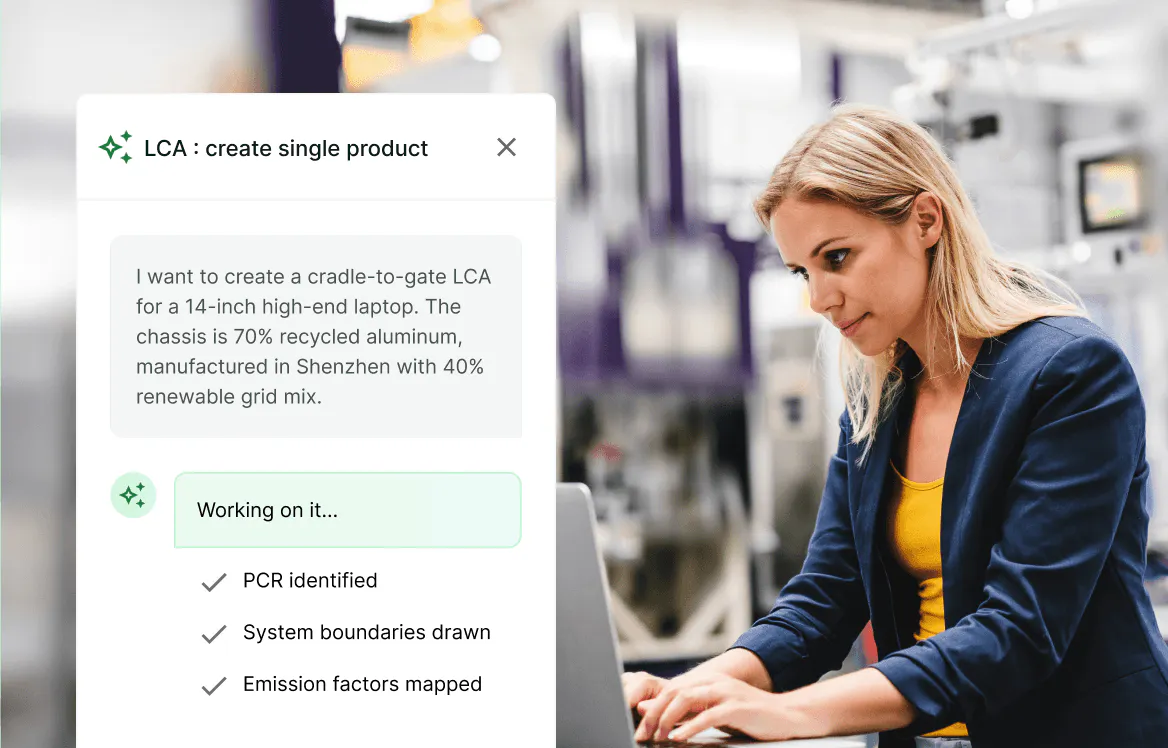
Describe your product, get a structured LCA in minutes
 Describe the product in plain language to EcoPilot (LCA Assistant). No expertise required.
- EcoPilot builds a structured, ISO-aligned LCA template in the same session: lifecycle stages, activities, and automatic emission factor matching.
- Every action is proposed by EcoPilot and confirmed by the user. Nothing gets calculated without your approval.
 STEP 2
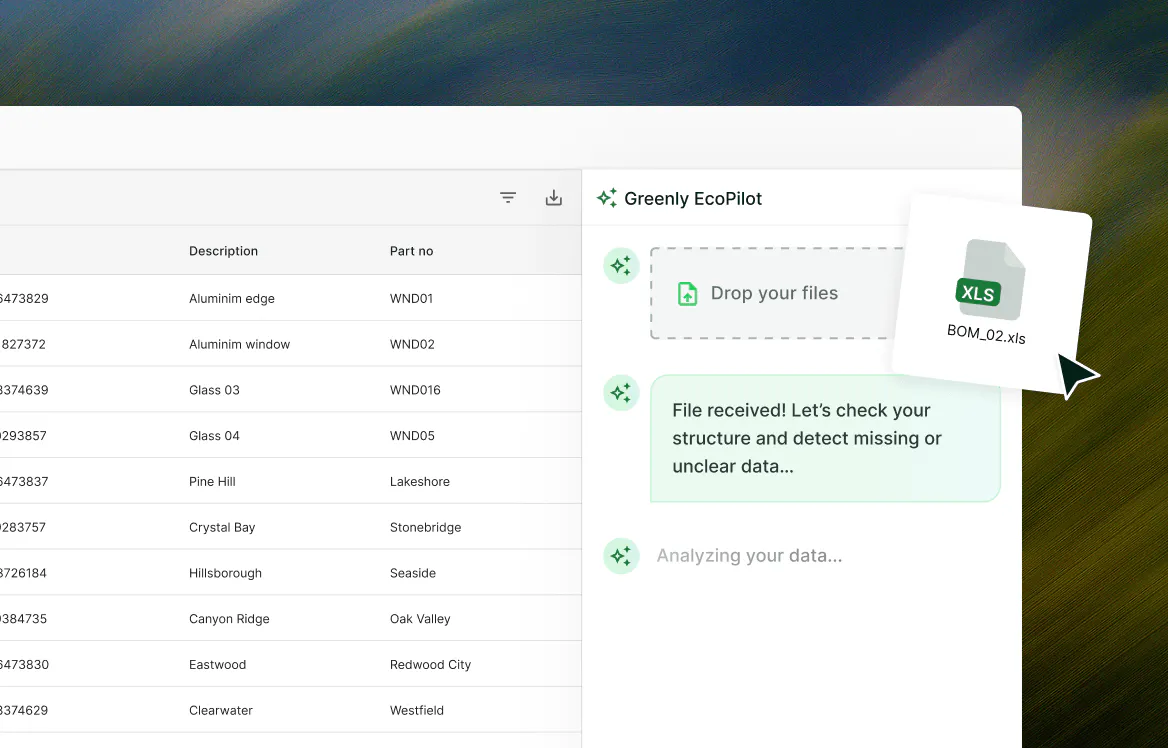
Upload every data point, whatever shape it's in
- Already have structured data? Import a BOM (CSV, ERP, PLM) with automatic column mapping.
- Data stuck in PDFs, spreadsheets, or product descriptions? EcoPilot scrapes and structures it automatically.
- Need supplier input? Loop them in with automated questionnaires and free accounts - no spreadsheets required.
 STEP 3
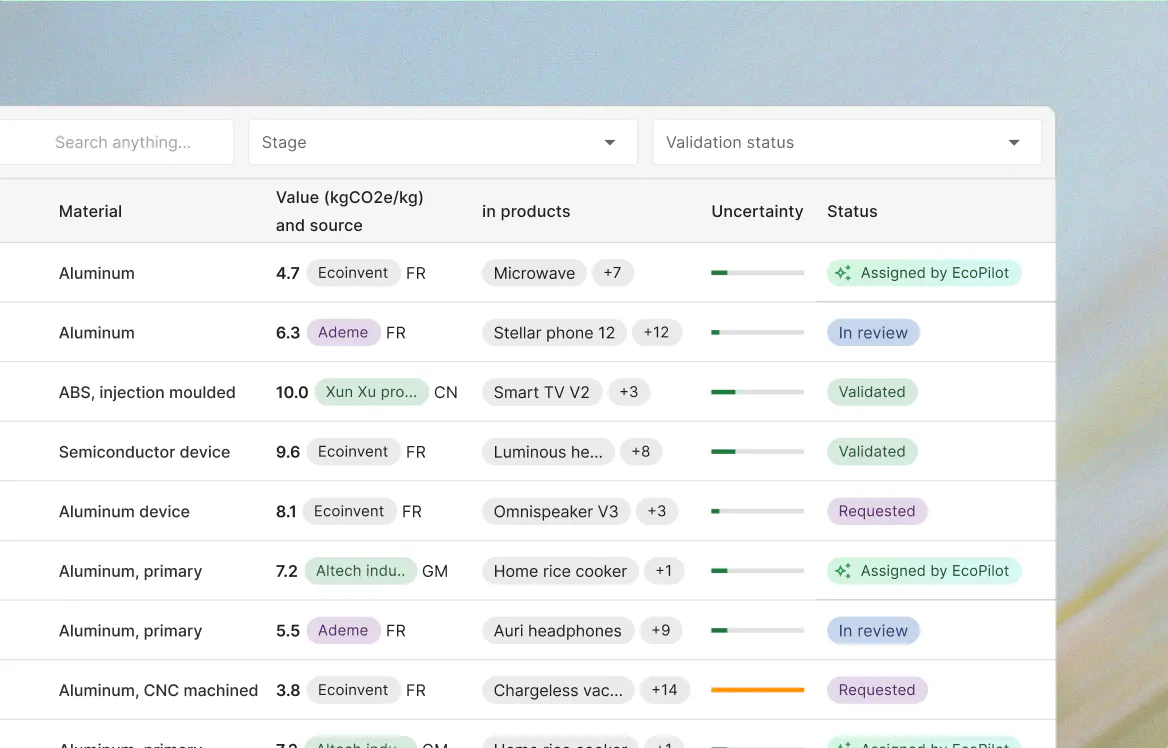
Still missing data? Auditable enrichment fills what's left
- When primary data still isn't available, enrichment workflows generate transparent estimates based on product categories and industry benchmarks.
- Every enriched data point is flagged and shown alongside its confidence level, so it's clear what's measured versus estimated.
- Nothing gets finalized without validation: estimates are proposed, not silently applied.
 STEP 4 (Optional)
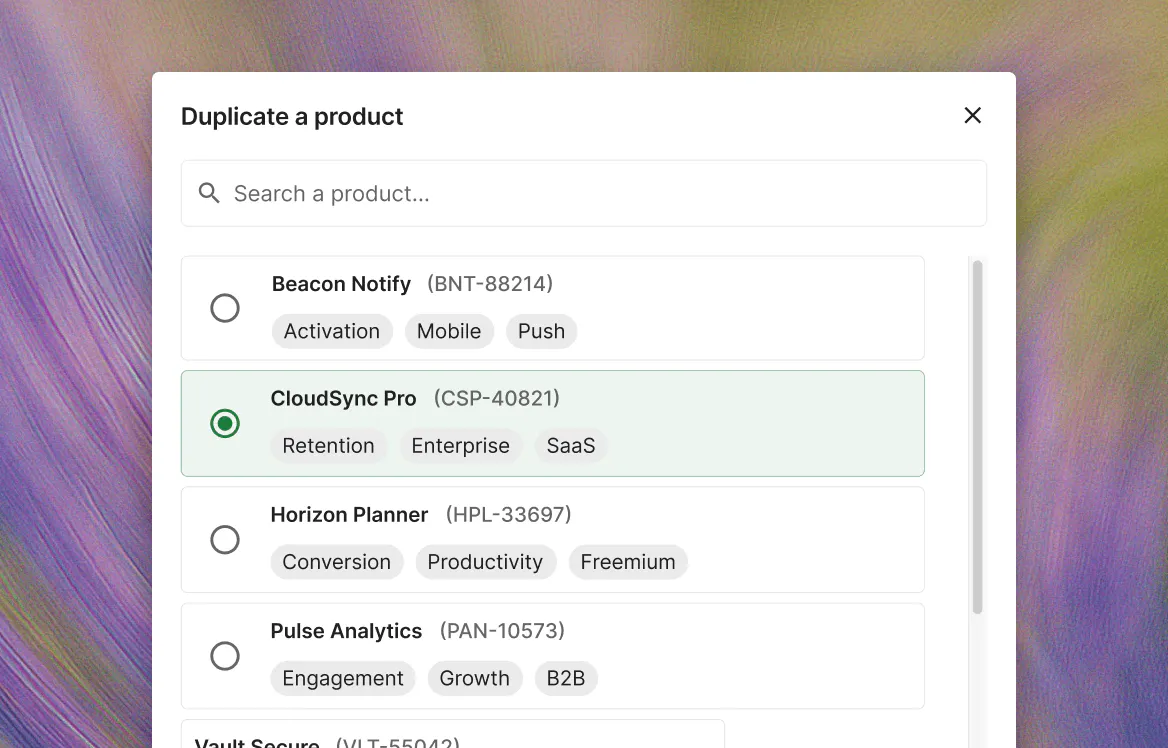
Mass LCA: Scale across your portfolio
- Import any BOM and Greenly matches Emission Factors to build a reference framework - shared parts matched once, reused instantly across your entire portfolio.
- Scaling from one product to a full catalog never means starting over; quality and consistency stay automated across every business unit.
- Proven at scale: ManoMano has run 2M+ product LCAs on Greenly; Lyreco processes 8,000+ a month, fully automated.
 STEP 5
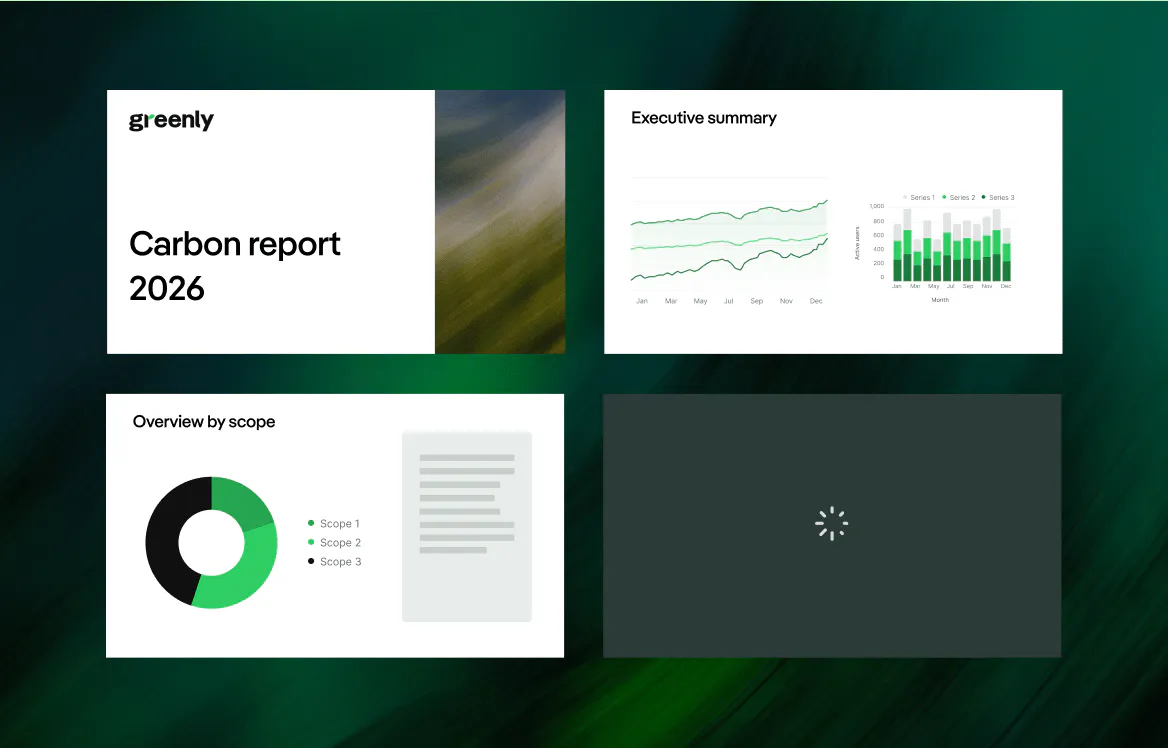
Every PCF flows straight into your GHG report
- Every data point is quality-checked before it enters the final Product Carbon Footprint.
- One-click report generation for ISO 14040/44/67, EPD, PEF/PEFCR, PEP, DPP, CBAM, PACT, and Catena-X.
- Completed LCAs are saved as custom Emission Factors and feed directly into Scope 3 reporting - no manual export, no double entry.
Compliance & Regulatory Support
Greenly's LCA platform is audited by ADEME for ISO 14040, 14044, and 14067 compliance. Every output is traceable and reviewable by clients, auditors, and regulators. The platform also enables:

PEF / PEFCR
Native methodology support with configurable category rules

Digital Product Passport (DPP)
ISO-compliant PCF plus circularity data, ahead of the ESPR roadmap

EPD (ISO 21930 / EN 15804)
One-click, tender-ready report generation

PACT (WBCSD)
PACT-compliant methodology with direct Data Exchange connectivity

CBAM
Supplier questionnaires → EF matching → regulatory-ready export.

Catena-X
PCF data formatted for OEM network submission
Why your business needs LCA now: the full guide

Still have questions about LCAs?
Explore our Knowledge Base for in-depth FAQs or connect with our team to find the exact answers you need.
A Life Cycle Assessment (LCA) is a comprehensive, multi-criteria analysis used to measure the environmental impact of a product or service. This analysis covers every stage of the life cycle - from raw material extraction through manufacturing and use, all the way to end-of-life disposal.
The four stages of LCA are: goal and scope definition, inventory analysis, impact assessment, and interpretation. Each step helps quantify the environmental impact across a product's life cycle.
An LCA framework is the structured approach for conducting an assessment, based on ISO 14040 or ISO 14044 standards. It guides data collection, analysis, and interpretation of environmental impact.
LCA assessments can be particularly interesting for :
- Public authorities (whether they intervene at international, national or European level)- scientists;
- Industrial companies.However, any structure offering products and/or services has the possibility to carry out an LCA.
A Life Cycle Assessment is useful :
- to identify the environmental issues and impacts of a company;
- to develop eco-designed products;
- to compare the environmental impact of its products with those of its competitors;
- to consolidate its brand image and stand out from the competition.
To conduct an LCA, define the scope, collect life cycle inventory data, assess environmental impacts, then interpret results to guide sustainable decisions. Greenly helps companies by offering expert support on our platform that aligns with ISO 14040, 14044 and 14067 methodology.
Yes, the LCA result can be used in the GHG assessment in several ways, depending on the scenario.
One example is that a company can use the activity-based approach instead of the spend-based approach if they purchase a product a certain number of times during the year of measurement.
Yes, LCA can measure the products of Suppliers that impact Clients' emissions.
