
Decarbonisation: what it is and why it matters
1 min
Level
What is decarbonisation and why is it urgent? Learn practical steps companies can take to support the global move toward net zero emissions.

By Stephanie Safdie, US Copywriter, on 19/10/2026
Updated by Agnès Potier-Murphy
Carbon footprint management software gives a business one place to gather emissions data, work out its Scope 1, 2 and 3 totals and turn them into audit-ready reports. For UK companies that means SECR today and UK SRS as it rolls out, alongside the CSRD for groups with EU operations. In 2025, more than 22,100 companies disclosed environmental data through CDP, according to CDP’s Disclosure Data Factsheet. This guide compares ten platforms, Greenly included, on what they measure, which UK and EU rules they support and who they suit, so UK sustainability and finance teams can shortlist quickly. Common questions, including cost, are answered in the Q&A at the end.
What carbon footprint management software does for UK businesses
Which features set apart carbon reporting and emissions tracking software
How ten platforms compare on UK reporting, Scope 3 coverage and company size
How to match a platform to your systems, budget and reporting duties

Carbon footprint management software is a platform that records a company’s greenhouse gas emissions across Scopes 1, 2 and 3, monitors them over time and supports reduction targets and statutory reporting. Vendors also describe it as a carbon management system, carbon management software, carbon footprint software or carbon accounting software.
Carbon footprint software replaces manual spreadsheets with automated calculations, so a business can see the greenhouse gas emissions of every site and activity in one view.
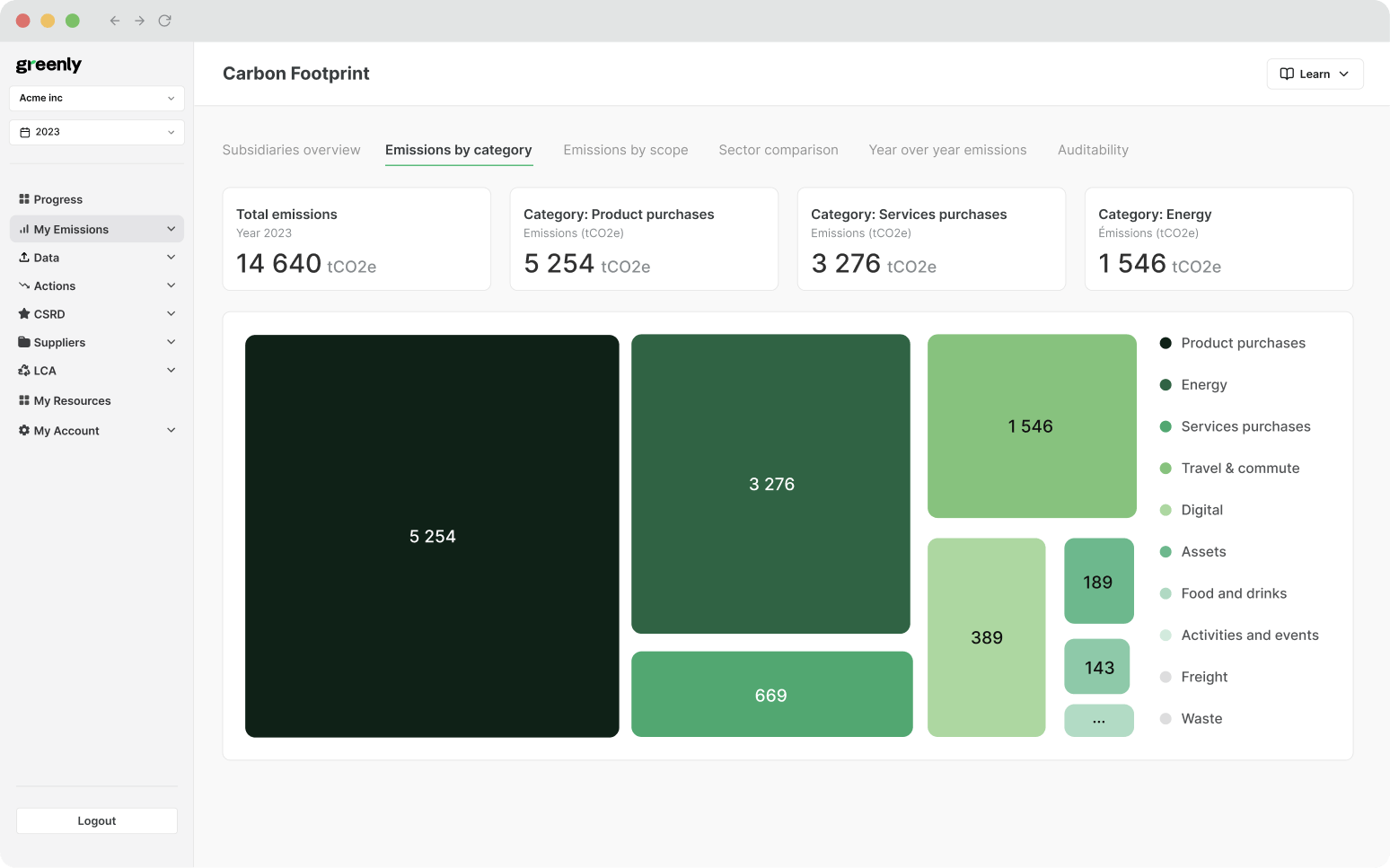
Carbon accounting solutions such as Greenly provide user-friendly, intuitive dashboards that can allow companies to more easily ensure precise carbon emissions calculations in addition to various carbon accounting tools such as:
These platforms help businesses follow standards such as the GHG Protocol and ISO 14064 and set science-based decarbonisation targets. By showing where emissions come from and suggesting concrete reduction steps, carbon management software plays a central part in tackling climate change.
As climate change accelerates, UK customers, investors and regulators increasingly expect companies to measure and report their emissions.
The UK has a legal duty to reach net zero by 2050, and national net-zero targets covered 77% of global GDP as of September 2025, according to the Net Zero Tracker. That backdrop gives companies a lasting reason to disclose their corporate carbon footprint, speed up sustainability progress, and set emission reduction targets.
But why is it so important for businesses to measure their carbon emissions?
Here’s why tracking emissions and adopting carbon management tools is essential for businesses committed to ESG goals and long-term sustainability:
Rules on emissions reporting are tightening in the UK and abroad. The UK’s Streamlined Energy and Carbon Reporting (SECR) regime and the EU’s CSRD (Corporate Sustainability Reporting Directive) are two examples, and the GHG Protocol sets the accounting standards that reports of this kind draw on. Software that automates data collection makes them easier to prepare.
UK groups with operations in the EU may be caught as well. Since the 2026 Omnibus amendment, the CSRD covers EU companies with more than 1,000 employees and over €450 million in net annual turnover, plus non-EU groups with more than €450 million of EU turnover and an EU subsidiary or branch above €200 million, according to the Council of the EU.
Closer to home, SECR already requires quoted companies, large unquoted companies and large LLPs to publish their energy use and greenhouse gas emissions in their annual report, according to GOV.UK guidance.
The next step is UK SRS. The government published the final UK Sustainability Reporting Standards in February 2026, and under FCA policy statement PS26/19 listed companies will report against them on a comply-or-explain basis for accounting periods starting on or after 1 January 2027.
As global net-zero targets become a priority, businesses need to track their emissions to understand where reductions can be made. Without accurate data, companies risk missing critical reduction opportunities. By using carbon management software, businesses can measure emissions across Scope 1, 2, and 3, identify areas for improvement, and create realistic decarbonisation plans aligned with science-based targets.
Consumers, employees, and investors are increasingly prioritising sustainability. Companies that can demonstrate their commitment to reducing their environmental impact are more likely to attract environmentally conscious customers and investors. Measuring emissions provides transparency and accountability, showing stakeholders that a company is actively working towards reducing its carbon footprint.
A 2021 PwC survey of consumers in five countries, the UK among them, found that 83% think companies should actively shape ESG best practice.
By identifying emission hotspots, carbon management software helps companies optimise their operations, reducing energy consumption and costs. From better energy management to more sustainable supply chains, tracking emissions can lead to long-term financial savings while aligning business practices with sustainability goals.
In short, carbon management software supports compliance, improves operational efficiency, strengthens investor confidence and helps the move to a low-carbon future. Measuring your organisation’s carbon footprint is therefore a sound investment in business growth.
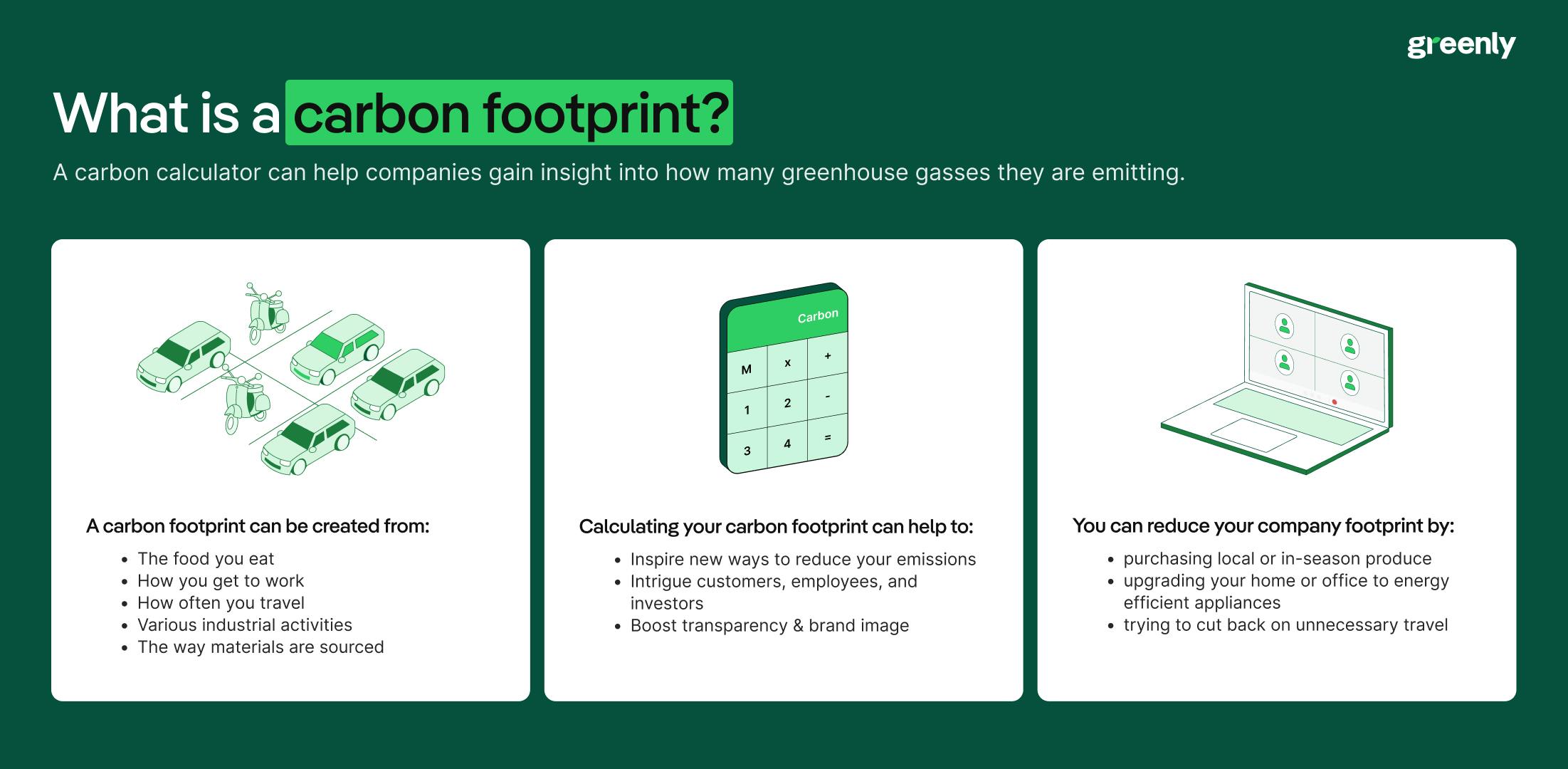
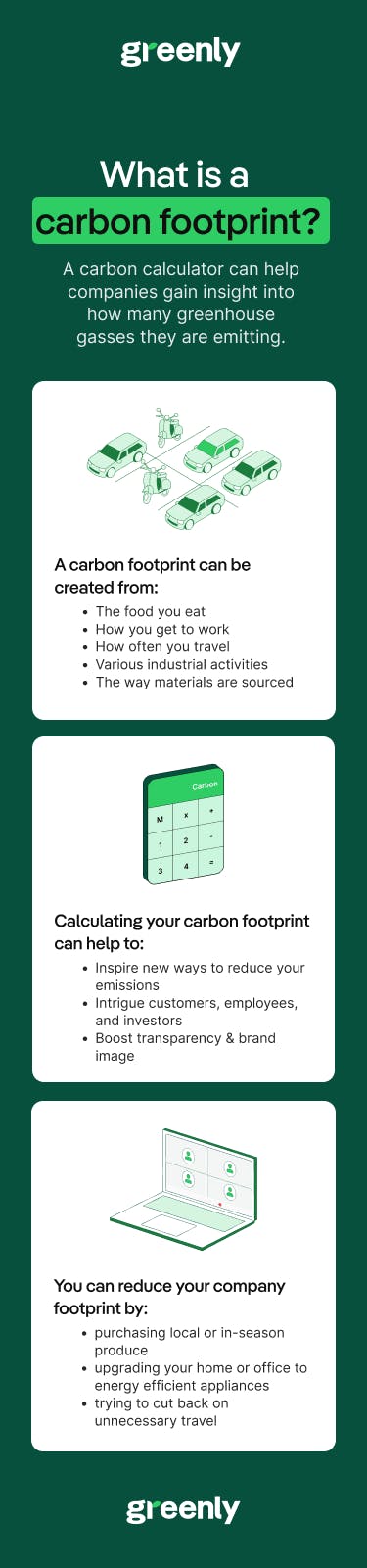
Choosing the right carbon management software is crucial for accurately measuring your business's emissions and implementing effective decarbonisation strategies. But with so many platforms available, how do you know which one is the best fit for your company? Here are the key features to look for when selecting carbon management software:
Capable emissions tracking software should cover all three scopes of emissions.
Scope 1 covers direct emissions from company-owned sources, Scope 2 accounts for indirect emissions from purchased energy, and Scope 3 involves emissions from your supply chain and other indirect sources. Being able to measure emissions across all scopes provides a complete view of your company’s carbon footprint. The GHG Protocol notes that value chain emissions often account for a company’s largest greenhouse gas impact.
Managing emissions data can be complex, especially if it's coming from various sources. A good carbon management platform utilises automated data capture to help avoid costly reporting errors, ensures audit-readiness, and builds investor confidence. This can reduce the time and effort needed for manual input in emissions measurement and carbon footprint calculations. Additionally, integration with your existing tools, like ERP systems or energy monitoring software, ensures seamless data flow and more accurate emissions reporting.
Good carbon reporting software turns emissions data into clear analytics and customisable reports. Look for intuitive dashboards that track progress against your targets and highlight emission hotspots, and for reports aligned with frameworks such as CDP, the GHG Protocol, ISO 14064 and IFRS S2, which incorporates the TCFD recommendations and has been endorsed in the UK as UK SRS S2. Those reports serve both internal reviews and external sustainability disclosure.
The summary cards below will provide a synopsis for each of these international frameworks:
Beyond just tracking emissions, the best carbon management software should offer actionable insights into how your company can reduce its carbon footprint. Decarbonisation pathways provide tailored recommendations for emission reductions, from energy efficiency improvements to supply chain adjustments.
For example, a food company might receive insights to reduce energy from the use of refrigerants or how to utilise local suppliers to reduce Scope 3 emissions. These tools help companies transition from measuring emissions to actively reducing them.
As carbon reporting rules grow, your software must be built to support compliance. Whether you follow the GHG Protocol, report under SECR or UK SRS, or meet CSRD requirements for EU operations, GHG management software should keep pace with the rules and support both compliance and transparency. It should also receive regular updates as regulations evolve.
Product carbon footprint software calculates the emissions of individual products from life cycle assessment (LCA) data. Among the platforms below, Sphera and Greenly offer product-level footprints alongside company-wide accounting.
Many UK teams also need ESG reporting software and Scope 3 software. Salesforce Net Zero Cloud links emissions data to ESG reports, Sage Earth lets enterprises invite SME suppliers to share carbon data, and Sweep and Greenly provide supplier engagement tools.
Focus on the essentials: full-scope tracking, automated data integration, and regulatory compliance. Software that delivers them lets a business measure emissions reliably, take strategic climate action, build credibility and support its long-term sustainability goals.
Having covered why carbon management software matters and which features count, here are ten emissions management software platforms that help UK businesses meet their emissions challenges.
We checked each of the nine other platforms against the vendor’s own website in October 2026, including its UK coverage where the vendor publishes it. Greenly is one of the ten, so its entry reflects our own view. Every entry follows the same format, which makes side-by-side comparison easier.
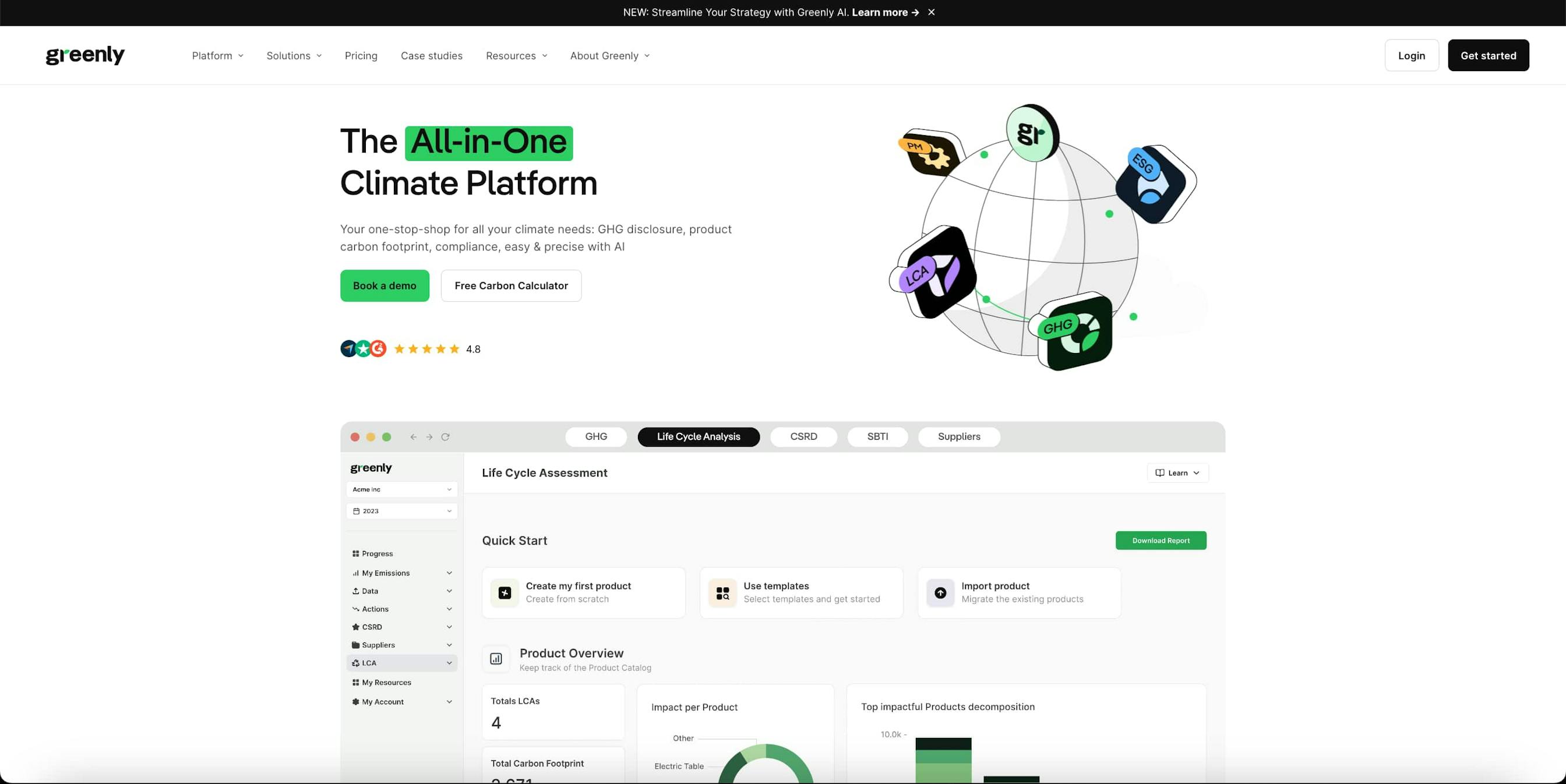
Overview: Greenly is a carbon management platform that helps businesses of all sizes measure and cut emissions across Scopes 1, 2 and 3. Built around ease of use, strong analytics and accuracy, it serves more than 3,500 clients, from SMBs to enterprises, in sectors such as finance, retail, and manufacturing. Companies use it to understand their carbon footprint and act on decarbonisation.
Key Features:
Greenly’s methodology is aligned with the GHG Protocol, and Greenly is a CDP-accredited provider.

Overview: Plan A is a TÜV-certified carbon management platform that helps companies decarbonise and handle demanding sustainability rules such as the EU’s Corporate Sustainability Reporting Directive (CSRD). Beyond carbon accounting, it offers tailored support for reporting emissions, reducing them and reaching sustainability goals.

Key Features:
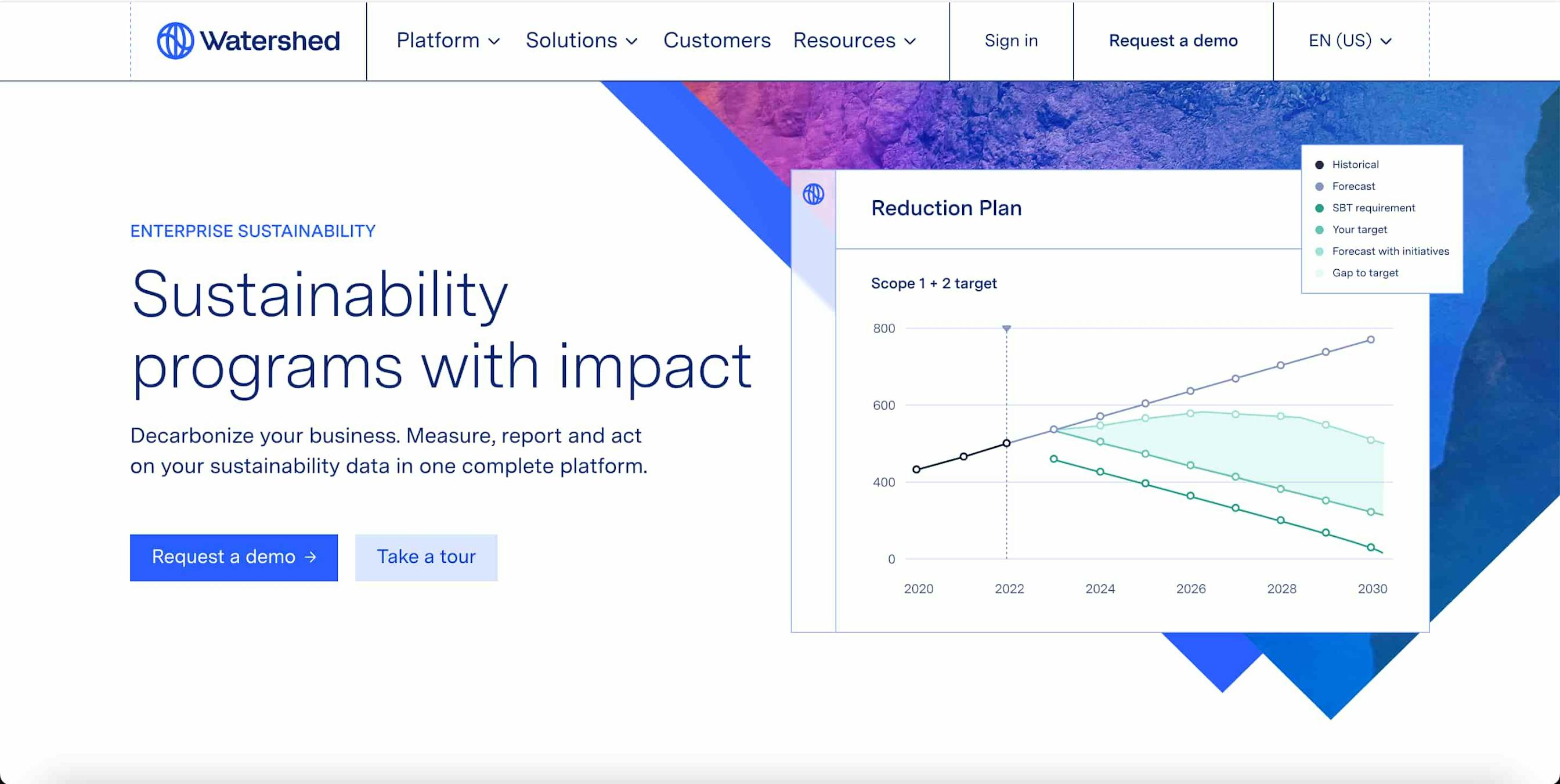
Overview: Watershed is a carbon management platform designed for large enterprises with complex supply chains. Its tools cover carbon, water and land use accounting, with a particular focus on Scope 3 emissions management, and businesses in sectors such as finance, technology and logistics use it.
Key Features:
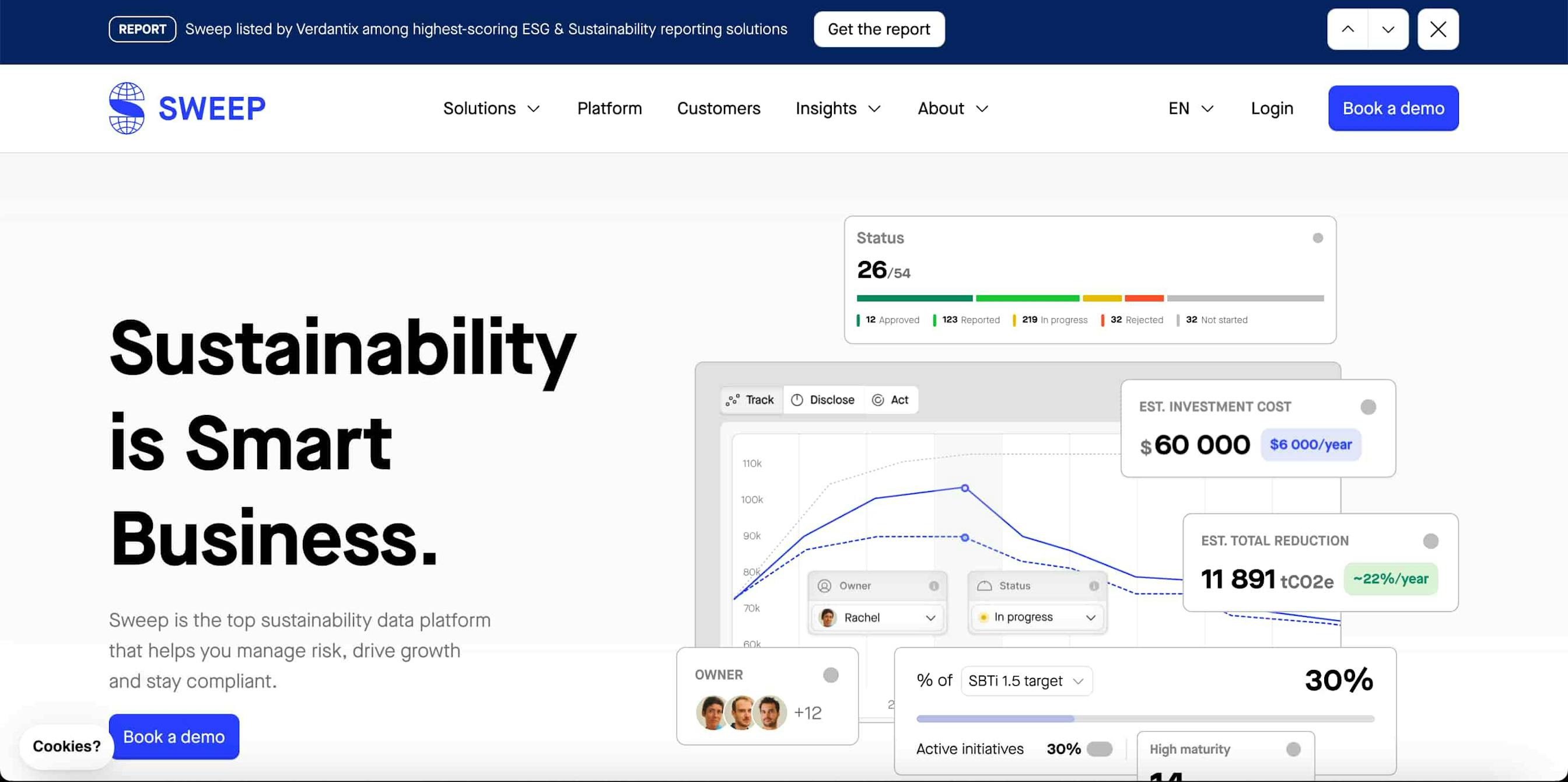
Overview: Sweep is a highly customisable platform designed to simplify supplier engagement and carbon data management. It suits organisations of all sizes, from SMEs to large corporations that want personalised emissions tracking and supplier engagement tools, and it supports UK reporting through a dedicated UK SRS module and SECR coverage.
Key Features:
Overview: IBM Envizi ESG Suite offers emissions management software for calculating and reporting Scope 1, 2 and 3 greenhouse gas emissions on a GHG Protocol basis. Its enterprise-grade options include a fully managed carbon accounting service, an Excel add-in and an Emissions API.

Key Features:
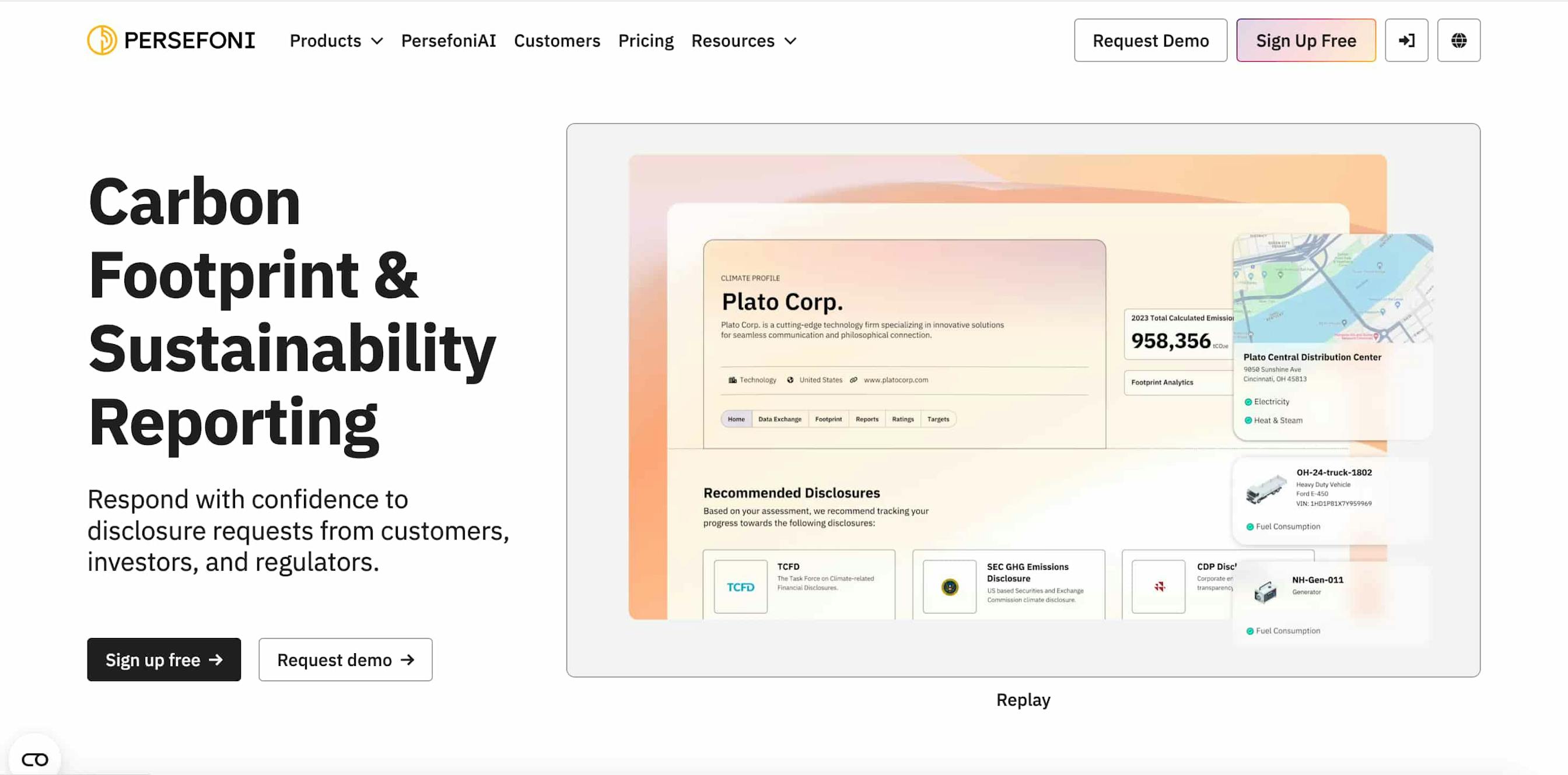
Overview: Persefoni provides assurance-grade carbon measurement, disclosure and reduction for businesses, with a separate offering for financial institutions.
Key Features:
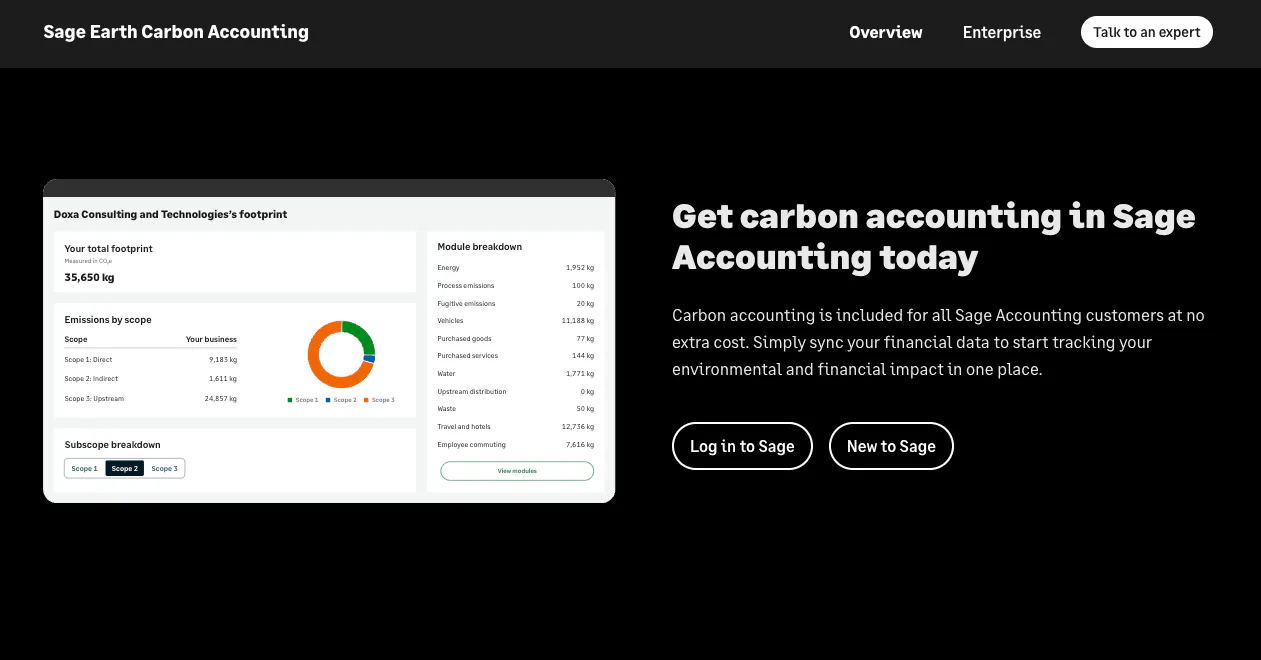
Overview: Sage Earth is a carbon accounting tool from Sage, built for UK small and medium-sized businesses. It connects to accounting software (Sage, Xero or QuickBooks) and estimates a carbon footprint from bank payments and paid invoices using the spend-based method.
Key Features:
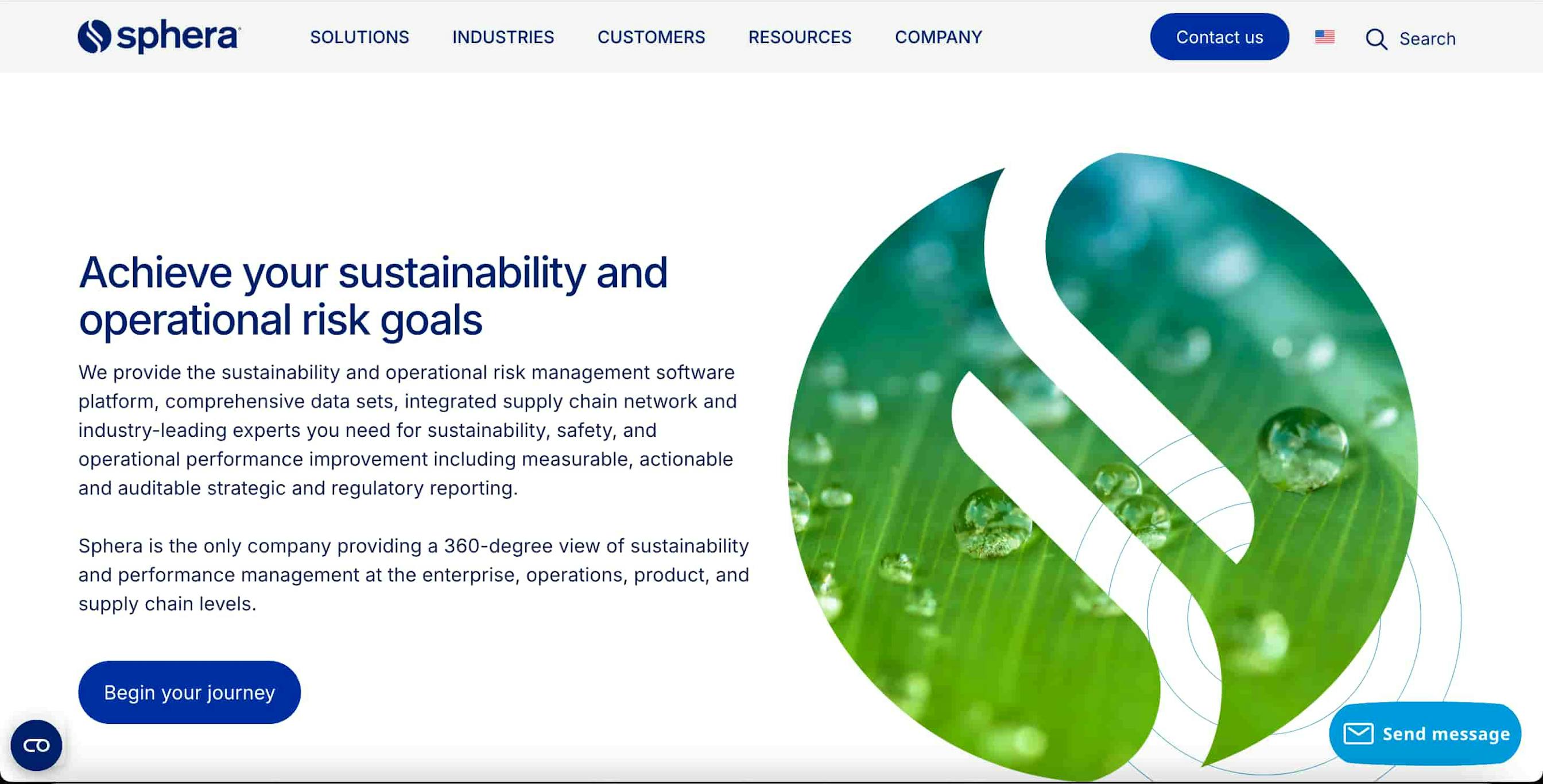
Overview: Sphera offers carbon management software for collecting Scope 1, 2 and 3 emissions data, calculating an organisation’s carbon footprint and measuring product carbon footprints with life cycle assessment (LCA) software and data.
Key Features:
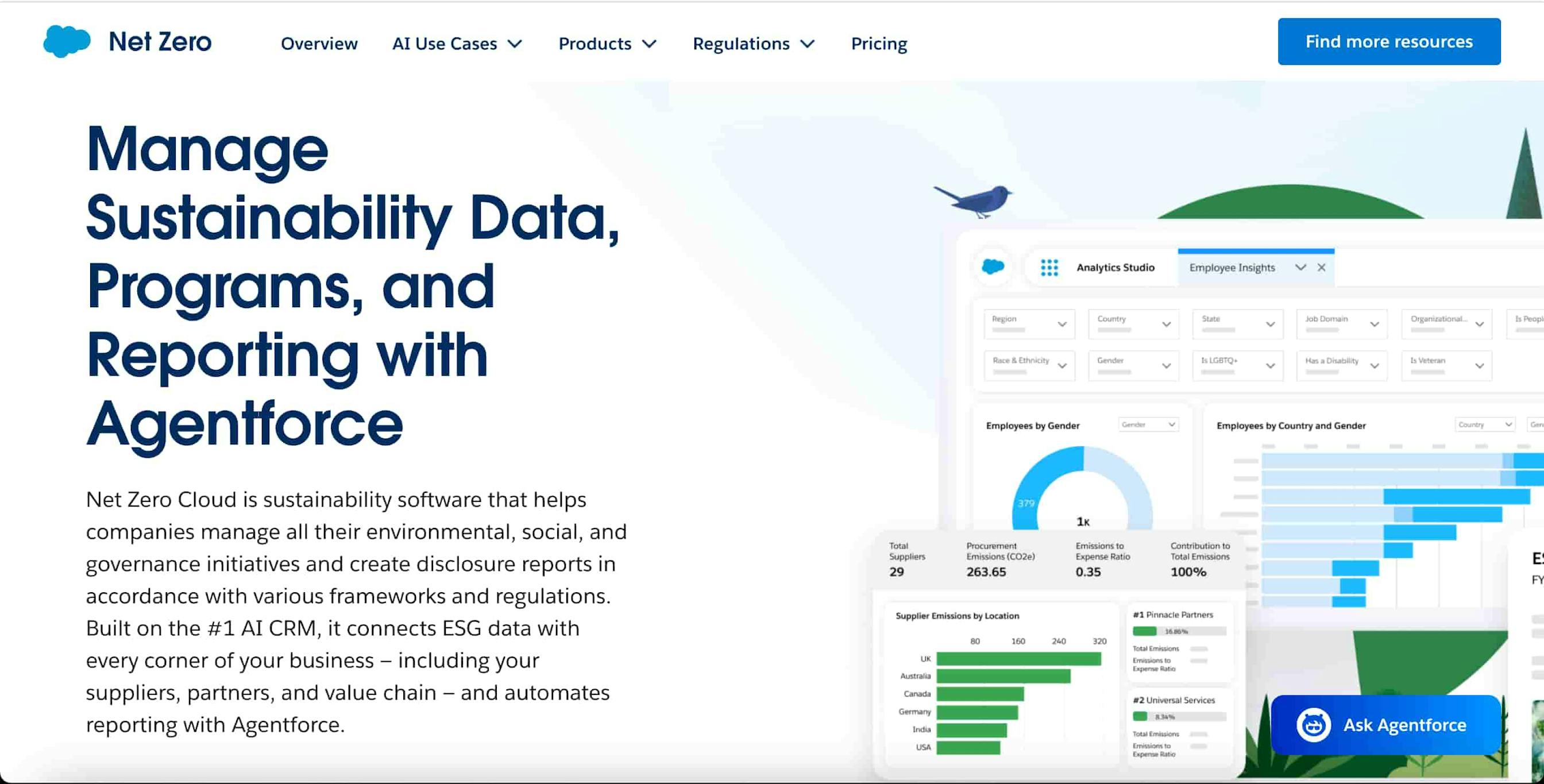
Overview: Developed by Salesforce, Net Zero Cloud helps organisations gather and track emissions data, produce ESG reports and surface sustainability insights through Salesforce workflows and integrations.
Key Features:
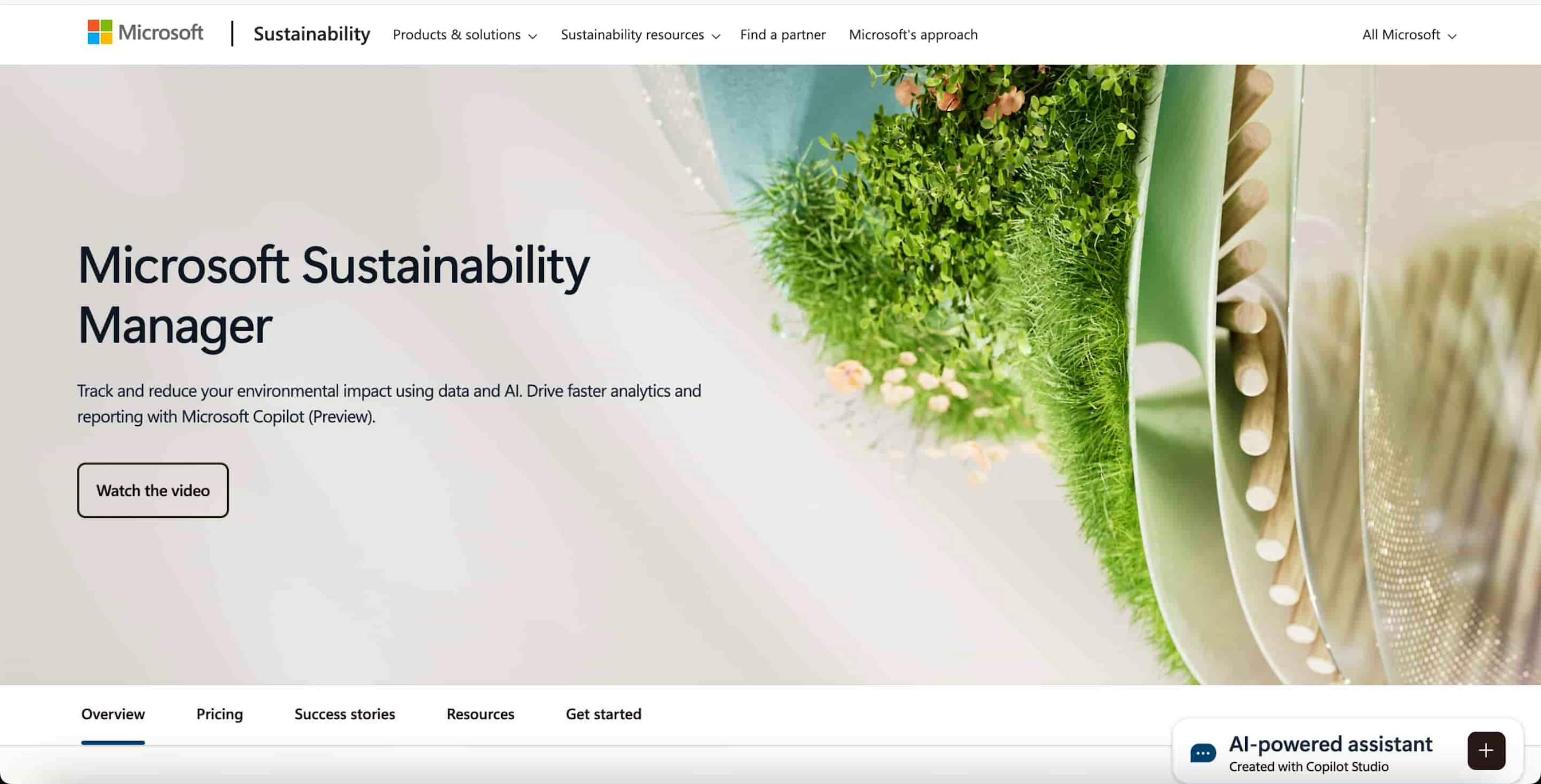
Overview: Microsoft Sustainability Manager, part of Microsoft Cloud for Sustainability, helps organisations record, report and reduce emissions and water or waste impact. It can integrate with any business system and can be extended with Azure and Power Platform tools.
Key Features:
The table below will compare and contrast these carbon accounting platforms:
| Platform | Overview | Key Strength | Best For |
|---|---|---|---|
| Greenly | Comprehensive platform focusing on Scope 1, 2, and 3 emissions tracking, tailored strategies, and supply chain decarbonisation. | User-friendly platform with tailored action plans and comprehensive supply chain decarbonisation tools. | Businesses of all sizes looking to track and reduce carbon emissions with expert support. |
| Plan A | European-focused platform prioritising decarbonisation with TÜV-certified tools, aligned with CSRD compliance. | Decarbonisation-first approach with compliance to major European regulations like CSRD. | European companies needing strong decarbonisation strategies and regulatory compliance. |
| Watershed | Robust platform for large enterprises with a focus on managing complex supply chains and multi-category environmental impacts. | Specialises in Scope 3 tracking and sustainability across supply chains, water, and land use accounting. | Large businesses with complex supply chains and multi-category environmental impacts. |
| Sweep | Highly customisable platform for businesses of all sizes, with supplier engagement, reporting tools and UK SRS support. | Customisable reporting, supplier emissions tools and a UK SRS module. | Companies seeking flexible, customisable tools for detailed carbon management. |
| IBM Envizi ESG Suite | Enterprise-grade carbon accounting for Scope 1, 2 and 3 emissions, with target tracking and supplier tools. | Fully managed platform, Excel add-in or API for calculating emissions. | Large organisations needing flexible, enterprise-grade carbon accounting. |
| Persefoni | Assurance-grade carbon measurement, disclosure and reduction, with a separate offering for financial institutions. | Footprint measurement across operations, supply chain and value chain, plus decarbonisation planning. | Companies needing assurance-grade disclosures for CSRD and SECR reporting. |
| Sage Earth | UK carbon accounting tool for small and medium-sized businesses that estimates emissions from accounting data. | Spend-based footprint from Sage, Xero or QuickBooks data, included for Sage Accounting customers. | UK SMEs with turnover up to £50 million that want a simple first footprint. |
| Sphera | Carbon management software that combines corporate carbon accounting with product carbon footprints and LCA data. | LCA expertise and a Managed LCA Content library of 20,000 annually updated datasets. | Manufacturing-intensive companies seeking product-level carbon insights and LCA training. |
| Net Zero Cloud by Salesforce | Salesforce’s carbon and ESG platform helps organisations gather emissions data, report and surface insights through Salesforce workflows. | Agentforce-assisted ESG reporting and Salesforce integration. | Salesforce-centric businesses centralising carbon, CRM, and ESG data in one platform. |
| Microsoft Sustainability Manager | Built on Microsoft Power Platform, a solution that helps organisations record, report and reduce emissions and water or waste impact. | Social, governance and environmental metrics in a single application, with Power BI reporting. | Microsoft-based organisations seeking automated sustainability tools integrated with existing software. |
Choosing the right carbon management software is about finding the platform that best aligns with your business’s specific goals, operations, and sustainability ambitions.
Here’s how you can approach the decision-making process to ensure you make the right choice:
For businesses looking to take meaningful steps toward reducing their carbon footprint, Greenly offers comprehensive carbon management solutions tailored to your unique needs.
Our advanced platform allows companies to:
Weighing up alternatives? Greenly’s comparison pages set it against Watershed, Sweep and Persefoni.
Ready to see Greenly with your own data? Book a demo to explore carbon assessment, supplier engagement and UK reporting for your business.
It is software that records a company’s greenhouse gas emissions across Scopes 1, 2 and 3, tracks how they change and supports reduction targets and statutory reporting. It is also sold as a carbon management system or carbon accounting software.
Carbon accounting measures the greenhouse gas emissions a business causes, normally by Scope, so they can be reported and reduced. Carbon accounting software automates the calculations.
Carbon management means measuring, cutting and reporting a company’s greenhouse gas emissions. Carbon management software supports each stage, and Greenly’s guide to carbon management goes into more detail.
Greenly, Watershed, Sweep, IBM Envizi and Persefoni all cover Scope 3 emissions or supplier data on their own sites, and Sage Earth lets enterprises collect carbon data from SME suppliers for Scope 3 reporting.
Several platforms in this guide say so on their own sites: Greenly has dedicated SECR and UK SRS solutions, Sweep offers a UK SRS module and covers SECR, and Persefoni lists SECR reporting. Check which UK rules apply to your company before you choose.
The two terms overlap heavily. Carbon accounting software, also called emissions tracking software, concentrates on measuring and reporting emissions, while carbon management software usually adds reduction targets, planning and supplier engagement, and most platforms here include both.
Price depends mainly on company size and on how many scopes you measure. Ask two or three vendors to quote for the same scope so the figures can be compared, and note that some tools, such as Sage Earth for Sage Accounting customers, come at no extra cost.
Sage Earth connects to Sage Accounting, Xero and QuickBooks, Microsoft Sustainability Manager can integrate with any business system, Salesforce Net Zero Cloud works within the Salesforce ecosystem, and Greenly connects ERP and accounting tools.
Greenly is an excellent choice for carbon management. We offer broad support to both reduce your emissions and build long-term sustainability: personalised climate experts to help you engage stakeholders, user-friendly dashboards to monitor and manage progress, and help complying with the latest regulations. You’ll also get step-by-step assistance for complex standards such as the CSRD or applying to the SBTi.
Yes! Greenly is well suited to SMEs. Our platform supports improved supplier engagement, LCA assessments, guidance for regulatory compliance, and additional resources, giving growing companies the tools to launch and scale sustainable strategies the right way. Greenly’s platform is also designed to support organisations of all sizes, including large enterprises managing complex emissions data across multiple teams, entities, and supply chains.
Greenly ensures accuracy using a hybrid of the spend-based and activity-based methods, combined with streamlined, verifiable data collection. This helps ensure nothing is missed and that calculations across all scopes are precise and audit-ready.
Greenly offers automated data collection, supplier engagement via a user-friendly portal, and structured surveys/questionnaires to keep data current, so your carbon reduction strategy can be adjusted as needed. In addition, our Quick Carbon Calculator provides a free 5-minute assessment of your CO2 emissions.
The Quick Carbon Calculator can’t guarantee real-time data because its output depends on the responses provided. However, a full Greenly subscription enables real-time data visualisation and monitoring, supporting the most approachable and robust carbon-reduction roadmaps possible.
Council of the EU, Council signs off simplification of sustainability reporting and due diligence requirements to boost EU competitiveness

GOV.UK, Environmental reporting guidelines: including Streamlined Energy and Carbon Reporting requirements
GOV.UK, UK Sustainability Reporting Standards: UK SRS S1 and UK SRS S2
Financial Conduct Authority, PS26/19: Aligning listed issuers sustainability disclosures with international standards
legislation.gov.uk, The Climate Change Act 2008 (2050 Target Amendment) Order 2019
CDP, Keeping Pace: Disclosure Data Factsheet 2025
Net Zero Tracker, Net Zero Stocktake 2025
PwC, PwC Survey: Three quarters of consumers would discontinue their relationships with companies that treated the environment, employees or the community poorly
GHG Protocol, FAQ on the Corporate Value Chain (Scope 3) and Product Standards
IFRS Foundation, TCFD
Plan A, Carbon Accounting Software by Plan A
Watershed, Watershed: The sustainability AI platform
Sweep, Software helping companies track and act on their ESG and carbon emissions
Sweep, Sweep launches UK SRS module as UK-listed companies prepare for mandatory sustainability reporting
Sweep, Workiva vs Sweep
IBM, Emissions Management Software, IBM Envizi
Persefoni, Persefoni for Business
Sage, Sage Earth Carbon Accounting
Sage, Why enterprises choose Sage Earth
Sage Earth, Frequently asked questions
Sphera, Product Carbon Footprint
Sphera, LCA Database
Salesforce, ESG AI for Net Zero Cloud: Top Use Cases
Microsoft, Microsoft Sustainability Manager overview
Share this article


More articles
View allDecarbonisation: what it is and why it matters
What is decarbonisation and why is it urgent? Learn practical steps companies can take to support the global move toward net zero emissions.

The Carbon Border Adjustment Mechanism (CBAM)
In this article, we break down what the EU CBAM is, how it works, and what businesses need to do to comply.

Impacts, Risks, and Opportunities (IRO) for CSRD Reporting
In this article, we’ll break down what IROs are, how to identify and assess them, and what CSRD requires in terms of disclosure.
