
Carbon Footprint Management Software: Top 10
1 min
Level
Compare 10 carbon footprint management software platforms for US businesses: carbon accounting, Scope 3 tracking, reporting and decarbonization tools.

Supply chain sustainability software helps companies track, manage, and reduce the environmental impact of their suppliers, covering everything from energy use and emissions to compliance with new regulations like the CSRD. Consumer scrutiny of how products are sourced is rising alongside that regulatory pressure, and as supply chains span more vendors, materials, and geographies, tracking that impact by hand becomes unrealistic. More companies now build their compliance and reduction plans around dedicated software instead.
Most companies already juggle more suppliers, more data, and more reporting requirements than they can track by hand, and that gap is what dedicated software is built to close.
Below, we break down what this software actually does, the benefits worth prioritizing, and how five leading platforms, including Greenly, compare on Scope 3 data collection, supplier engagement, and audit-ready reporting.
The core capabilities of supply chain sustainability software, and how it differs from general ESG platforms
Why supplier-level tracking is becoming a compliance requirement, not just a nice-to-have
A side-by-side look at five leading platforms, including Greenly, on integration, Scope 3 data collection, and audit-readiness
What to prioritize when shortlisting a platform for your own supply chain

Supply chain sustainability software is a category of enterprise software that centralizes the collection, verification, and reporting of environmental, social, and governance (ESG) data across a company's supplier base, replacing manual spreadsheets and email-based data requests with automated questionnaires, emissions calculations, and compliance dashboards.
Supply chain sustainability software is a platform that can help companies to monitor and manage their supplier’s efforts to instill greater sustainability.
Oftentimes, supply chain sustainability software can help companies to decipher which of their suppliers are adhering to company-wide environmental protocols and overall efforts to reduce emissions.
Ultimately, supply chain sustainability software can shed light on which scope emissions in your business still need greater attention to effectively reduce.
Here are some of the hallmark qualities of supply chain sustainability software:
Almost all supply chain sustainability software operates on a secure platform to ensure encrypted data and safe sharing of files between stakeholders, suppliers, and any other third-party actor involved in the company’s efforts to reduce emissions.
Supply chain sustainability software is able to collect and integrate data from multiple suppliers and providers, which can help to share continuous updates for your company to gauge its current ESG impact.
As one of the most important parts of sustainability is demonstrating transparency, supply chain sustainability software can help companies to understand their supplier’s activity in real-time – which can help to pinpoint sources of excessive emissions across the supply chain.
Think of the health app on your phone that counts how many steps, flights of stairs, or calories you have already burned that day. Supply chain sustainability software does the same thing, as it can help companies to better understand their energy consumption, water usage, and life-cycle assessments and act accordingly.
Supply chain sustainability software can help companies to identify new business risks, such as the consequences of failing to comply with new environmental regulations or continuing to use already-scarce resources.
Supply chain sustainability software can boost communication as these platforms often allow for easier data, file, and resource sharing – all in the same place for suppliers to easily access.
Overall, supply chain sustainability software is used to help companies address their current environmental and social impact – while also addressing consumer and stakeholder desire to be more sustainable and building a more resilient supply chain.

Choosing a sustainable supply chain is an imperative component to any company looking to reduce its emissions long-term and develop a reputable, eco-friendly business.
As the demand for companies aware of the ESG impact continues to increase, platforms such as supply chain sustainability software is crucial to develop a loyal customer base.
Here’s a breakdown of why supply chain sustainability software is important in 2026:
In the same way that consumers are becoming more conscious of how their products were sourced and developed, manufacturers should be equally as concerned with the resources and suppliers used to create their finished product or service.
As a result of making an effort to monitor and manage your carbon footprint, your business can continue to attract new customers and ensure long-term company success.
However, this is next to impossible to do without remaining aware of your supplier’s actions – making supply chain sustainability software a key component to tracking your company’s progress in sustainability.
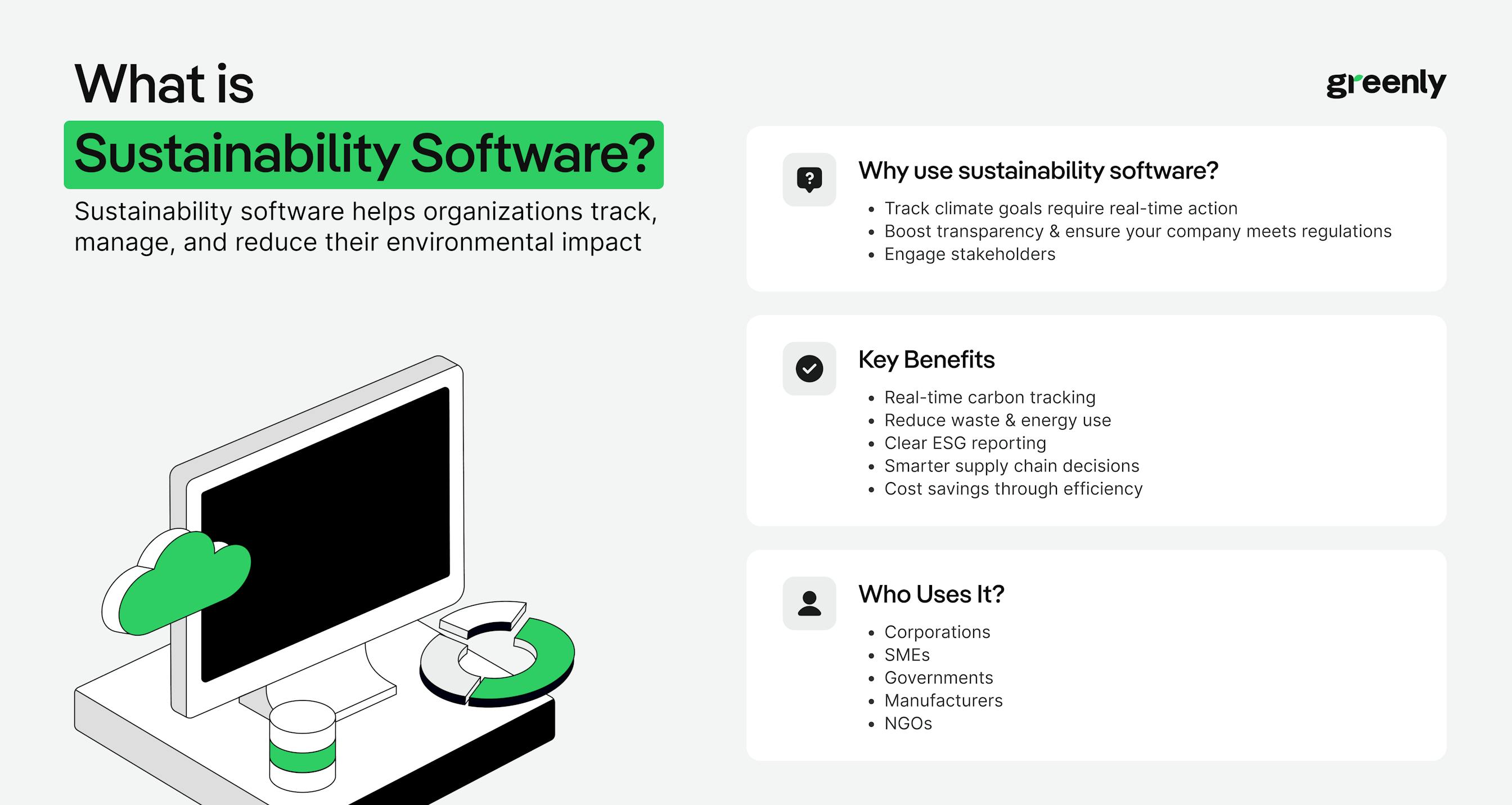
Think of supply chain sustainability software the same way as you would ingredients for cooking a meal. The better quality those ingredients, the better tasting the finished product will be – and no amount of different techniques can change the basis of the ingredients used at the start.
The interactive flip cards below (move cursor over card to flip) will reveal some of the ways that sustainability software is integral to successfully managing and reducing your supply chain emissions:
The same concept goes for supply chain sustainability software, as its impossible to effectively reduce emissions in your business without knowing the ESG impact created by your suppliers – which act as the building blocks to your final product or service.
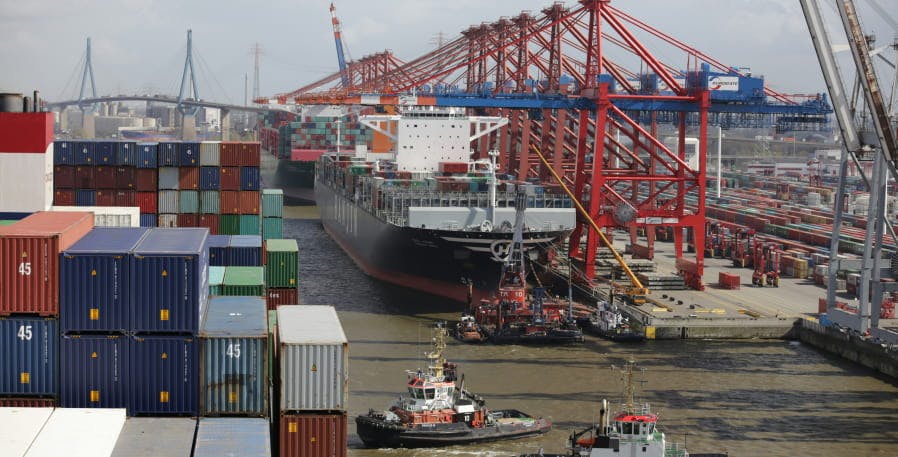
There are numerous benefits to using supply chain sustainability software, such as by being able to demonstrate transparency, compliance, and keeping your stakeholders and customers satisfied and informed regarding your business activities.
Think of when you’re buying something at the grocery store and want to check the food labeling to be 100% aware of what you’re purchasing – supply chain sustainability software can help all supporters of your business to feel confident in their contribution.
Furthermore, developing greater sustainability with the help of supply chain sustainability software can help to boost business revenue, brand reputation, and inspire new innovative ideas.
Here are just a few of the benefits to using supply chain sustainability software:
Ultimately, using supply chain sustainability software can help businesses to improve their brand image, communication skills, and the at times mundane and difficult-to-manage elements of reducing emissions and becoming a more environmentally friendly business.

At Greenly, we offer a wide variety of tools and services to help your company comply with environmental regulations, reduce carbon emissions effectively, and of course – manage your supply chain.
We offer tools to help manage and reduce your carbon footprint while also complying with environmental regulations such as the CSRD.
Want to see just how easy it is to go green with Greenly? Check out our demo tutorial below to discover our platform!

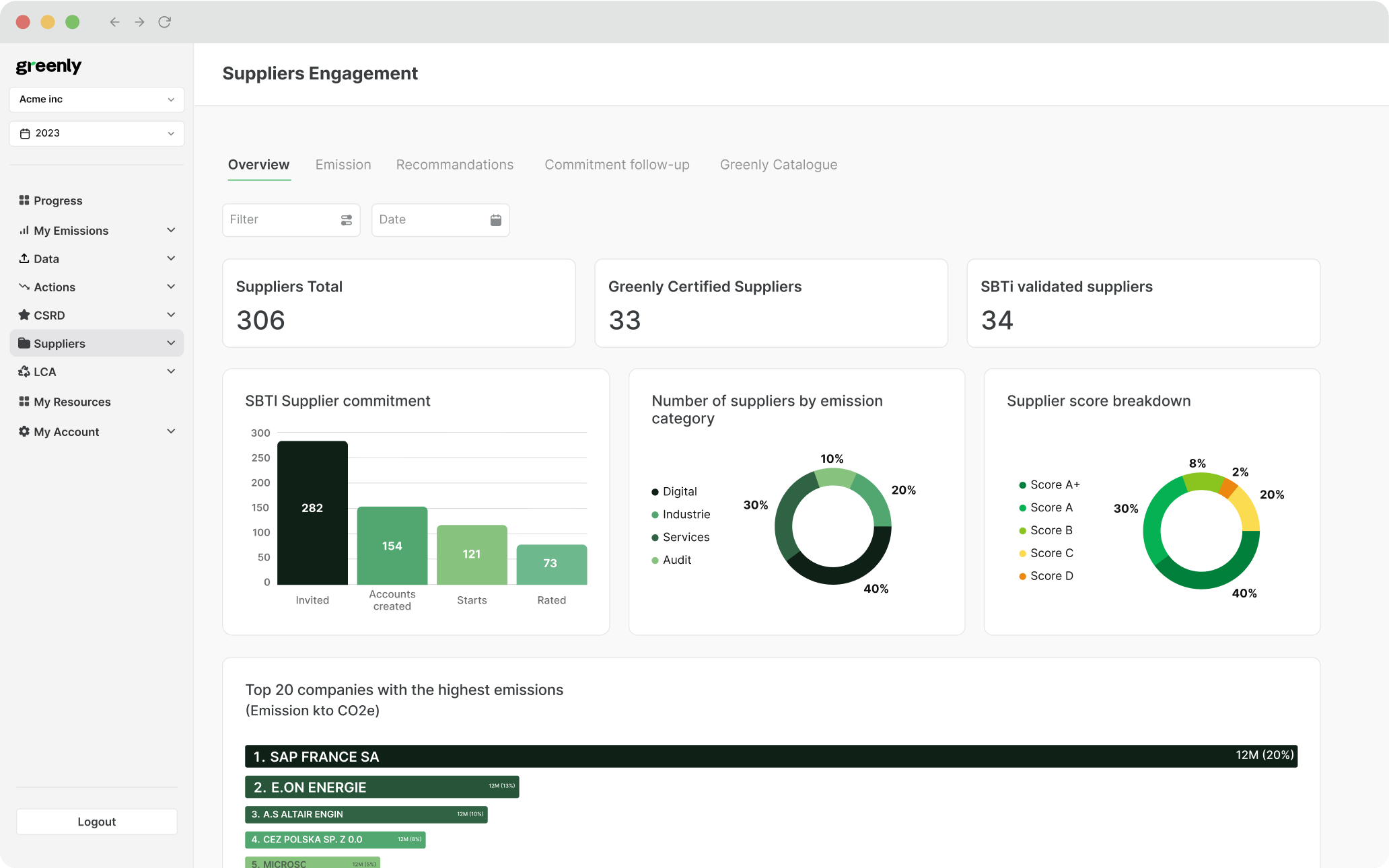
Our intuitive dashboard can help you to engage all of your suppliers in one place and make managing your supply chain emissions easier than ever before.
Click here to learn more about how Greenly can help your business with supply chain sustainability software.
EcoVadis is a great option for supply chain sustainability software as it is known as a leader in supply chain management and ESG criteria.
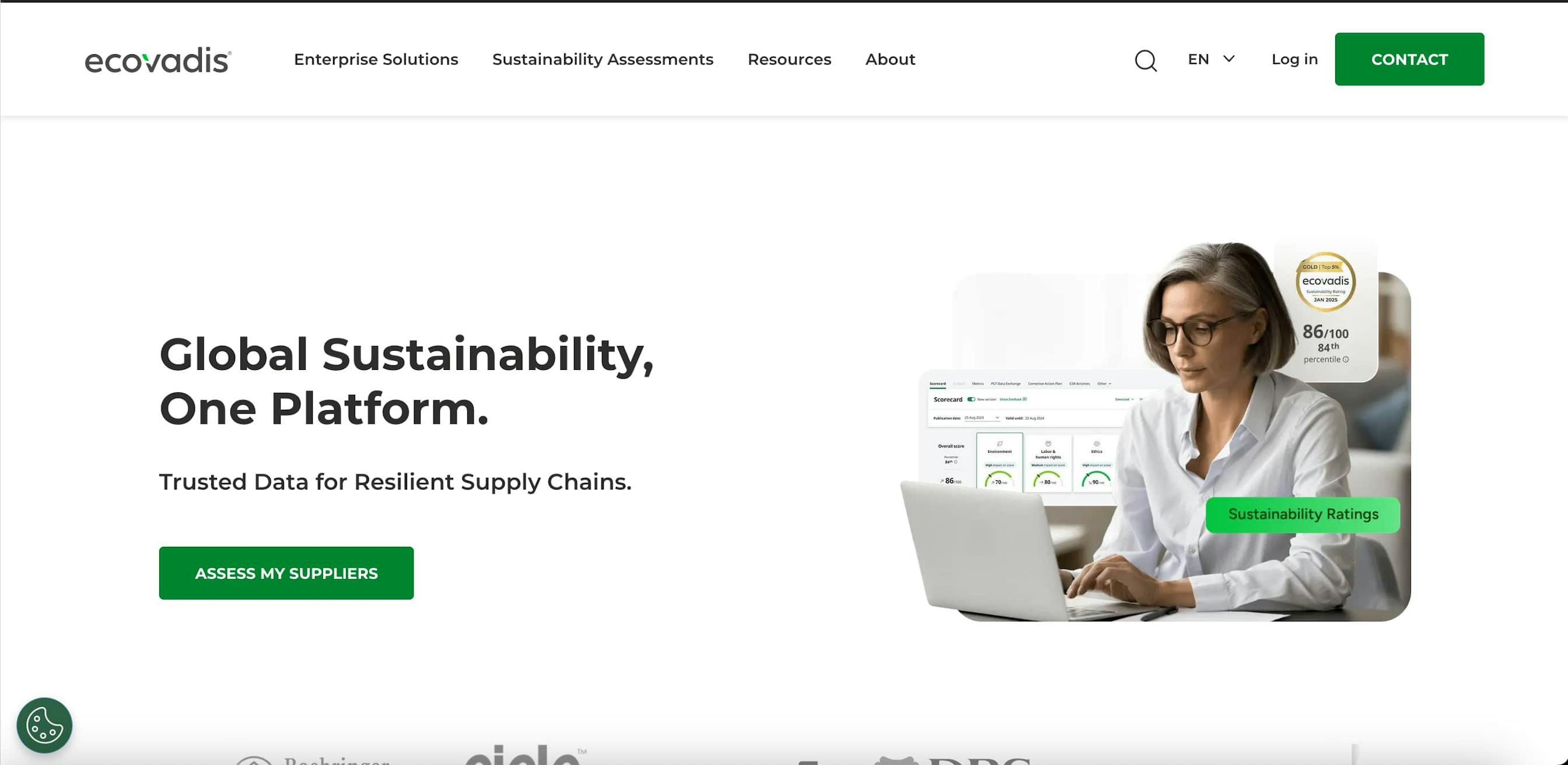
Their platform offers collaborative efforts to support greater transparency, risk monitoring, tools to reduce carbon emissions, and improve ESG performance – all of which are essential when trying to monitor, manage, and encourage your suppliers to reduce emissions.
Transparency-One, acquired by ISN in 2023, can help to improve supply chain management by helping to identify both social and environmental risks, tracing supply chain data, and monitoring sourcing standards to be made accessible for your entire supplier network.
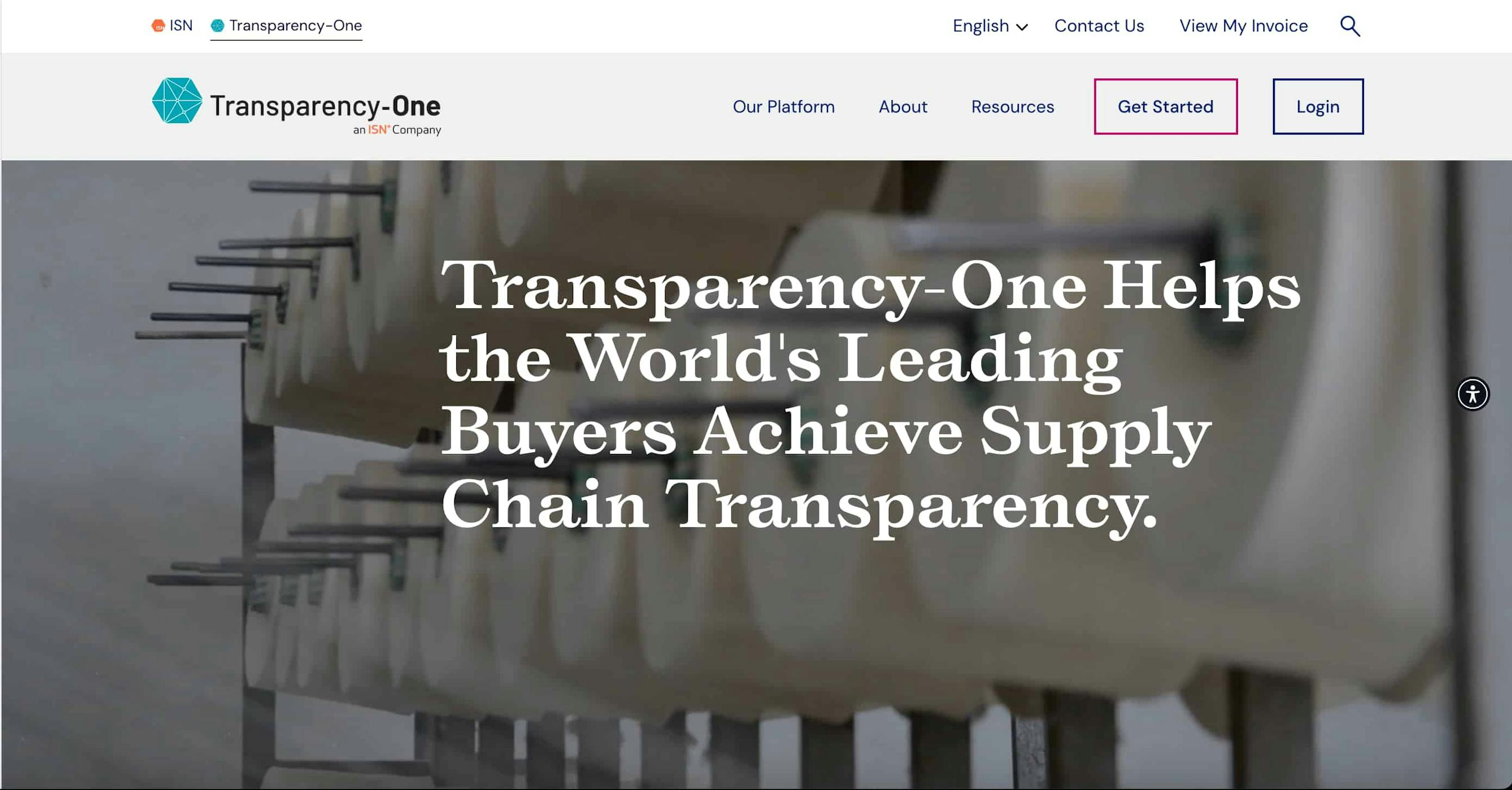
Focused on social responsibility and adhering to environmental standards, Transparency-One is the perfect supply chain sustainability software – as its focus is more well-rounded than a traditional carbon-accounting platform.
Cementing themselves as a 2024 leader in sustainability software, Avetta specializes in supply chain risk management – emphasizing the importance of regulatory compliance, an essential component to ensuring transparency and sustainability across your supply chain.
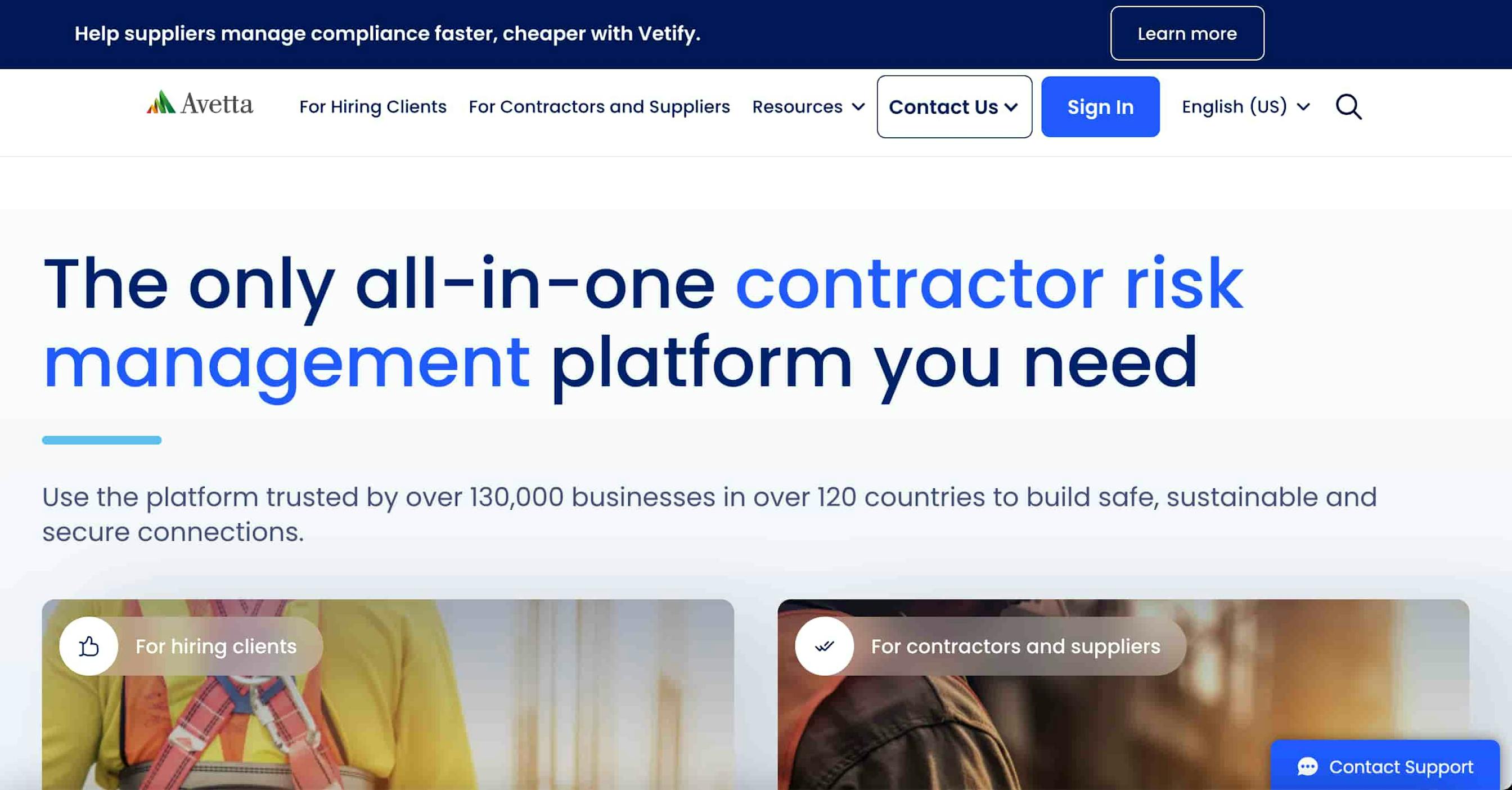
Avetta serves as a viable option for supply chain sustainability software as they can offer a platform for your business to connect with other contractors, suppliers, and business partners to find the most eco-friendly options available.
Avetta can also help with:
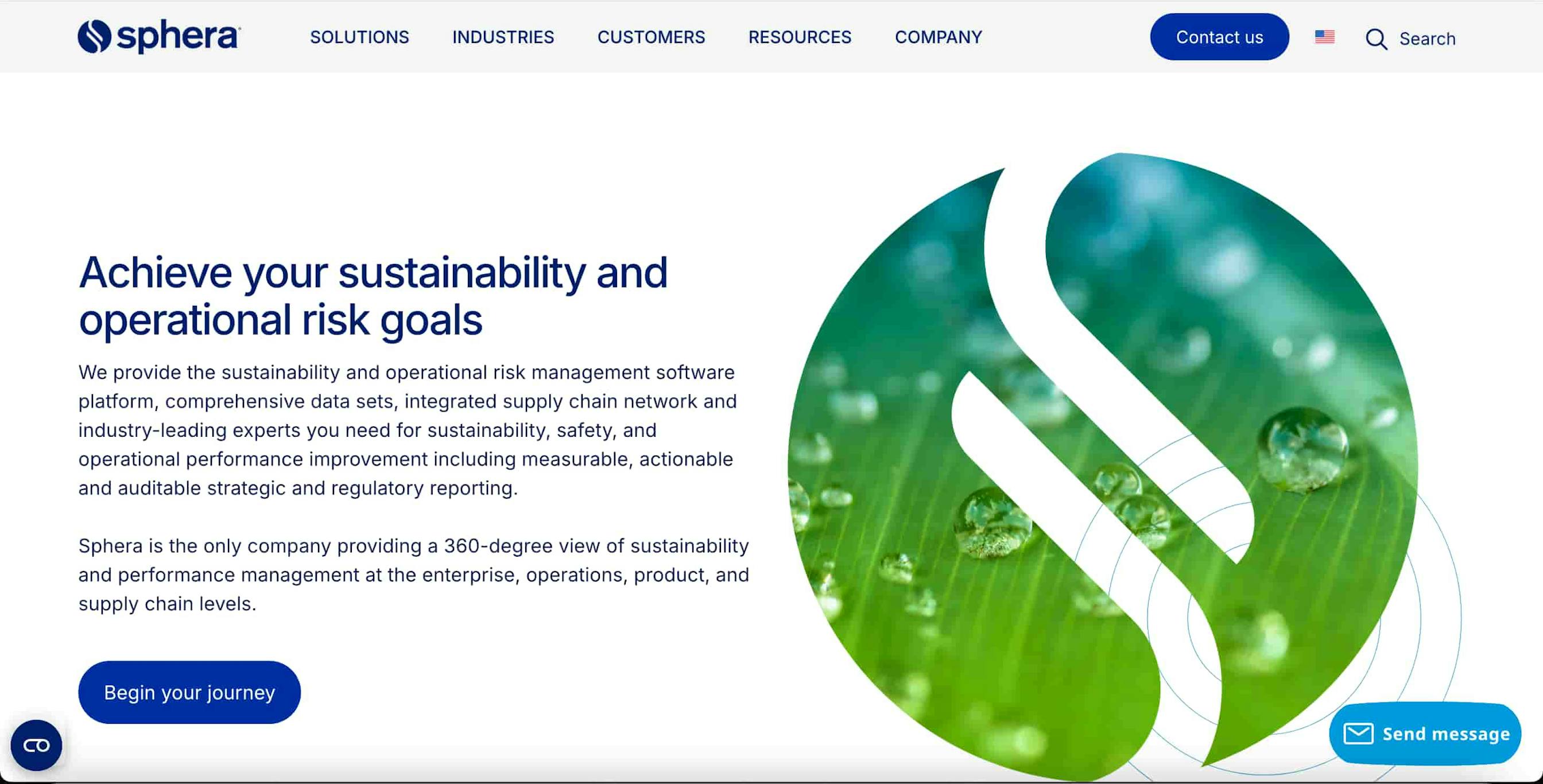
SupplyShift, now acquired by Sphera as of 2024, is a cloud-based platform designed to encourage data traceability and greater transparency within your supply chain.
The table below will depict the pros and cons of each supply chain sustainability software:
| Platform | Pros | Downsides | Best For |
|---|---|---|---|
| EcoVadis |
- Comprehensive sustainability ratings. - Actionable insights for ESG performance. - Strong focus on transparency and collaboration. |
- May require extensive data input. - Can be resource-intensive for small companies. |
Companies with global supply chains needing deep ESG analysis and collaboration. |
| Avetta |
- Emphasis on compliance and safety. - Mitigates risks with contractors and suppliers. - Excellent for sustainable procurement. |
- Primarily focuses on risk rather than broad sustainability. - Limited tools for carbon management. |
Organizations prioritizing risk management and supplier compliance. |
| Transparency-One |
- Excellent for supply chain mapping and traceability. - Strong focus on social and environmental compliance. - Effective risk identification. |
- Can be overwhelming for companies with complex supply chains. - May not provide in-depth carbon reporting. |
Companies needing detailed supply chain visibility and compliance tracking. |
| SupplyShift |
- Strong emphasis on supplier engagement. - User-friendly interface for data collection. - Encourages collaboration across supply chains. |
- May require significant time for initial setup. - Relies heavily on supplier participation. |
Businesses looking to engage suppliers and promote transparency. |
If your IT or procurement-ops team is the one signing off on a new tool, integration depth usually matters as much as the sustainability data itself. Greenly, TrusTrace, Sourcemap, and IntegrityNext all ship with native, pre-built connectors into ERP and procurement systems rather than requiring a partner to build the bridge.
Greenly connects to 100+ ERP, accounting, logistics, and HR systems via API, with custom APIs available on request.
TrusTrace runs on an open API with out-of-the-box PLM and ERP connectors and a dedicated Business Services team for technical rollout.
Sourcemap is ERP-agnostic and works directly with systems integrators to support deeper implementations.
IntegrityNext offers real-time, bi-directional APIs with OAuth2 and SSO, plus plug-and-play connectors for SAP Ariba, Coupa, Ivalua, and Celonis.
EcoVadis does provide its own API for procurement and SRM systems, but building out a deeper integration typically means working through one of its certified Solution Partners rather than a self-serve connector.
For technical teams that want day-one connectivity without a partner-led implementation, Greenly, TrusTrace, Sourcemap, and IntegrityNext are the ones worth shortlisting first.
Technical fit matters, but for a Scope 3 program the harder question is whether a platform can turn supplier data into numbers your finance team and auditors will actually accept.
Greenly matches your supplier list against a database of 200,000+ known suppliers and pulls public SBTi and CDP disclosures before sending a single questionnaire, so every data point that reaches your Scope 3 report is benchmarked and traceable back to its source.
TrusTrace and Sourcemap both run structured supplier engagement, though TrusTrace's strength is materials and compliance traceability rather than emissions data specifically, while Sourcemap pairs Scope 3-focused sourcing data with white-glove outreach in 12+ languages. IntegrityNext explicitly targets Scope 3 reduction and calls its own reporting "audit-ready transparency." EcoVadis measures and manages Scope 3 emissions with verified supplier data too, though its audit story rests on 500+ in-house analysts reviewing each score rather than a dedicated audit-trail feature like the others.
| Platform | Scope 3 Supplier Data Collection | Supplier Engagement Workflow | Audit-Ready Reporting |
|---|---|---|---|
| Greenly | Matches your supplier list against a database of 200,000+ known suppliers and pulls public SBTi and CDP disclosures before any outreach. | Targeted outreach only for real data gaps; pre-filled questionnaires, automated follow-ups. | Every data point is benchmarked, confidence-rated, and traceable — built to be defensible under audit. |
| TrusTrace | Collects material and compliance traceability data rather than emissions data specifically. | 500+ built-in assessment questions, customizable ESG templates, 10,000+ suppliers on network. | Dedicated Audit module for third-party audits and non-conformities. |
| Sourcemap | Verified sourcing data built for Scope 3 accounting. | White-glove outreach in 12+ languages, onboarding, data-quality review. | Built for government-portal submission; focus on data integrity and auditability. |
| IntegrityNext | Purpose-built to measure, manage, and reduce Scope 3 emissions. | Automated supplier engagement and AI-augmented data collection across 2M+ suppliers. | Maintains "audit-ready transparency" (its own phrase). |
| EcoVadis | Measures and manages Scope 3 emissions with verified supplier data. | Standardized assessments and automated workflows. | Reviewed by 500+ in-house analysts — a defensible score, not a dedicated audit-trail feature. |

Regardless of whichever supply chain sustainability software you choose, it’s important to remember that effective supply chain sustainability software will be adaptable to your own business needs and allow for all suppliers to refer to one, intuitive platform for all the tools and resources they may need for compliance.
Can’t decide which supply chain sustainability software to choose? Check out our demo and give Greenly a try.
If reading this article about supply chain sustainability software has made you interested in reducing your carbon emissions to further fight against climate change – Greenly can help you!
It can be overwhelming to figure out how to effectively manage supply chain emissions in your business, but don’t worry – Greenly is here to help. Click here to schedule a demo to see how Greenly can help you find ways to ensure your company is reducing its supply chain emissions to the best of your capabilities.
Greenly can help you make an environmental change for the better, starting with a carbon footprint assessment to know how much carbon emissions your company produces.
EverythingSupplyChain

Sustainability Magazine
Supply Chain Digital
Avetta
McKinsey
Credera
Sphera
TrusTrace — TrusTrace Supply Chain Management & Compliance Solution — Sourcemap — ERP Supply Chain Integration — IntegrityNext — IntegrityNext Platform – Powering Sustainable Supply Chains — EcoVadis — Find an EcoVadis Partner —
Sourcemap, "Supplier Engagement Services," EcoVadis, "One Brain for the Supply Chain,"
BusinessWire, "ISN Acquires Leading Responsible Sourcing Platform Transparency-One,"
Share this article


More articles
View allCarbon Footprint Management Software: Top 10
Compare 10 carbon footprint management software platforms for US businesses: carbon accounting, Scope 3 tracking, reporting and decarbonization tools.

Impacts, Risks, and Opportunities (IRO) for CSRD Reporting
In this article, we’ll break down what IROs are, how to identify and assess them, and what CSRD requires in terms of disclosure.

Decarbonization: what it is and why it matters
What is decarbonization, and why is it urgent? Learn practical steps companies can take to support the global move toward net zero emissions.
