 ESG COMPLIANCE
PPWR compliance without the chasing
For EU manufacturers, importers and retailers with hundreds of SKUs, Greenly maps your packaging inventory and legal roles, and run your supplier campaign. Then, the same dataset can be reused for ESRS E5 and Scope 3, as a separate scope.



TRUSTED BY 4,000 CLIENTS, FROM SMB TO ENTERPRISE


What breaks PPWR compliance

The grace period has expired
Since August, 12, 2026 packaging without an EU Declaration of Conformity can be stopped at the border under Articles 58 and 61

Your suppliers have never heard of PPWR
Recycled content, material composition, recyclability grade: all data your suppliers were never asked for. Per SKU, per format. Chasing hundreds of suppliers who don't know this regulation exists takes months.

EPR, ESRS E5, Scope 3: same data request
Recyclability grade and recycled content feed your EPR contribution, your ESRS E5 disclosure and your Scope 3 packaging footprint. Most companies collect this data three times, once per report.
What goes into a PPWR file
If you've already run LCA studies, Greenly maps them straight onto your eight PPWR requirements, no starting from scratch.
What's already required
Hazardous substance declarations (SVHC under REACH, PFAS limits)
Material composition breakdown: substrate, decoration, closure, adhesive
Technical documentation supporting design and safety claims
EU Declaration of Conformity, per packaging format
What's coming in 2030
Recyclability Performance Grades (A, B, C) per upcoming harmonised methodology (from 2030)
Recycled content percentage, by material type and weight (from 2030)
Packaging-to-product volume ratio (void space) (from 2030)
Reuse/refill rate, where the category requires it (from 2030)
Step 1
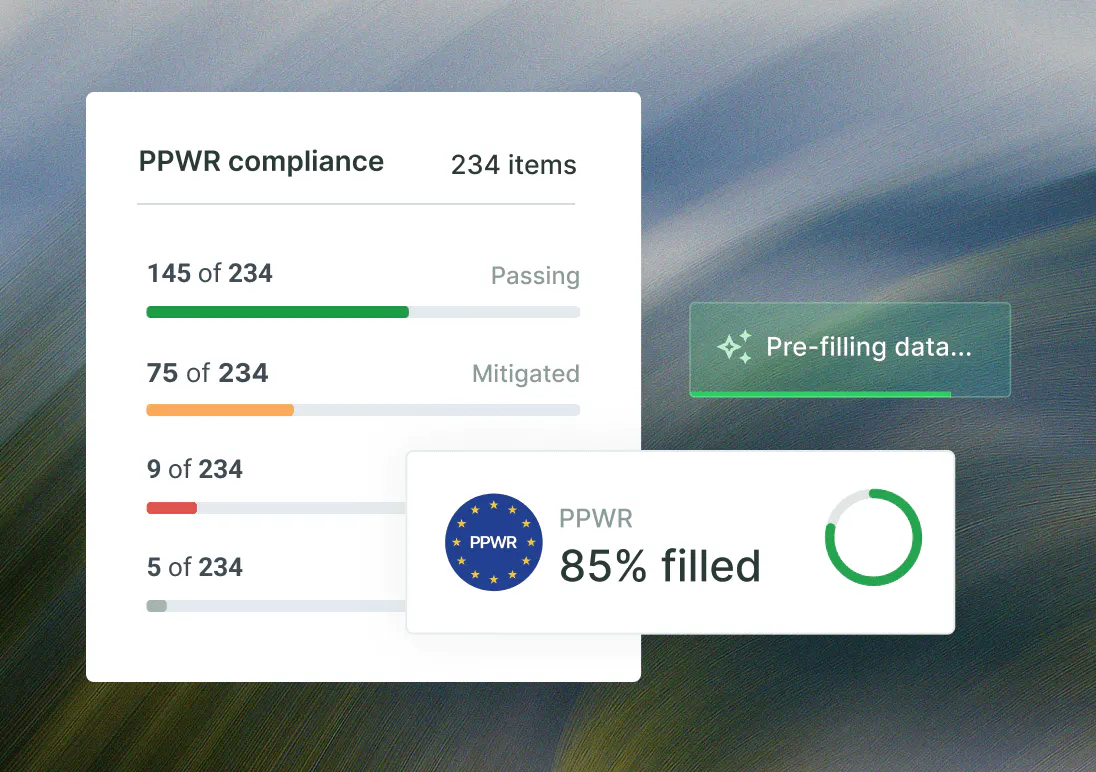
Map your packaging portfolio
 Import product master data and BOMs via API connectors for SAP, Oracle, Dynamics and major PLM systems.
- Data already collected for your Life Cycle Assessments is reused, which shortens data collection.
- EcoPilot consolidates it all into a single inventory, structured by item, material, weight, supplier and market.
- Every supplier record gets deduped in the catalog, so each packaging item maps to one clean profile.
Step 2
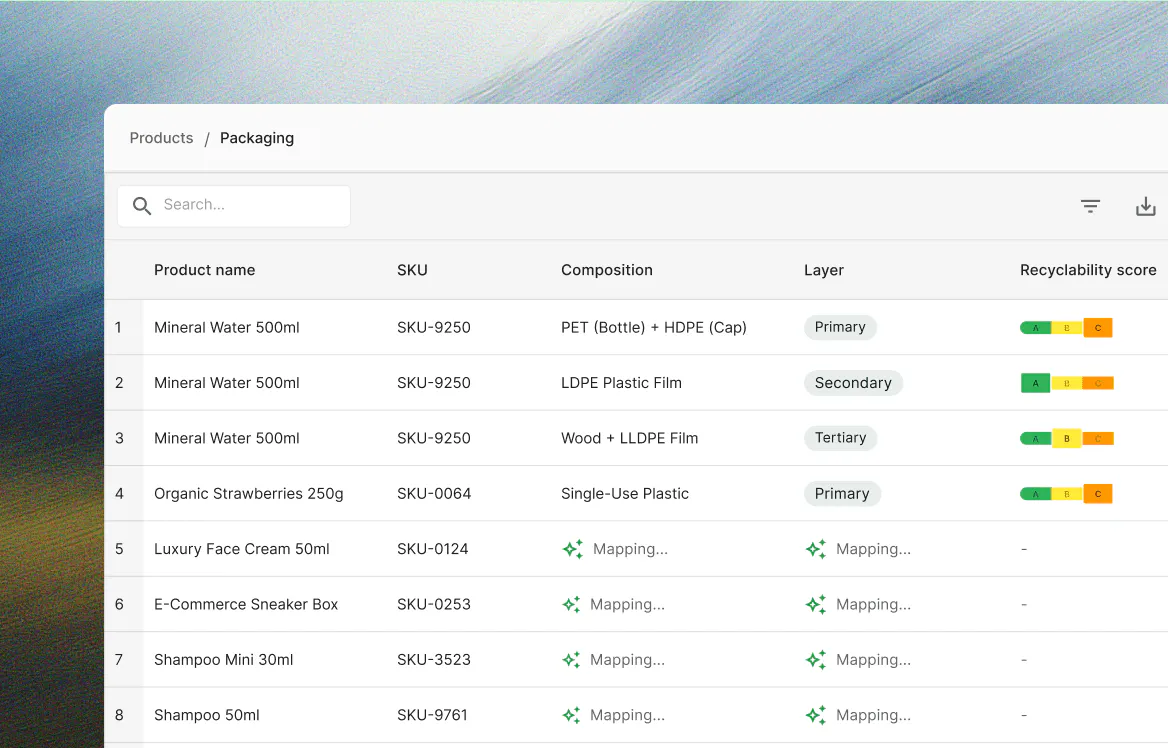
Run the supplier collection campaign
- Suppliers are segmented by material and risk. A paper supplier gets five questions; a converter gets full grading.
- Suppliers drop in their conformity PDF for automatic parsing, or fill the datapoints directly online.
- Campaign managers clarify obligations, follow up and escalate non-responders until the data lands.
- Primary supplier data sits in a Legal Vault and is never shared without explicit consent.
Step 3
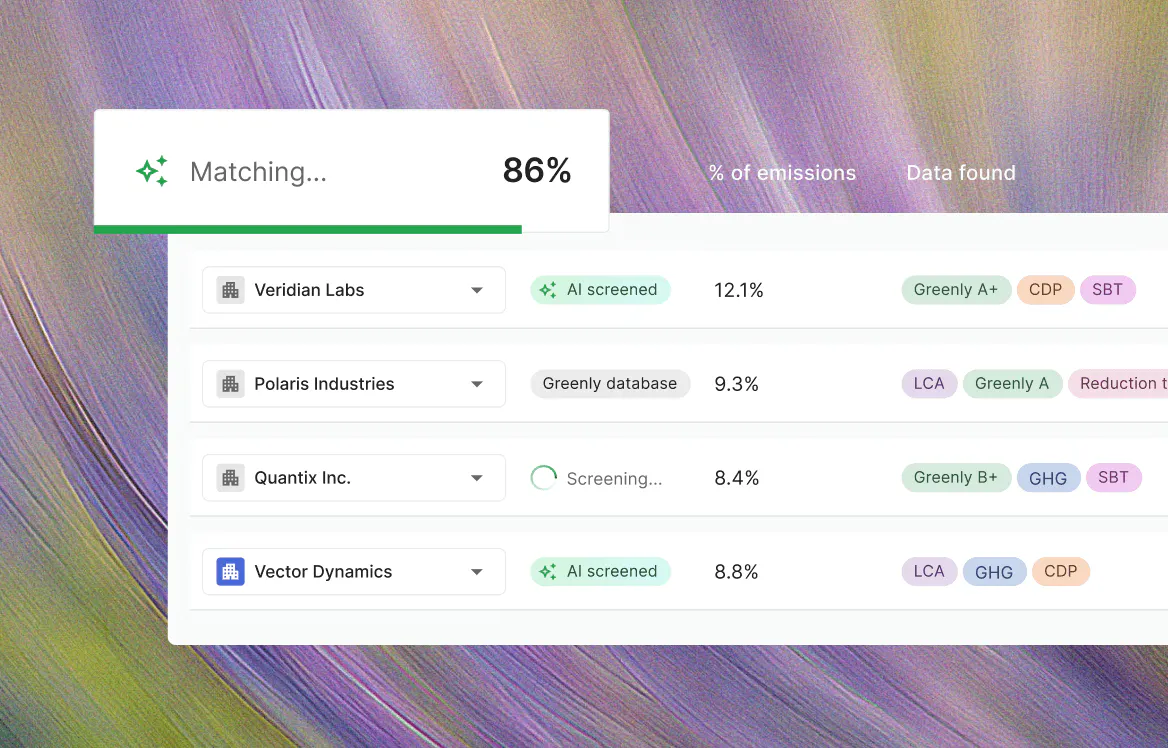
Report, grade and export
- Recyclability grades A, B, C and PFAS/SVHC checks run across your portfolio, flagging inconsistent entries.
- One-click export of EU Declarations of Conformity and the technical documentation behind them to ensure PPWR compliance.
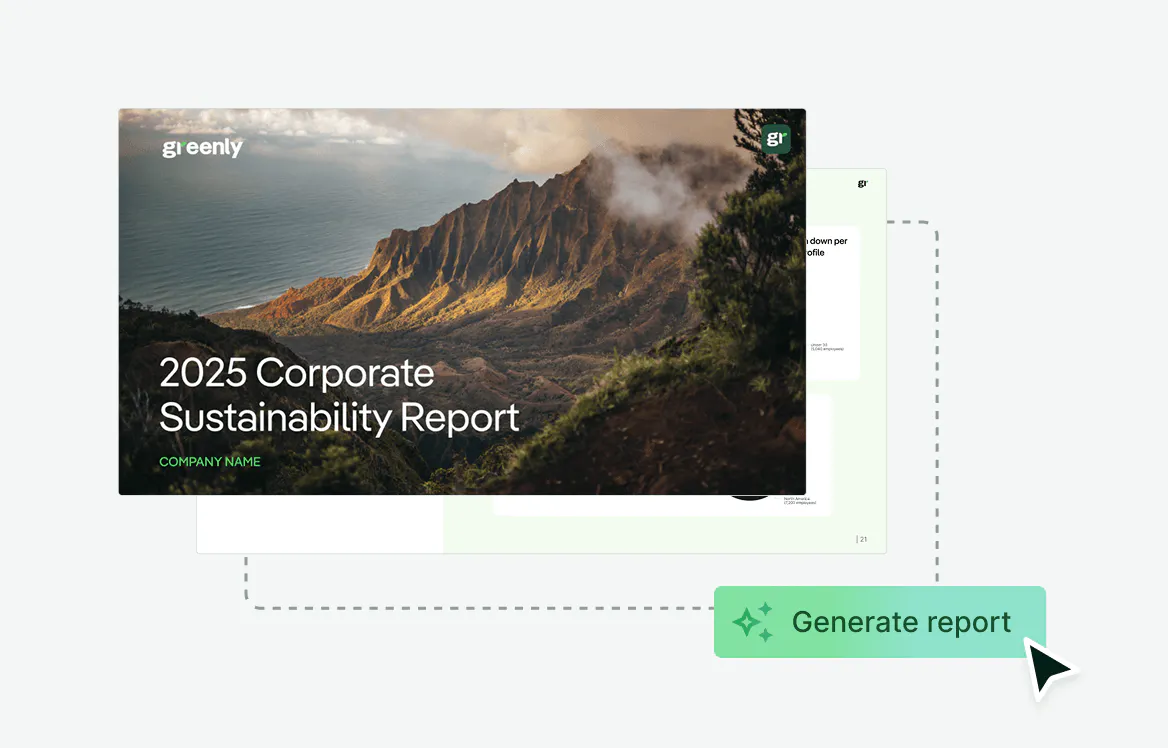
- From there, the same dataset becomes both your ESRS E5 disclosure (E5-4, E5-5) and your LCA-grade Scope 3 emission factors.
- A live dashboard tracks year-on-year progress, ready to export into DPP formats as ESPR is finalized.
Frequently Asked Questions
Still have questions? Check out our complete FAQs to
get the answers you’re looking for.
PPWR is EU Regulation 2025/40, the Packaging and Packaging Waste Regulation. It entered into force on February 11, 2025 and its general application began on August 12, 2026, replacing the old, country-by-country Packaging and Packaging Waste Directive with one directly applicable rule. Scope depends on where the packaging ends up, not on where the business is based: if a US company ships a packaged product to a customer anywhere in the EU, PPWR applies to that packaging the same way it would for an EU manufacturer. That includes manufacturers, importers, distributors and retailers, HORECA businesses, and online platforms or fulfillment services shipping into the EU. Micro-enterprises under 10 employees get a limited exemption; most businesses that touch packaging don't qualify for it.
Requirements vary by product category, but a complete file currently has to cover: hazardous substance declarations, including heavy-metal and PFAS evidence under PPWR, and REACH data where you already hold it; material composition broken down by substrate, decoration, closure and adhesive; technical documentation supporting design-for-recycling claims; and an EU Declaration of Conformity for each packaging format. From 2030, the recycled content percentage by material type and weight; Recyclability Performance Grade (A, B, C) per upcoming harmonised methodology; packaging-to-product volume ratio, meaning void space limits for specific categories; reuse and refill rate where the category applies; will also be required. Reporting is annual, at product level, broken down by material composition and weight across formats.
Article 39 requires that the manufacturer draws up a formal declaration confirming that a packaging format meets PPWR requirements. The declaration itself is short, but what supports it isn't. That means holding technical documentation showing minimum recycled content, packaging minimisation against empty-space limits, and compliance with substance limits such as PFAS and heavy metals. Where primary supplier data is unavailable and proxy values are used, the documentation has to show the effort made to gather primary data. Greenly logs every data request, reminder and escalation with a timestamp for exactly this reason, and exports the declaration and its supporting file in one click.
EPR contributions are no longer flat. Under PPWR, what a producer pays a Producer Responsibility Organisation is directly modulated by packaging design by rewarding recyclable formats. Under the PPWR, this will become even more stringent with mandatory European recyclability performance grades (A through C) and minimum recycled content thresholds. Better-performing packaging costs less to put on the market; poorly recyclable formats cost more. The practical consequence is that a packaging design decision is now a cost decision, and it is one most teams make blind because the data sits with suppliers. Greenly surfaces material composition figures your Producer Responsibility Organisation uses to set that fee, so your team works from verified numbers rather than supplier estimates when assessing a reformulation.
There are two categories of penalty. Market exclusion: under Articles 58 and 61, customs authorities can identify and block non-compliant packaging at external EU borders, and can order the immediate withdrawal or recall of products lacking a valid EU Declaration of Conformity or proper digital tracking. Administrative fines: Article 68 requires member states to set penalties for failing to meet EPR, reporting or minimization obligations, with fines that must be effective, proportionate and dissuasive. Fine levels are set nationally and vary by member state. For most companies with meaningful EU revenue, the real risk sits in the market access ban and retailer delisting that follow, well beyond whatever the fine itself amounts to.
Yes. Food-contact packaging containing PFAS above specified limits is prohibited.PPWR also restricts other substances of concern, such as heavy metals. Compliance here depends entirely on the accuracy of material composition data from converters and material suppliers, which is why substance declarations are built into Greenly's supplier collection workflows rather than handled separately. The platform tracks chemical composition and PFAS content across the supplier base and flags anything that breaches PPWR limits.
Yes, and this is where most of the time saving comes from. Existing LCA studies, EPDs and PEF assessments can be uploaded and mapped to PPWR data fields automatically. Greenly's methodology is aligned with ISO 14040/44 and PEF, the scientific standards PPWR relies on, so prior work is reusable rather than repeated. The output is a gap list: which fields are already covered, and which SKUs still need data. Companies that have invested in packaging LCA typically start PPWR compliance with a substantial share of the file already populated.
Under Article 12, packaging will progressively require standardised digital data carriers (such as QR codes) to provide consumers with sorting instructions, display EPR compliance, and link directly to the EU Declaration of Conformity, with full recyclability grade labelling following by 2030. The underlying dataset is the same one used for annual reporting and the Declaration of Conformity, which is why it is worth collecting once, at product level, rather than assembling separately for each obligation.
Yes, and that is the point of collecting it once. The packaging inventory and supplier data gathered for PPWR - material composition, weight, recycled content, recyclability grade - is the same input Greenly's LCA engine needs to compute Scope 3 emission factors, and the same data that rolls up into your ESRS E5 disclosures (E5-4, E5-5). PPWR compliance, ESRS E5 reporting and Scope 3 carbon accounting come from the same dataset, in the same place. In practice: you buy PPWR, and LCA-grade Scope 3 precision and a filled-in ESRS E5 disclosure come with it, built into the same workflow.
