AEnwgbNJEFaPX4b1 GRAEnwi7NJEFaPX4b4 LEAF
Greenlyhttps://images.prismic.io/greenly/43d30a11-8d8a-4079-b197-b988548fad45_Logo+Greenly+x3.pngGreenly, la plateforme tout-en-un dédiée à toutes les entreprises désireuses de mesurer, piloter et réduire leurs émissions de CO2.
GreenlyGreenly, la plateforme tout-en-un dédiée à toutes les entreprises désireuses de mesurer, piloter et réduire leurs émissions de CO2.
Descending4
Home
1
Blog
2
Category
3
New York Climate Disclosure Bill S9072A: What Companies Need to Know
4
Media > All articles > Legislation & Standards > New York Climate Disclosure Bill S9072A: What Companies Need to Know

New York Climate Disclosure Bill S9072A: What Companies Need to Know

ESG / CSRLegislation & Standards
Level
Hero Image
Hero Image
new york sky line
New York’s S9072A climate disclosure bill will require large companies to report Scope 1, 2, and 3 emissions. Key requirements, timeline, and penalties explained.
ESG / CSR
2026-03-04T00:00:00.000Z
en-gb

For a long time, sharing your company’s carbon footprint was a choice - usually a marketing one. But in 2026, that choice is disappearing. With the EU and California already moving toward mandatory disclosures, New York is now formalising its own requirements through Senate Bill S9072A.

Known as the Climate Corporate Data Accountability Act, this bill cleared the State Senate in February. It sends a clear message to large companies doing business in New York: the state is no longer asking for climate data; it is mandating it.

If your annual revenue exceeds $1 billion, you are on the hook. This isn't just about the electricity in your own offices; it includes your entire supply chain. Essentially, if you want to operate in the financial capital of the world, your emissions data is about to become as scrutinised as your financial statements.

In this article, we'll cover:

  • The bill’s key requirements

  • Who Is Impacted

  • Reporting Scopes 1, 2, and 3

  • Timeline and deadlines

  • Enforcement and penalties

What Is the Climate Corporate Data Accountability Act (S9072A)?

note icon

Senate Bill S9072A is New York’s move to bring corporate carbon footprints into the public eye. After passing the State Senate in February 2026, the bill is now under review by the Assembly. If signed into law, it will turn voluntary sustainability reports into a mandatory annual requirement for large companies.

The goal is simple: transparency. By providing investors, regulators, and the public with standardised data, New York aims to cut through the noise of greenwashing and provide a clear look at how the biggest players in the state are impacting the climate.

The Reporting Framework

Under this proposal, companies won't be able to cherry-pick what they disclose. Instead, they must follow the GHG Protocol - the global gold standard for emissions accounting - to report across three specific categories: Scope 1, Scope 2, and Scope 3 emissions.

note icon

By requiring every major company to use the same "ruler", the bill makes it easy to compare one organisation to another. It effectively moves climate data from the marketing department to the compliance office, ensuring that disclosures are as standardised as financial statements.

Who is Affected?

note icon

S9072A isn't just for companies headquartered in New York - it’s designed to capture any large, U.S.-based corporation with a meaningful commercial presence here.

Under the current bill, you are considered a reporting entity if you meet two criteria:

Doing Business in New York
You derive revenue from activity in the state (following the same "nexus" rules used in New York Tax Law).
$1 Billion Revenue
Your total revenue for the previous fiscal year exceeds $1 billion.

Two Things to Watch

The way the bill is drafted creates some important practical implications for larger organisations:

The Subsidiary Catch
Total revenue is viewed broadly. If a massive global parent company has a smaller subsidiary doing business in New York, that sub-entity can pull the entire corporate group into the reporting net.
Commercial, Not Just Green
The definition of doing business is tied to tax law, not sustainability metrics. Compliance is triggered by your commercial footprint in the state, regardless of your current climate goals.

The Guardrails

The bill does include exceptions for edge cases. For instance, a foreign entity isn't automatically pulled in just because it holds a board meeting or keeps a bank account in New York. There has to be an actual commercial connection to the state.

note icon

Current Status: As of March 4, 2026, the bill has officially cleared the Senate and is currently sitting with the Assembly Codes Committee.

What Companies Will Need to Report

note icon

At its core, S9072A is about moving corporate climate data from marketing highlights to a standardised annual requirement. Instead of companies picking and choosing what to disclose, the bill mandates a full accounting based on the GHG Protocol - the global standard for carbon bookkeeping.

Under the current draft, your reporting will be broken down into three distinct categories:
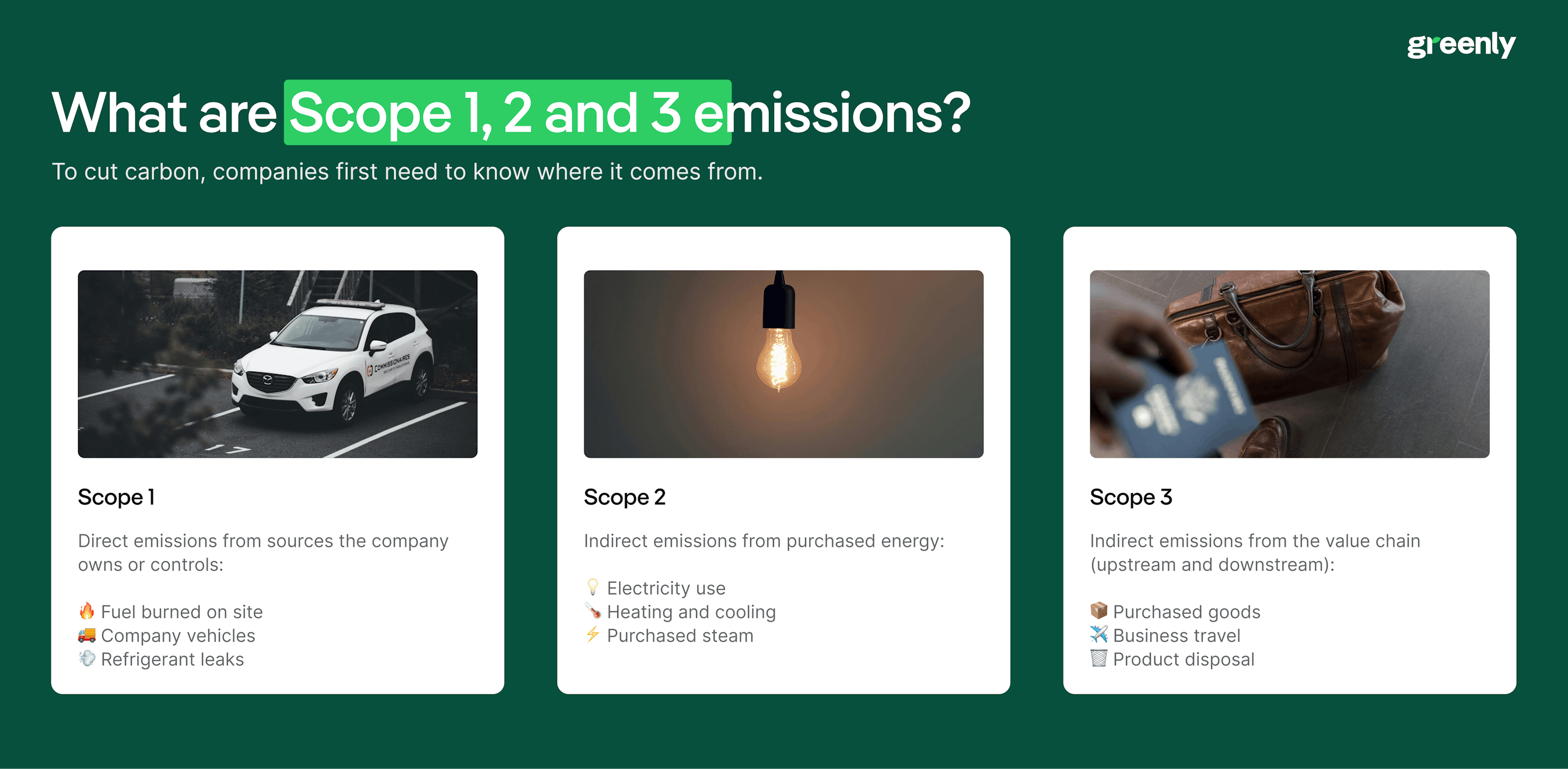
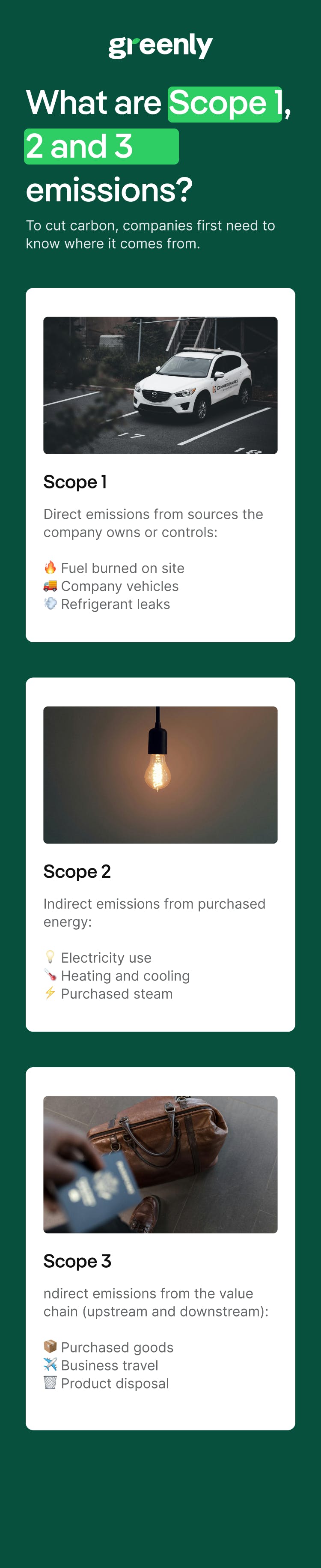
🏭 Scope 1 (Direct)
These are the emissions you own or control.
If your company runs a fleet of delivery trucks, operates a manufacturing plant, or uses gas-powered equipment at a warehouse, that fuel combustion goes here.
⚡ Scope 2 (Energy Use)
This covers the “purchased” emissions.
When you buy electricity, heating, or cooling for your offices, you are responsible for the carbon emitted by the utility company to produce that power.
🌍 Scope 3 (The Value Chain)
This is the most significant part of the bill. It captures everything else.
Your suppliers’ factory emissions, the carbon cost of shipping your goods, and even the energy used by customers when they plug in your products.
infographic on scopes 1,2 and 3infographic on scopes 1,2 and 3

Timeline for Compliance

note icon

If S9072A becomes law, you won’t be expected to have every single data point ready overnight. The bill uses a phased rollout to give companies time to build the necessary tracking and verification systems.

Here is how the calendar looks:

By December 31, 2026
The Department of Environmental Conservation (DEC) will finalise the official reporting rules.
2027 (The First Wave)
Reporting begins for Scope 1 and Scope 2 emissions. This will cover data from your 2026 fiscal year, so companies should already be tracking this information now.
2028 (The Value Chain)
Scope 3 reporting kicks in. Because supply chain data is notoriously difficult to pin down, the bill provides an extra year to get these systems in order.
2030 and Beyond
This moves from reporting to auditing. You’ll be required to have an independent third party verify your data. By 2032, the standard for Scopes 1 and 2 will rise to reasonable assurance — the same high bar used for financial audits.

Why the Lead Time Matters

note icon

This isn't just about a deadline - it’s about the complexity of the data. For most companies, measuring direct emissions (Scopes 1 and 2) is relatively straightforward. However, mapping out every supplier and customer use-case for Scope 3 takes significant time. The phased approach is a 'ready, set, go' model - giving you the 2026–2027 window to find the gaps in your data before the legal penalties start to apply.

Enforcement and Penalties

note icon

S9072A isn't just a paperwork exercise. The bill is designed to move climate data into the same high-stakes category as financial reporting, and the enforcement mechanisms reflect that.

The Attorney General’s Role
The New York Attorney General is the primary enforcer here. They have the authority to bring civil actions against any company that fails to file, submits incomplete data, or — most importantly — provides misleading information.
The Cost of Non-Compliance
The financial stakes are high. The bill authorises civil penalties of up to $100,000 per day for violations. While there is usually some discretion for first-time honest mistakes, the per-day structure is there to ensure companies don't just treat these fines as a minor cost of doing business.
The “Safe Harbor” for Scope 3
Because everyone acknowledges that tracking a global supply chain is a massive headache, the bill includes a “safe harbor” provision. As long as a company makes a good-faith effort and has a reasonable basis for its Scope 3 numbers, it won't be penalised for unintentional misstatements.

Beyond the Fines

While the $100,000 daily penalty gets the headlines, the bigger risk for most corporations is reputational. These reports will be hosted on a public digital platform. In a market where investors, lenders, and customers are using this data to decide where to put their money, an "Inaccurate" or "Non-Compliant" tag from the Attorney General is a major red flag that can impact a company’s valuation and brand.

How Companies Should Prepare

note icon

Even if S9072A is still moving through the Assembly, the direction of travel is clear: climate reporting is shifting to a hard regulatory requirement. If your company hits that $1 billion mark, here is how to start preparing.

Audit Your Existing Data
Most large companies already track some emissions, but internal tracking isn't the same as regulatory-grade data. You’ll need to ensure your Scope 1 and 2 records are backed by documentation that can stand up to a third-party audit.
Map Your Supply Chain Early
Scope 3 is the biggest hurdle. You can’t report what you don't know, so start identifying your highest-impact suppliers now. Waiting until 2028 to ask a global vendor for their carbon data is a recipe for a compliance headache.
Look for Reciprocity Wins
If you are already reporting for California (SB 253) or the EU’s CSRD, you’re already halfway there. The New York bill is designed to align with these frameworks, so focus on creating a single, centralised source for emissions data rather than building a separate system just for New York.
Prepare for Third-Party Assurance
Reporting the numbers is just the first step. You’ll need an independent firm to verify your Scope 1 and 2 data. This means your internal controls — how you collect, store, and check your data — need to be as robust as your financial accounting.

Climate Data is Now a Core Business Metric

note icon

The days of treating climate reporting as a voluntary exercise are over. States like New York and California are effectively setting the national standard, ensuring that transparency and accountability are built into the cost of doing business at scale. For organisations operating in New York, the message is simple: the more you do to formalise your emissions tracking now, the less risk you'll face when the first deadlines arrive in 2028.

Frequently Asked Questions

  • Does this bill apply to private companies?

    Yes. Unlike many federal rules that only target public companies, S9072A applies to any U.S.-based entity - public or private - that does business in New York and meets the $1 billion revenue threshold.

  • What if I already report emissions in California?

    The bill is designed to minimise duplication. If you are already preparing reports for California’s SB 253 or the EU’s CSRD, New York intends to let you submit those same reports, provided they meet the state’s specific criteria.

  • Is there a fee to report?

    Yes. Reporting entities will be required to pay an annual fee to the Department of Environmental Conservation (DEC). These funds go into a new Climate Accountability and Emissions Disclosure Fund to pay for the program’s administration and digital public platform.

  • What happens if my data isn’t 100% perfect?

    There is a "safe harbor" for Scope 3 emissions. Because supply chain data is famously difficult to track, the bill generally protects companies from penalties for Scope 3 errors made in good faith, at least during the initial rollout years.

  • When will the final rules be ready?

    The DEC is required to finalise the official regulations by December 31, 2027. However, because the first reporting wave in 2028 will cover your 2027 data, you effectively need your tracking systems ready by the start of next year.

  • Does This Affect UK Companies?

    If you are a UK-based firm, it depends on your U.S. structure. If your U.S. subsidiary does business in New York and the parent group hits the $1 billion revenue mark, you are likely in scope. The good news is that New York plans to accept reports already prepared for other jurisdictions, like the UK’s SDR or the EU’s CSRD. If you are already doing the work for UK regulators, you shouldn’t have to start from scratch for New York

Close
youtube screenshot

How Greenly Can Help

Unmatched Data Accuracy — Your foundation for confident climate action
We deliver the most precise & auditable carbon assessment so your GHG data is bullet-proof from ingestion to reporting.
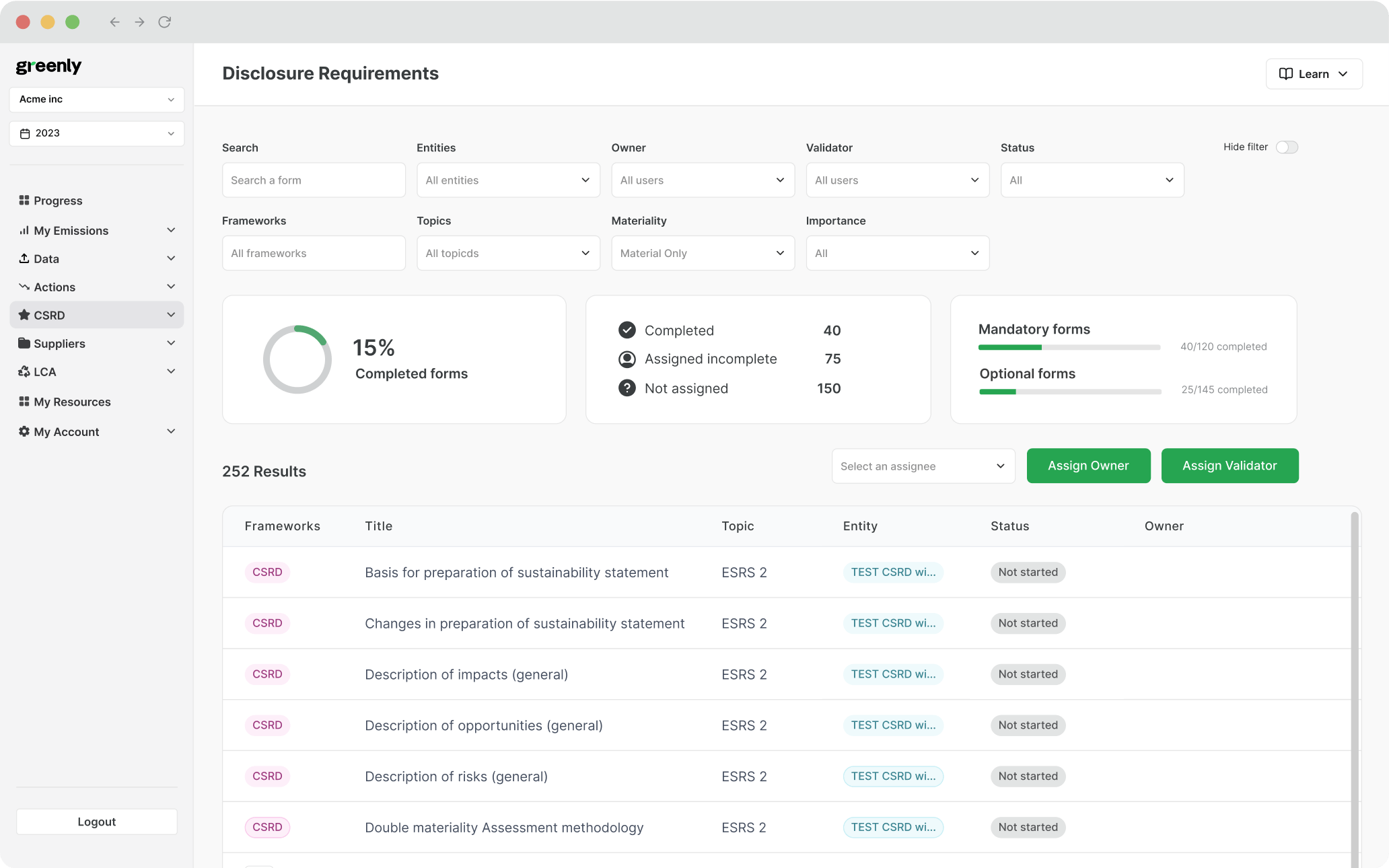
📊 Scope 1, 2 & 3 analysis using activity-based & spend-based data
🗂️ Dynamic database of 350k+ Emission Factors (sector- & location-specific)
🤖 Automated EF matching via an evolving algorithm
🧠 AI-powered data categorisation covering over 100+ languages
🔎 Granular analytics (BU, scope-specific, corporate, division, facility…)
📄 4000+ GHG reports delivered (for 3000+ clients)
🛡️ Built-in data quality controls with automated ingestion & validation
🧾 Internal visibility & ready-to-export audit trails
🌍 Aligned with global standards (GHG Protocol, ADEME, Bilan Carbone, SBTi, etc.)
Gain Expertise & Lead Your Decarbonisation In-house
Empower your team to become autonomous climate experts with workshops, in-app training and granular insights to manage projects confidently.
🗺️ Roadmap workshops: targets & action pathways
🎓 In-app training & stakeholder buy-in incl. supplier onboarding
📚 Full climate e-learning library with employee challenges
🧩 Project & task manager tailored to your company (owners, budgets, timelines)
🤝 Scope 3 supplier portal with automated reminders & autonomous workflows (GHG assessment, LCA, etc.)
Personalised & Actionable Decarbonisation
We turn your data into an action plan with impact & financial analysis so you can prioritise the most effective and feasible levers.
📚 Action Plan Library: 200+ quantified actions (reduction potential & steps)
📈 Decarbonisation Trajectory Builder: real-time simulation, scenarios & industry benchmarking
🎯 Personalised suggestions linked to targets (corporate/division/site)
🔗 Supplier integration: modelled supplier trajectories & contribution to targets
✅ End-to-end SBTi module (from commitment letter to expert review)
Save Time & Focus on Action, Not Admin
We streamline your entire carbon workflow to cut admin burden and give you real-time visibility on progress.
🔗 100+ API integrations (ERP, accounting, logistics, cloud, HR…)
🤖 AI-powered data harmonisation (ETL)
🧾 1-click, audit-grade exports (CSRD, SEC, GHG Protocol, etc.)
📆 Annual footprint tracking & automatic EF updates
🎯 Yearly target recalibration
📊 Live dashboards & monthly progress reporting (Gantt-style monitoring)
🌱 Offset portfolio via Patch (vetted projects)
greenly platform
Sources:

Share this article

Subscribe to the CSO Connect Newsletter
We care about your data in our privacy policy.

More articles

View all
people putting hands together as a team
ESG / CSR
ESG Initiatives
1 min

What is Lean Management?

1 min
Level

In this article, we’ll explain what lean management is, the five principles, and how your company can get started with lean management.

office space
ESG / CSR
Net zero trajectory
1 min

10 Reasons to Track a Corporate Carbon Footprint

1 min
Level

In this article, we’ll explain what a corporate carbon footprint is, why it’s important, how it is measured, and reasons why your company should track it too.

Shape the present.

Build the future.

Get a demo