
Carbon Footprint Management Software: Top 10
1 min
Level
Compare 10 carbon footprint management software platforms for US businesses: carbon accounting, Scope 3 tracking, reporting and decarbonization tools.


By Stephanie Safdie, US Copywriter,
Updated by Agnès Potier-Murphy, on 08/20/2026
Carbon management is a growing field for addressing the contribution businesses have to climate change and reducing greenhouse gas emissions, and one that's shifting from a voluntary initiative to a business necessity. As global warming's business costs become harder to ignore, regulators, investors, and customers increasingly expect companies to back up their climate commitments with real, measurable data.
The scale of what's possible is measurable: the International Energy Agency reported that improvements in energy efficiency made in 2019 alone avoided an increase of around 200 MtCO₂ in global emissions, a reminder that structured, well-measured action moves the needle at scale.
In this article, we'll break down what carbon management actually involves, walk through real examples of carbon management in action, explore how to build a carbon management strategy that holds up to scrutiny, and share practical tips — from carbon accounting to energy efficiency — for reducing your company's carbon footprint.
How implementing carbon management can be beneficial for companies
Various technologies used for carbon management & case studies
How carbon management can help companies to maintain sustainability

Carbon management is the practice of measuring, tracking, and reducing an organization's greenhouse gas emissions.
According to the World Resources Institute (WRI), effective carbon management, including systematic measurement and monitoring – can help to avoid and reduce greenhouse gas emissions across an organization's value chain and business operations.
As a whole, carbon management helps organizations stay focused on achieving their targets to reduce CO₂ emissions and their use of fossil fuels.
The timeline below will reveal how a company utilizing carbon management often achieves an improved baseline of carbon emissions or overall sustainability:
Start by measuring your current carbon emissions across Scope 1, 2, and 3 to establish a baseline.
Identify emissions hotspots and understand the key drivers behind your carbon footprint.
Set reduction goals and design a roadmap with targeted decarbonization initiatives.
Take concrete action by reducing emissions through operational changes, supplier engagement, or renewable energy.
Continuously monitor performance, iterate strategies, and improve sustainability outcomes year over year.
With mandatory reporting requirements in the UK and EU, and stakeholder pressure for businesses to set goals to reduce emissions and implement carbon management helps businesses, measure, track, and manage emissions in an organized way.
A carbon management strategy is what turns the five steps above from an abstract framework into an actual plan: a documented approach to measuring emissions, setting reduction targets, and tracking progress over time. Most companies formalize this as a carbon management plan with clear ownership, a timeline, and a budget attached to each phase, which is also why many businesses fold carbon management into their broader environmental and energy management systems rather than running it as a standalone initiative. Setting science-based emissions targets, covered next, is often the first concrete milestone in that plan.
The Science Based Targets initiative (SBTi) passed 10,000 companies with validated science-based targets in early 2026, with over 13,000 having set or committed to targets aligned with climate science, demonstrating the growing desire for businesses to utilize structured carbon management systems.
Carbon management combines practical, cost-effective approaches to reducing annual greenhouse gas (GHG) emissions in ways that enhance environmental performance and create long-term business value. In fact, a study published explains how seeking to employ effective carbon capture processes will allow for reductions in both energy consumption and operational costs.
Marta Cañada
CTO, Abora Solar, 2021
Carbon management is useful for identifying useful carbon dioxide (CO2) emissions reduction strategies for cutting back the annual emissions business report to stakeholders in their CSR reports. McKinsey & Company has previously shared research showing that companies who already outperform on growth and profitability see an additional shareholder-return advantage when they also lead on ESG, a "triple outperformer" effect on top of strong underlying financial performance.
The flip cards below (move cursor over card to flip) will reveal how carbon management is beneficial for finance in business:
There are a wide range of strategies employed in carbon management: energy efficiency, low-carbon fuel substitution, renewable energy certificates, life cycle analysis, and the use of new technologies like carbon capture, otherwise known as direct air capture – are all strategies that can help businesses lower their reported CO₂ emissions.
The International Panel on Climate Change (IPCC) has identified these approaches as critical components to the overall global incentive to limit warming to 1.5°C above pre-industrial levels.
However, not all companies can afford carbon capture and storage systems – meaning that some business leaders may need to re-evaluate their industrial processes and use critical thinking to employ effective carbon management strategies.
Unilever demonstrates how process optimization and supply chain reconfiguration reduced their carbon footprint – such as how they have announced plans to eliminate fossil fuels in their cleaning products by 2030.
Unilever's "Clean Future" program will include sourcing 100% of the carbon derived from fossil fuels in its cleaning and laundry product formulas with renewable or recycled carbon – in addition to their already existing success in reducing plastic usage by 75% and transportation emissions by 83%.
Additionally, Unilever's Climate Transition Action Plan outlines targets to reduce greenhouse gas emissions across its value chain by 2030, including:
42% reduction in Scope 3 emissions (energy & industrial)
30.3% reduction in Scope 3 emissions (forest, land, and agriculture)
100% reduction in Scope 1 & 2 emissions by 2030 (SBTi-aligned)
Overall, science and research are seeking new ideas for decarbonization technologies are being made all of the time to improve upon sustainable development, but the good news is – emissions reductions can effectively be achieved through the implementation of one or more of these broad categories.
Carbon management shows up in several concrete forms, from measuring emissions to funding removal projects. Here's what it looks like in practice:
Carbon management does not just look at the problem of carbon emissions added to the atmosphere each year, it supports the development of technologies and approaches to address the legacy emissions and hard to abate industrial emissions.
Research published in Scientific Data tracking historical emissions since 1850 underscores how much of today's warming is already locked in, a reminder that carbon management has to address the legacy emissions already in the atmosphere, not only new emissions going forward.
Within organizations, carbon management goes beyond technology to include policies, training, and techniques that reduce CO2 emissions strategically. With a managerial approach to the problem of CO₂ emissions, organizations can avoid a disorderly and confusing process to alter their systems. A study by the Harvard Business Review explained how companies with comprehensive sustainability strategies often reap the benefits of improved financial performance and risk management.
In other words, technology development can help make a low carbon future a reality. The International Energy Agency's Net Zero by 2050 roadmap outlines how carbon management is an imperative tool to help us achieve global climate objectives.
Luckily, there are multiple pathways of improvement for all organizations regardless of size or sector. In the event of CO₂ emissions reductions, carbon management identifies the pathways of least resistance. For example, The Siemon Company, a global manufacturer of network infrastructure solutions, adopted a structured carbon accounting process that raised its emissions-data accuracy from 50% to over 90%, while cutting the time spent on carbon accounting from 1,080 hours a year to just 40, and consultancy costs by 60%.
Here are a few evidence-based reasons why carbon management can prove indispensable for businesses:

Climate change will fundamentally shape the course of business over the next few decades, so it is important to stay alert regarding the use of natural gas, GHG emissions, energy costs, and climate change overall.
Companies face both transition risks and physical risks from climate change that will impact their financial performance, a framework originally developed by the Task Force on Climate-related Financial Disclosures (TCFD), whose recommendations are now fully incorporated into the IFRS Sustainability Disclosure Standards (IFRS S1 and S2) following the TCFD's disbandment in 2023. Research cited in a ZEW policy brief (Ilhan et al., 2023) shows that institutional investors value and demand climate risk disclosure, highlighting the importance of sustainability information in investment decisions.
Carbon credentials demonstrate an organization’s legitimate approach to a globally acknowledged problem: carbon emissions are too high, and science, resources, research, and new ideas need to be sought out for the sake of the climate and reducing harmful greenhouse gases and methane emissions.
Dr. James Hansen et al.
Columbia University's Earth Institute, 2013
Every carbon management system starts with collecting the data on CO₂ emissions, following protocols established by the Greenhouse Gas Protocol, used by 97% of S&P 500 companies disclosing to CDP in 2023, making it the de facto gold standard for emissions accounting. Consider this data a starting point to slice down the numbers towards zero and work towards net reduction.
Furthermore, the Science Based Targets initiative emphasizes the importance of setting clear and accurate emissions baselines to effectively reduce greenhouse gas emissions in line with the Paris Agreement goals.
The problem is not just that businesses have not set net zero targets, the issue is many have not even calculated their baseline of GHG emissions. The CO₂ emissions baseline is the starting point which enables carbon management in the first place.
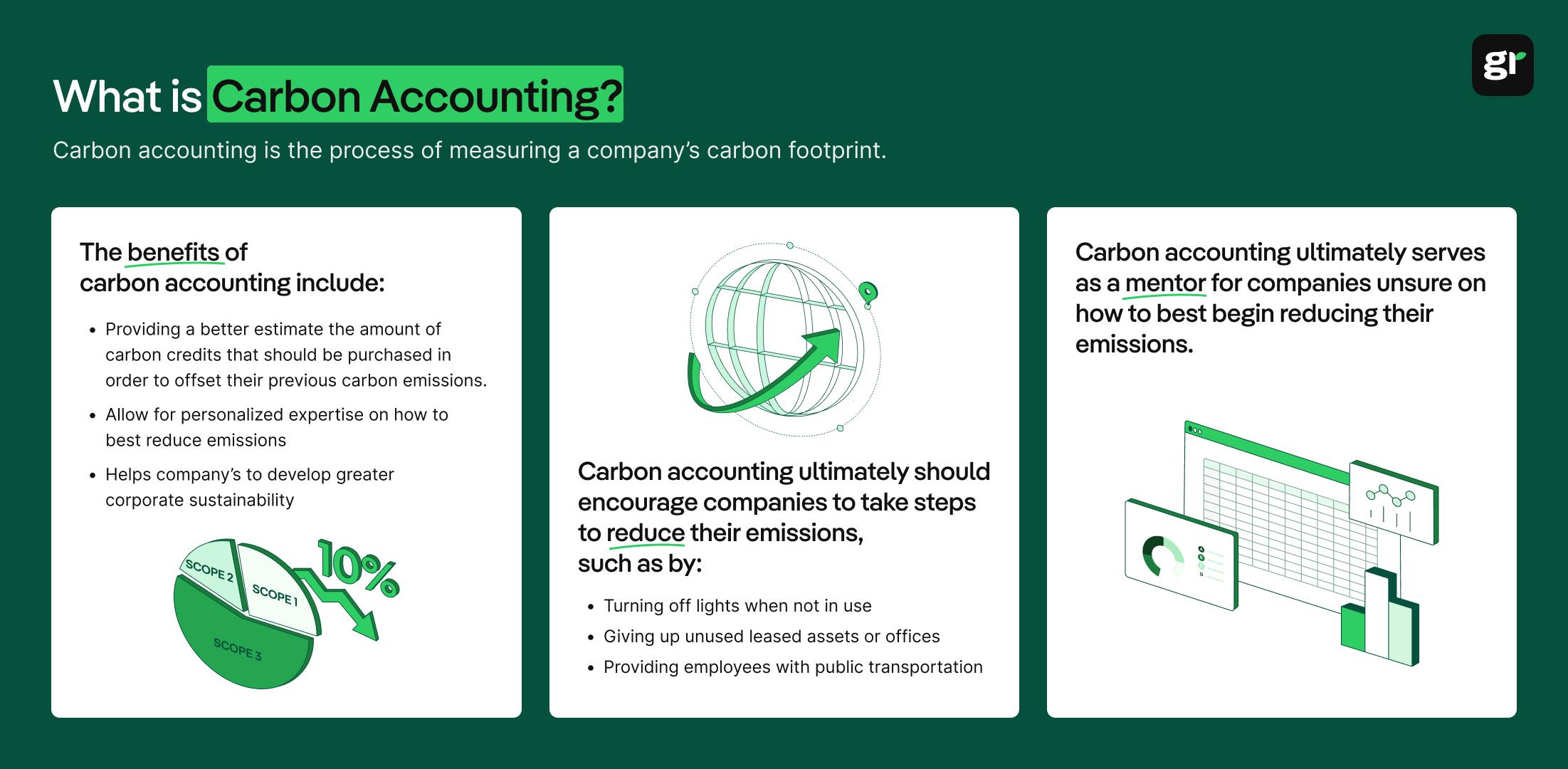
“Carbon footprint” is a popular sustainability buzzword, but some people may not fully understand its meaning.
The phrase refers to the sum of greenhouse gases (carbon dioxide, nitrous dioxide, methane, and HFCs) which our carbon intensive activities and other projects produce typically expressed in CO₂-equivalent units (CO₂e) to standardize the global warming potential of different gases, as defined by the Intergovernmental Panel on Climate Change (IPCC).
Carbon footprints can be calculated for individuals, businesses, cities, or even countries. On average, people in the US have a carbon footprint of 16 tons of CO₂ emissions per year. This is much higher than the global annual average of 4 tons. According to research from the Global Carbon Project, this disparity can have a varied impact across different regions, such as with energy consumption patterns, transportation infrastructure, and consumption habits.
Even this average, however, is still too high to limit global emissions to less than 2℃ by 2100. The average global footprint should drop to 2 tons or less per year by 2050. As demonstrated in "Vision 2050" by the World Business Council for Sustainable Development, there are several pathways for businesses to contribute to a more sustainable future – but this can only happen if we excel in the push for systematic changes across various sectors.
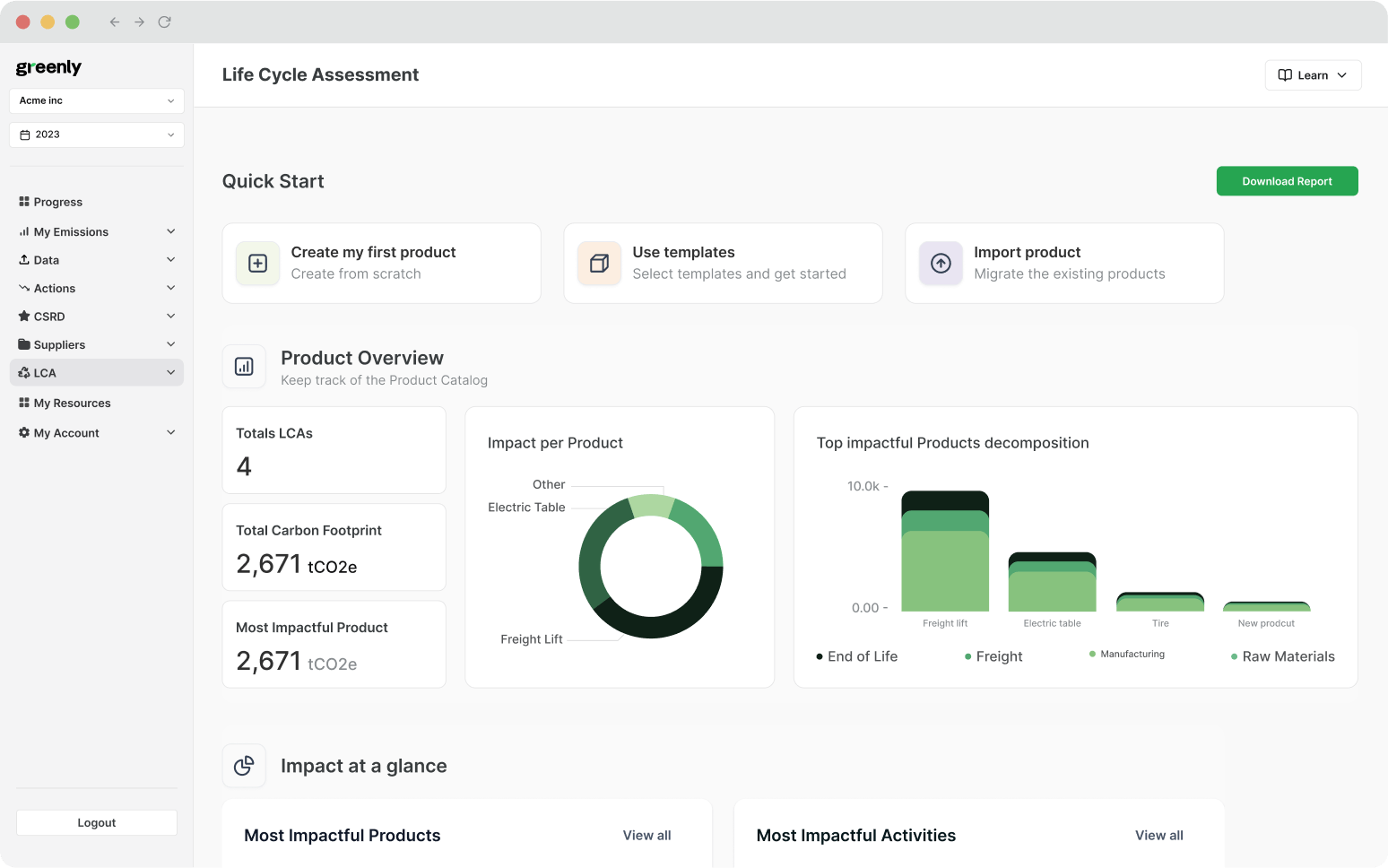
You may have seen carbon footprint calculators online which quickly help you audit your lifestyle for its CO₂ emissions impact. However, these calculators only scratch the surface. Greenly supports its clients with a range of services that are useful for carbon measurement and management.
The Greenhouse Gas Protocol, developed by the World Resources Institute and World Business Council for Sustainable Development, provides the most widely used international accounting framework for quantifying corporate emissions.
The vertical timeline below will reveal how companies can calculate the carbon footprint of their company:
Determine which facilities, business units, or assets fall under your footprint calculations.
List all activities and processes that emit greenhouse gases (Scopes 1, 2, and 3).
Gather energy bills, supplier reports, business travel logs, and procurement data.
Apply relevant emissions factors to convert activity data into CO2e equivalents.
Multiply activity data by emissions factors to determine your carbon footprint.
Organize emissions into Scope 1 (direct), Scope 2 (indirect energy), and Scope 3 (indirect value chain).
Disclose findings in line with standards (like GHG Protocol) and identify areas for reduction.
With that baseline established, your organization can effectively measure progress relative to the starting point. This helps you scope out actions that could immediately minimize your CO2 footprint and allow for cost savings, or even reduce costs – while also improving efficiency.
The baseline also helps organizations develop strategies with a timeline, budget, and KPIs – like any management problem in an organization. Your carbon dashboard is a communication tool for benchmarking performance, highlighting progress, and building trust.
Here is how carbon management can prove beneficial in these areas:
Professor Michael Porter of Harvard Business School has discussed the importance of implementing ESG criteria into business strategies. For example, in research co-published with Mark Kramer, they break down the concept of "shared value," and how businesses could gain long-term value by addressing ESG issues.
These assess the total level of CO₂ emissions per year for a range of business activities. A carbon footprint measurement converts the activities of your organization into a tangible set of facts and figures.
According to the International Organization for Standardization (ISO), utilizing ISO 14064-1 can allow companies access to a more detailed overview for both direct and indirect emissions sources, providing organizations with a complete inventory that serves as the foundation for strategic carbon management.
These activities may fall within different Scopes. The 3 main Scopes worth addressing include:
Here's a breakdown comparing and contrasting the different scope emissions:
Most emissions fall under scope 3, and reporting recommendations are increasingly concerned with these emissions — as scope 3 upstream emissions alone can account for up to 70% of a company's overall emissions — with downstream scope 3 often adding still more. Research published in Communications Earth & Environment found that a majority of the scope 3 emissions counted toward current science-based targets sit in supply-chain tiers that are hard to trace, underscoring why carbon accounting for scope 3 remains so difficult. Assessing the carbon footprint of Scope 3 emissions often benefits from the support of a partnering organization familiar with the latest measurement techniques.
The same digital monitoring, reporting, and verification (MRV) technologies being developed for carbon-credit programs are increasingly informing how companies verify their own emissions reporting.

Unlike a carbon footprint, which assesses organizational activities for a given period of time, life cycle analysis looks at how CO2 emissions and other environmental impacts occur across the useful life of a product or service.
The International Organization for Standardization (ISO) has established the ISO 14040 and 14044 standards to govern life cycle assessment methodologies, as both of these standards help to provide a structured framework for corporations to follow worldwide.
Let’s use a product as an example for the emissions created over a product's entire existence:
Therefore, a life cycle analysis produces a flow chart to illustrate how a product is made, transported, used, and eventually disposed. Along each step of the flow chart there are related CO₂ emissions to measure and assess.
Businesses have play a central role in helping to reduce the amount of greenhouse gas emissions in the atmosphere, because a large amount of emissions occur during the production and distribution of goods and services, which individuals cannot change.
Here are two evidence-based examples:
Christopher Davis
International Director of Corporate Responsibility and Campaigns, The Body Shop, from the 2018 documentary Closing the Loop
Renewable energy sources provide low-carbon opportunities for energy consumption. Renewable energy sources include solar, wind, hydropower, geothermal, power plants, and a range of other opportunities. Most of these energy sources produce no CO₂ emissions once they are operational, proving that power generation doesn't need to create excessive carbon emissions.
When a company reports its energy and fuel mix in a carbon footprint assessment, each type of energy is associated with a different level of CO₂ emissions. By sourcing renewable energy, a business can report zero emissions in this category and improve their carbon management.
So how should a company verify its use of renewable energy? The answer varies depending on which country or region an organization operates in. Here are a few different opportunities:
Aside from these certificates, companies can also join one of several initiatives to demonstrate their support for expanding renewable energy sources.
The summary cards below will paraphrase the main points of each of these ways to verify the use of renewable energy:
Let U.S. companies support renewable power generation—even when it’s not locally available—by buying credits equal to 1 MWh of clean energy each.
In the UK, REGOs prove that electricity comes from 100% renewable sources—providing traceable, Ofgem-backed certification to businesses.
A global initiative uniting 400+ companies across 150+ markets, all committed to going 100% renewable.
This UN-backed effort pushes for energy matching in real time—ensuring clean energy is used every hour of every day, not just averaged annually.
The COVID-19 pandemic caused many workplaces to expand their digital and remote working systems out of necessity. Lockdown meant that people couldn't easily travel for conferences or work in shared office spaces.
As a result, a wide range of digital opportunities became more widely used: Zoom, Skype, Slack, and Clubhouse offered networking opportunities both within organizations and externally.
From a carbon footprint perspective, digital working opportunities significantly cut down on the number of work commutes and air miles spent on travel for work purposes. Even after the world opened back up again, most conferences and events still offer reduced-rate entry for digital attendees.
For hard-to-reduce air miles, companies should be aware that every passenger seat type has a different carbon footprint. Areport by Condé Nast Traveler reveals that a round-trip flight from New York to Los Angeles in economy class emits approximately 1,247 pounds of CO₂ per passenger, with the same flight in business class accounting for nearly 25,000 pounds of CO₂.
Employee commutes aren’t the only thing to consider, as studies reveal that companies with fleets of vehicles can reduce their CO₂ emissions by switching to electric vehicles, hybrid, or alternative fuel-source vehicles.
It’s important to think beyond road-based vehicles, too. This includes fleets of lawn mowers, utility vehicles, forklifts, and other equipment used in the operations of a business. Remember, off-road equipment can also account for a significant portion of operational emissions for certain industries such as construction and agriculture.
The driving habits of your employees can also make a considerable difference in terms of the overall CO₂ footprint of a company. To address this, training on low-emissions driving styles, ride sharing incentives, and route optimization can all improve a company’s transportation-based emissions.
Finally, promoting alternatives to internal combustion engine vehicles such as trains, bikes, and metro all offer carbon management techniques worth exploring – as transportation is repeatedly proven to be one of the main sources of emissions contributing to climate change.
There are literally hundreds of ways businesses can optimize their energy efficiency, and in addition to helping the climate crisis – it can help your company to reduce operational costs and save money. Until you undergo a carbon footprint assessment, these opportunities might not seem obvious.
Retrofits, technology swaps, smart technologies, and operational and behavior changes can all improve energy efficiency metrics. This is why carbon management benefits from innovation and thinking outside the box.
Here are a few ideas to employ energy efficiency:
Heating and cooling contribute significant amounts of CO2 emissions. One of the most impactful green building strategies you can make is switching from a natural gas heater or boiler heater to an energy efficient heat pump.
However, this will require an upfront cost. Researching incentives from your local government may help you finance the shift. The Database of State Incentives for Renewables & Efficiency (DSIRE) at provides an overview of the incentives and policies supporting energy efficiency and renewable energy in the United States.
Operational adjustments can go a long way to cut down on the excess. Smart thermostats can adjust the indoor temperature according to the outside temperature automatically and shift temperature during day and nighttime.
To reduce cooling costs, inventive approaches such as:
Data storage centers often use excess cooling to keep the servers from overheating. However, improving the accuracy of the temperature in the center can cut down on unnecessary cooling costs. This could mean raising or lowering the ambient temperature a few degrees, since ASHRAE recommends server-inlet temperatures stay within 18°C to 27°C (64.4°F to 80.6°F).
Every item in your office has a life cycle which could prematurely send materials to the landfill. Procurement strategies have proven effective in reducing the amount of unnecessary waste created.
This can include purchasing recycled or used goods, or leasing office furniture. Circular business models that lease equipment and offer repair and maintenance services can extend the useful lifespan of items.
All of the small supplies that are quickly used up in an office such as food, drinks, paper, or other supplies can all be optimized for low-waste alternatives. Composting, food donations, and storing files electronically can all minimize waste from these supplies.
Electronics contribute significant waste each year, so ensuring that your company prioritizes recycling e-waste and repair services is another way to minimize waste. The U.S. Environmental Protection Agency estimates that recycling one million laptops saves energy equivalent to the electricity used by more than 3,500 U.S. homes in a year.
Every item that is sent to the landfill adds to your carbon footprint. Remember, The EPA's Waste Reduction Model (WARM) tool allows organizations to determine their greenhouse gas emissions reductions depending on different waste management practices, helping to prioritize waste reduction strategies with the greatest carbon impact.
Carbon footprint management is the ongoing process of measuring, reducing, and reporting a company's total greenhouse gas emissions across Scope 1, 2, and 3. It's essentially another term for carbon management, with a stronger emphasis on the measurement side.
Carbon and energy management combines emissions tracking with energy use optimization, since energy consumption is usually a company's largest source of controllable emissions. Many businesses manage both under a single environmental management system.
A carbon management system is the software, processes, and policies a company uses to measure, track, and reduce its greenhouse gas emissions — platforms like Greenly's Climate Suite are built specifically to support this.
A carbon management program is a company's structured, ongoing initiative to manage emissions, typically covering target-setting, data collection, supplier engagement, and regular progress reporting.
Carbon management helps companies cut costs through energy efficiency, meet regulatory requirements, attract sustainability-focused investors and customers, and reduce exposure to climate-related financial risk.
Match the system to where you are in the five-stage cycle above. A company still establishing its baseline needs strong data collection and Scope 3 coverage first; one further along needs stronger target-tracking and reporting-alignment tools instead. Beyond that, check it maps to the frameworks you actually report against, such as California's SB 253 or the SEC's evolving rules, and that it can trace every figure back to its source, since that's what auditors ask for first.
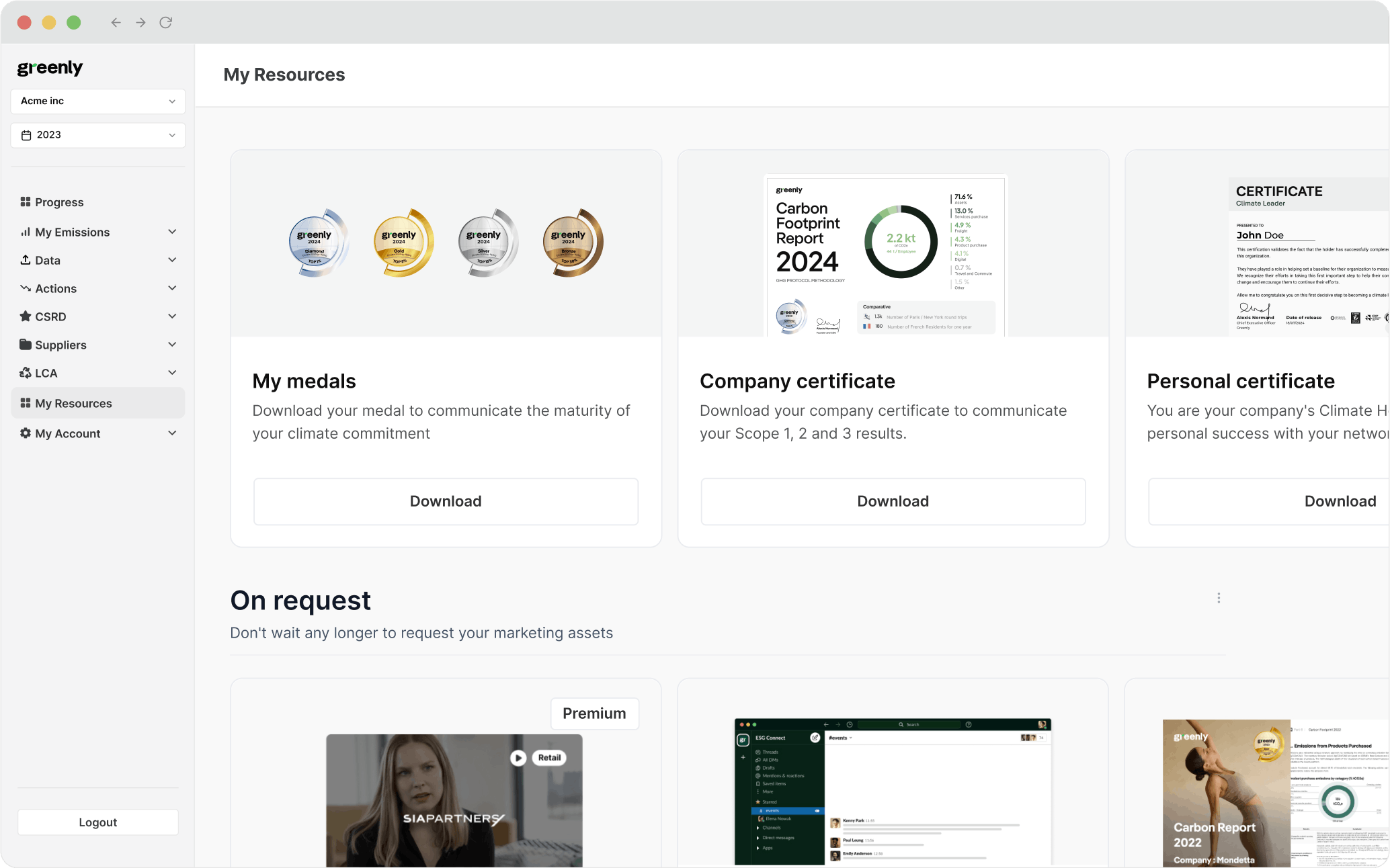
Greenly helps businesses conduct carbon footprint assessments and develop carbon management strategies to draw down emissions.
Click here to learn more about Greenly and how we can help you reduce your carbon footprint.
Don't wait any longer, take the first step towards reducing your carbon footprint by requesting a free and non-binding demo with one of our experts today and finding the solution that best fits your business needs.
Environmental Protection Agency, "GHG Reduction Programs & Strategies," epa.gov/climateleadership/ghg-reduction-programs-strategies
International Energy Agency, "Energy Efficiency 2020 – Energy efficiency in 2019," iea.org/reports/energy-efficiency-2020/energy-efficiency-in-2019
World Resources Institute, "Greenhouse Gas Protocol initiative," wri.org/initiatives/greenhouse-gas-protocol
Science Based Targets initiative, "SBTi celebrates 10,000 company validations," sciencebasedtargets.org/news/sbti-celebrates-10000-company-validations
Corporate Leaders Group, "Business quotes on raising climate ambition for 2030," corporateleadersgroup.com/corporate-leaders-group-europe/business-and-investor-ceo-letter/business-quotes-on-raising-climate-ambition-for-2030
ScienceDirect, "Cost optimization methodology based on carbon-techno-economic analysis: An application to post-combustion carbon capture process," sciencedirect.com/science/article/abs/pii/S0959652623040453
McKinsey & Company, "The triple play: Growth, profit, and sustainability," mckinsey.com/capabilities/strategy-and-corporate-finance/our-insights/the-triple-play-growth-profit-and-sustainability
Greenly, "How Siemon Enhanced Emission Accuracy and Net-Zero Strategy with Greenly," greenly.earth/en-us/case-study/the-siemon-company-greenly-case-study
Springer Nature (Scientific Data), "National contributions to climate change due to historical emissions of carbon dioxide, methane, and nitrous oxide since 1850," nature.com/articles/s41597-023-02041-1
NASA Goddard Institute for Space Studies, "Hansen et al. 2013: Assessing 'dangerous climate change'," giss.nasa.gov/pubs/abs/ha08510t.html
Unilever, "Unilever to invest €1 billion to eliminate fossil fuels in cleaning products by 2030," unilever.com/news/press-and-media/press-releases/2020/unilever-to-invest-1-billion-to-eliminate-fossil-fuels-in-cleaning-products-by-2030
Unilever, "Clean Future: one year on – how innovation is driving growth," unilever.com/news/news-search/2021/clean-future-one-year-on-how-innovation-is-driving-growth
Unilever, "Unilever's Climate Transition Action Plan," unilever.com/sustainability/climate/our-climate-transition-action-plan
Urban Land Institute Europe / C Change, "Accelerating Accountability: The Case for Carbon Pricing," europe.uli.org/wp-content/uploads/2024/10/Accelerating-Accountability-the-Case-for-Carbon-Pricing.pdf
McKinsey & Company, "Climate risk and response: Physical hazards and socioeconomic impacts," mckinsey.com/capabilities/sustainability/our-insights/climate-risk-and-response-physical-hazards-and-socioeconomic-impacts
World Economic Forum, "Innovation and Adaptation in the Climate Crisis: Technology for the New Normal," www3.weforum.org/docs/WEF_Innovation_and_Adaptation_in_the_Climate_Crisis_2024.pdf
Deloitte, "2024 CxO Sustainability Report," deloitte.com/global/en/issues/climate/content/deloitte-cxo-sustainability-report.html
S&P Global, "Risky Business: Companies' Progress On Adapting To Climate Change," spglobal.com/sustainable1/en/insights/special-editorial/risky-business-companies-progress-on-adapting-to-climate-change
Transition Pathway Initiative, "TPI State of Transition Report 2024," transitionpathwayinitiative.org/publications/uploads/2024-tpi-state-of-transition-report-2024
IFRS Foundation, "ISSB and TCFD," ifrs.org/sustainability/tcfd
ZEW – Leibniz Centre for European Economic Research, "Financing the green transition: The role of private capital," ftp.zew.de/pub/zew-docs/policybrief/en/pb04-25.pdf
Greenhouse Gas Protocol, "For Companies and Organizations," ghgprotocol.org/companies-and-organizations
ResearchGate, "Strategy and Society: The Link Between Competitive Advantage and Corporate Social Responsibility," researchgate.net/publication/6616248_Strategy_and_Society_The_Link_Between_Competitive_Advantage_and_Corporate_Social_Responsibility
UCAR Center for Science Education, "What's Your Carbon Footprint?," scied.ucar.edu/learning-zone/climate-solutions/carbon-footprint
Friedlingstein et al., "Global Carbon Budget 2024," Earth System Science Data, essd.copernicus.org/articles/17/965/2025
World Economic Forum, "Scope 3 emissions are key to decarbonization – but what are they and how do we tackle them?," weforum.org/stories/2023/09/scope-3-emissions-are-key-to-decarbonization-but-what-are-they-and-how-do-we-tackle-them
Springer Nature (Communications Earth & Environment), "Net-zero greenhouse gas mitigation potential across multi-tier supply chains," nature.com/articles/s43247-025-02173-9
ACS Publications (Environmental Science & Technology Letters), "Digital Monitoring, Reporting, and Verification Technologies Supporting Carbon Credit-Generating Water Security Programs," pubs.acs.org/doi/10.1021/acs.estlett.4c01048
Ellen MacArthur Foundation, "Completing the Picture: How the Circular Economy Tackles Climate Change," ellenmacarthurfoundation.org/completing-the-picture
The Nature Conservancy, "Carbon Footprint Calculator," nature.org/en-us/get-involved/how-to-help/carbon-footprint-calculator
Sustainable Brands, "'Closing the Loop' Doc Stresses Imperative for Circular Revolution, Shares Success Stories," sustainablebrands.com/read/defining-the-next-economy/closing-the-loop-doc-stresses-imperative-for-circular-revolution-shares-success-stories
WECC, "Western Renewable Energy Generation Information System (WREGIS)," wecc.org/program-areas/wregis
The Climate Group, "RE100 Members," there100.org/re100-members
Condé Nast Traveler, "How to Purchase Carbon Offsets for Your Next Flight," cntraveler.com/story/how-to-purchase-carbon-offsets-for-your-next-flight
Carbone 4, "Road Transportation: What Alternative Motorisations Are Suitable for the Climate?," carbone4.com/files/wp-content/uploads/2021/02/Road-transportation-what-alternative-motorisations-are-suitable-for-the-climate-Carbone-4.pdf
U.S. Department of Energy, "Lighting Choices to Save You Money," energy.gov/energysaver/lighting-choices-save-you-money
DSIRE, "Database of State Incentives for Renewables & Efficiency," dsireusa.org
ASHRAE, "Emergence and Expansion of Liquid Cooling in Mainstream Data Centers," ashrae.org (see note below)
Environmental Protection Agency, "Electronics Donation and Recycling," epa.gov/recycle/electronics-donation-and-recycling
Share this article


More articles
View allCarbon Footprint Management Software: Top 10
Compare 10 carbon footprint management software platforms for US businesses: carbon accounting, Scope 3 tracking, reporting and decarbonization tools.

Impacts, Risks, and Opportunities (IRO) for CSRD Reporting
In this article, we’ll break down what IROs are, how to identify and assess them, and what CSRD requires in terms of disclosure.

Decarbonization: what it is and why it matters
What is decarbonization, and why is it urgent? Learn practical steps companies can take to support the global move toward net zero emissions.
