Carbon Footprint Management Software: Top 10
1 min
Level
Compare 10 carbon footprint management software platforms for US businesses: carbon accounting, Scope 3 tracking, reporting and decarbonization tools.


By Stephanie Safdie, US Copywriter,
Updated by Kara Anderson, on 03/30/2026
Setting up an Environmental Management System (EMS) is one thing; making it actually work for your business is another. While many companies feel the pressure to go green because of new reporting laws or supply chain demands, the actual process of building a system from scratch can feel like a massive administrative burden.
This is where ISO 14004 becomes useful. It isn't a set of rigid rules you have to pass to get a certificate. Instead, it’s a practical guide designed to help you figure out what an EMS should look like for your specific operations. Whether you are trying to fix a system that isn't delivering or you're just starting out, this standard provides the technical how-to that most other frameworks leave out.
What ISO 14004 actually is
The core features
Strategic benefits
How to implement it in your company

At its core, ISO 14004 is a roadmap for building and maintaining an effective Environmental Management System (EMS). While other standards tell you what requirements you need to meet, ISO 14004 focuses on the how. It provides the practical explanations, examples, and help that many businesses find missing when they first look at environmental regulations.

A common point of confusion is whether you can "get" ISO 14004. It is important to note that ISO 14004 is a guidance standard, not a certification. You don’t get audited against it to hang a certificate on the wall; instead, you use it as a manual to make your ISO 14001 certification more robust and your day-to-day operations more efficient.
As of early 2026, the International Organization for Standardization has released the ISO 14001:2026 revision. This update has raised the bar, requiring companies to be much more explicit about how climate change and supply chain risks affect their business.
ISO 14004 has become an essential companion to this new revision. It provides the expanded guidance needed to navigate these updated requirements, particularly around environmental transparency and the way a company interacts with its broader ecosystem. Using the two standards together is now considered best practice for any business looking to stay ahead of modern reporting demands.
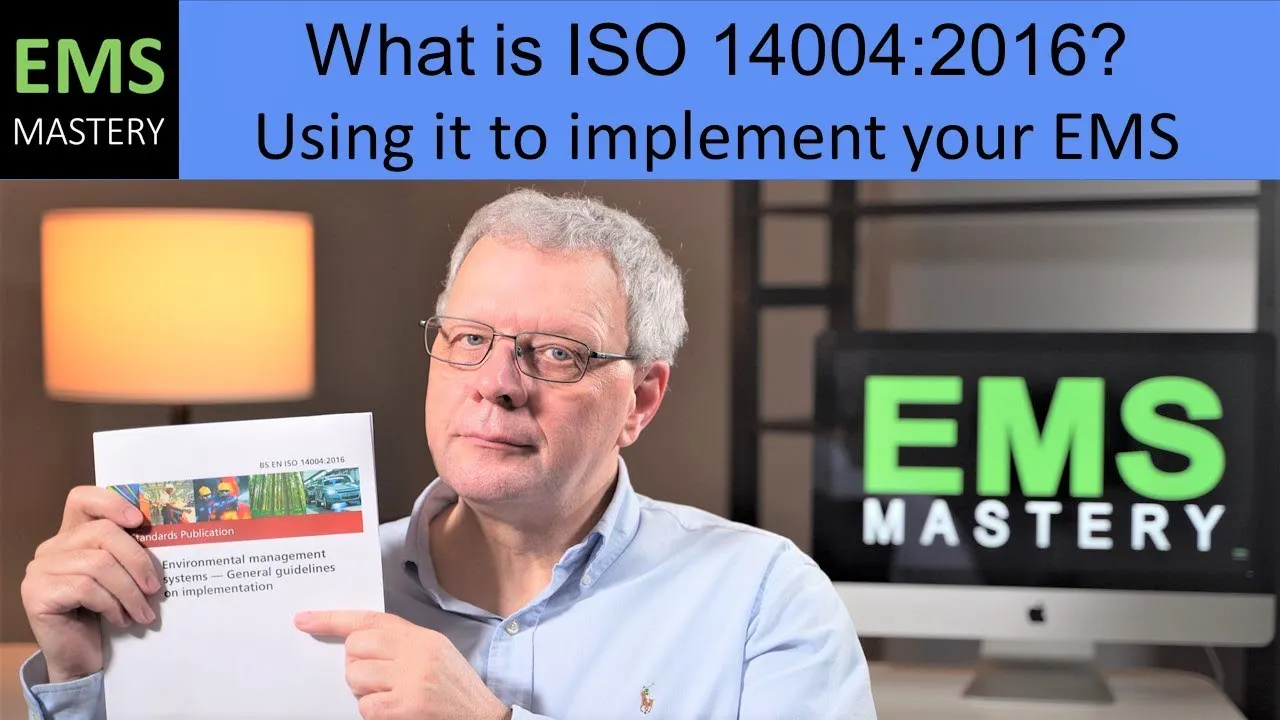

It is easy to get lost in the sea of ISO numbers, but the relationship between 14001 and 14004 is actually quite simple. If you are serious about environmental management, you don’t really choose one over the other - you use them together.
The best way to think about these two is by looking at the language they use.
While you can technically implement ISO 14001 on its own, many companies find the high-level requirements difficult to translate into daily tasks. ISO 14004 fills those gaps, offering a level of detail that makes the certification process much smoother.
In 2026, very few companies manage sustainability in a vacuum. Most successful organizations now use an Integrated Management System (IMS). This is a fancy way of saying they combine all their ISO standards into one single, streamlined process.
Because ISO 14004 follows the same harmonized structure as other major standards, it is designed to plug directly into:
By using ISO 14004 as your guide, you ensure that your environmental efforts aren't just a side project, but a core part of a unified business strategy.
If ISO 14001 is the skeleton of your environmental strategy, ISO 14004 provides the muscle. It breaks down the high-level requirements into actionable features that help a business actually manage its impact.
The standard is built on the Plan-Do-Check-Act (PDCA) model. This isn’t just a theoretical loop; it’s a systematic way to ensure your environmental goals don't get forgotten after a meeting.
In 2026, a company’s footprint is no longer defined just by what happens inside its own walls. ISO 14004 pushes businesses to adopt a Life Cycle Perspective.
This means looking beyond your immediate operations to consider environmental impacts at every stage:
By following this guidance, you can identify Scope 3 emissions and impacts that often stay hidden but are now critical for modern sustainability reporting.
A significant focus of the latest 2026 updates is how a company manages its broader ecosystem. ISO 14004 provides detailed advice on Operational Control, specifically regarding "externally provided processes, products, and services".
In simpler terms: if you outsource a part of your business or buy materials from a third party, you are still responsible for the environmental impact of those choices. The standard helps you build the right controls - such as environmental criteria for procurement and supplier audits - to ensure your partners aren't undermining your sustainability goals.
Using ISO 14004 helps move your environmental strategy from a list of goals to a functional part of your business. In 2026, where data accuracy and cost-control are everything, this guidance provides several practical advantages.
Implementing the guidelines in ISO 14004 doesn't have to happen all at once. Because it is a guidance document rather than a rigid set of audit requirements, you can adopt it in stages to strengthen your existing Environmental Management System.
One of the biggest reasons to use ISO 14004 is that it translates the rigid requirements of ISO 14001 into plain English. The standard is packed with Practical Help Boxes and Informative Annexes that show you what good looks like in the real world.
Throughout the standard, you’ll find dedicated sections that provide specific examples for common hurdles. These include:
Identifying Stakeholders
Use a practical checklist to identify interested parties, from local communities and regulators to employees and insurance providers.
Competence Needs
Match training to each role. A facility manager, procurement officer, and CEO each need different types of environmental competence.
Life Cycle Examples
Follow the product journey from raw materials and design to production, use, and disposal to uncover hidden environmental impacts.
One of the most useful parts of ISO 14004 is Annex A. This section acts as a library of examples that connect business activities to environmental impacts. For example
For smaller companies or those just starting out, Annex B is a game-changer. It outlines a phased approach to implementation. Rather than trying to build a perfect system overnight, it shows you how to establish the basics first - like legal compliance and emergency response - before moving on to more complex areas like life-cycle assessment.
There is no fixed price for implementing ISO 14004. The cost typically involves the purchase of the standard itself from the ISO website (usually between $150 - $200), plus the internal resources or external consultancy fees required to apply the guidance. Because it is a guidance document and not a certification, you do not have to pay for an external registrar to audit you against it.
While ISO 14004 is a voluntary standard, many of the processes it describes are now becoming mandatory under new laws like the EU’s CSRD and various SEC climate disclosures. Using the standard is the most reliable way to ensure your Environmental Management System (EMS) is capable of producing the high-quality, auditable data that these new 2026 regulations require.
Yes. In fact, ISO 14004 is often more helpful for small to medium-sized enterprises (SMEs) than the stricter ISO 14001. It provides the simple explanations and practical examples that smaller teams need to build a system from scratch without needing a full-time sustainability department.
ISO standards are typically reviewed every five to eight years. The current version is ISO 14004:2016. However, with the release of the ISO 14001:2026 revision, the guidance in 14004 is being used more frequently to help companies bridge the gap between old practices and new, more rigorous environmental requirements.
While it doesn't provide a carbon accounting tool, ISO 14004 provides the framework for identifying "Environmental Aspects" throughout a product’s life cycle. This is the essential first step for any company looking to accurately report on Scope 3 emissions, as it helps you identify which parts of your supply chain and product use-phase have the biggest environmental impact.

International Organization for Standardization (ISO), ISO 14031: Environmental management, Environmental performance evaluation, Guidelines

Greenly, ISO 14001: meaning, standard, and requirements
International Organization for Standardization (ISO), ISO 14001: Environmental management systems, Requirements with guidance for use
Greenly, Everything you need to know about LCA (Life Cycle Analysis)
Greenly, What are Scope 3 emissions?
Greenly, What is the Corporate Sustainability Reporting Directive (CSRD)?
Share this article


More articles
View allCarbon Footprint Management Software: Top 10
Compare 10 carbon footprint management software platforms for US businesses: carbon accounting, Scope 3 tracking, reporting and decarbonization tools.

Impacts, Risks, and Opportunities (IRO) for CSRD Reporting
In this article, we’ll break down what IROs are, how to identify and assess them, and what CSRD requires in terms of disclosure.

Decarbonization: what it is and why it matters
What is decarbonization, and why is it urgent? Learn practical steps companies can take to support the global move toward net zero emissions.
