TCFD software helps companies produce climate-related financial disclosures built around the TCFD framework's four pillars: governance, strategy, risk management, and metrics and targets.
The task force itself disbanded in 2023, but its recommendations live on inside IFRS S2 — "TCFD software" still means something concrete today, and it hasn't changed what buyers need from a TCFD tool today. Here are the platforms worth comparing.
In this article, we'll explore:
The four TCFD pillars — governance, strategy, risk management, and metrics & targets — which are still the backbone most climate-disclosure platforms are built around.
California's SB 253 and SB 261, and the UK's new SRS framework, both explicitly accepting TCFD-aligned reporting as a valid compliance path.
The absence of formal "TCFD certification" — vendors align with the recommendations; they don't get certified against them.
Pricing, integrations, and audit-readiness vary widely across the platforms compared below, as the right fit depends on company size and reporting scope.
What is TCFD, and is it still relevant?
TCFD (the Task Force on Climate-related Financial Disclosures) was created by the Financial Stability Board in 2015 to develop a consistent framework for companies to disclose climate-related financial risk. In June 2017, it published recommendations built around four pillars — governance, strategy, risk management, and metrics and targets — which more than 100 companies and financial institutions representing over $3.3 trillion in market capitalisation committed to supporting from launch.
TCFD itself wound down in October 2023, when the Financial Stability Board handed responsibility for monitoring companies' climate disclosures to the IFRS Foundation. The FSB's own reasoning was that the work had succeeded enough to be folded into something larger: it judged the ISSB's new IFRS S2 standard to be "the culmination of the work of the TCFD," since IFRS S2 fully incorporates the original recommendations. That's the view looking back at what TCFD achieved. Looking forward, the IFRS Foundation frames the relationship the other way round: using the TCFD recommendations, it says, is "a good entry point for companies as they move to use the ISSB Standards."
So is TCFD outdated? Not in any way that matters for buyers. The framework's substance, the four pillars and the disclosure structure, is what's now embedded in IFRS S2, and it's also a framework California accepts as a valid way to satisfy SB 253 and SB 261's climate-risk disclosure requirements (more on that just below). "TCFD software" today means software built to produce disclosures against that same structure, whether a company frames its reporting as TCFD-aligned directly or through IFRS S2.
How does TCFD relate to UK SRS and California's SB 253/261?
Three different regulators, three different mechanisms, one common ancestor. The UK's new Sustainability Reporting Standards (UK SRS S1 and S2), finalized 25 February 2026, were built explicitly to replace the patchwork of TCFD-aligned rules, SECR obligations, and voluntary frameworks UK companies had used for years. They're currently voluntary, with the FCA weighing whether to fold them into the Listing Rules.
California took a different route. SB 253 (Scope 1/2 reporting, now due November 10, 2026, after CARB pushed the deadline back from August) and SB 261 (climate-related financial risk, currently unenforced pending a Ninth Circuit appeal) already give companies flexibility to use TCFD- or IFRS S2-aligned disclosures to satisfy their reporting obligations, and CARB has said it intends to build the same interoperability into its forthcoming Scope 3 rules.
Globally, IFRS S1/S2, built on TCFD's structure, had been adopted on a voluntary or mandatory basis in 35 jurisdictions as of mid-2026, with 11 more planning to.
The practical upshot for software buyers: a platform built around the TCFD pillars can usually serve UK SRS, SB 253/261, and IFRS S2 reporting from the same underlying data, rather than needing a separate tool per regulation.
The Best TCFD Software
With more platforms offering AI-powered workflows, audit-ready exports, and compatibility across global frameworks, choosing the right TCFD reporting tool can feel overwhelming. That's why we've compared the most promising solutions on the market — from intuitive entry-level tools to powerful enterprise-grade platforms.
Below, we compare the 10 platforms worth considering:
🥇 The Top 10 TCFD Software
Highlight Feature
1.Greenly
TCFD-aligned workflows mapped to SB 253/261 and IFRS S2
2.AMCS ESG REBRANDED
TCFD reporting integrated with physical operational flows
3.Persefoni
Carbon-to-disclosure automation with investor-grade outputs
4.Novisto ACQUISITION
Unified "all-in-one" source of truth with Minimum's carbon engine
5.IBM Envizi
Enterprise ESG reporting spanning TCFD, CDP, GRI, and CSRD
...and 5 others including CCH Tagetik, Tracera, and Plan A
Scroll on for pricing, features, and why each one made the list.
10. Lucanet
Pricing: Custom pricing based on company size, number of entities, and modules used
Location: Headquartered in Germany, serving clients across Europe and internationally
Key features:
Seamless integration of ESG and financial data for IFRS S1 and S2 alignment
Automated scenario analysis tools for climate-related disclosures (e.g. 1.5°C or 2°C pathways)
Excel-compatible workflows with bulk import functionality and error-reduction automation
Drill-down capabilities for transparent traceability and audit-readiness
Supports multi-framework disclosures (IFRS, CSRD, GRI) through structured reporting modules
Types of customers: Lucanet is ideal for mid-sized to large companies looking to centralize ESG and financial data within a single IFRS-compliant reporting environment. Its Excel-friendly design makes it especially appealing to finance teams transitioning from spreadsheet-based workflows to audit-ready sustainability reporting.
9. Workiva
Pricing: Enterprise-level pricing available on request, typically based on modules and number of users
Location: Headquartered in the United States, with a global client base and offices across Europe, APAC, and North America
Key features:
Real-time collaboration across teams with live document editing, commenting, and version control
Native support for IFRS S1 and S2 frameworks, including TCFD-aligned climate risk disclosures
Automated XBRL tagging for machine-readable, regulator-ready reports
Seamless integration with ERP, ESG, and financial systems to unify sustainability and finance data
Powerful audit trails and workflow tools to support governance and assurance requirements
Types of customers: Workiva is a top choice for large enterprises and multinational organizations that need to manage complex sustainability disclosures across teams, departments, and geographies. It’s especially well-suite
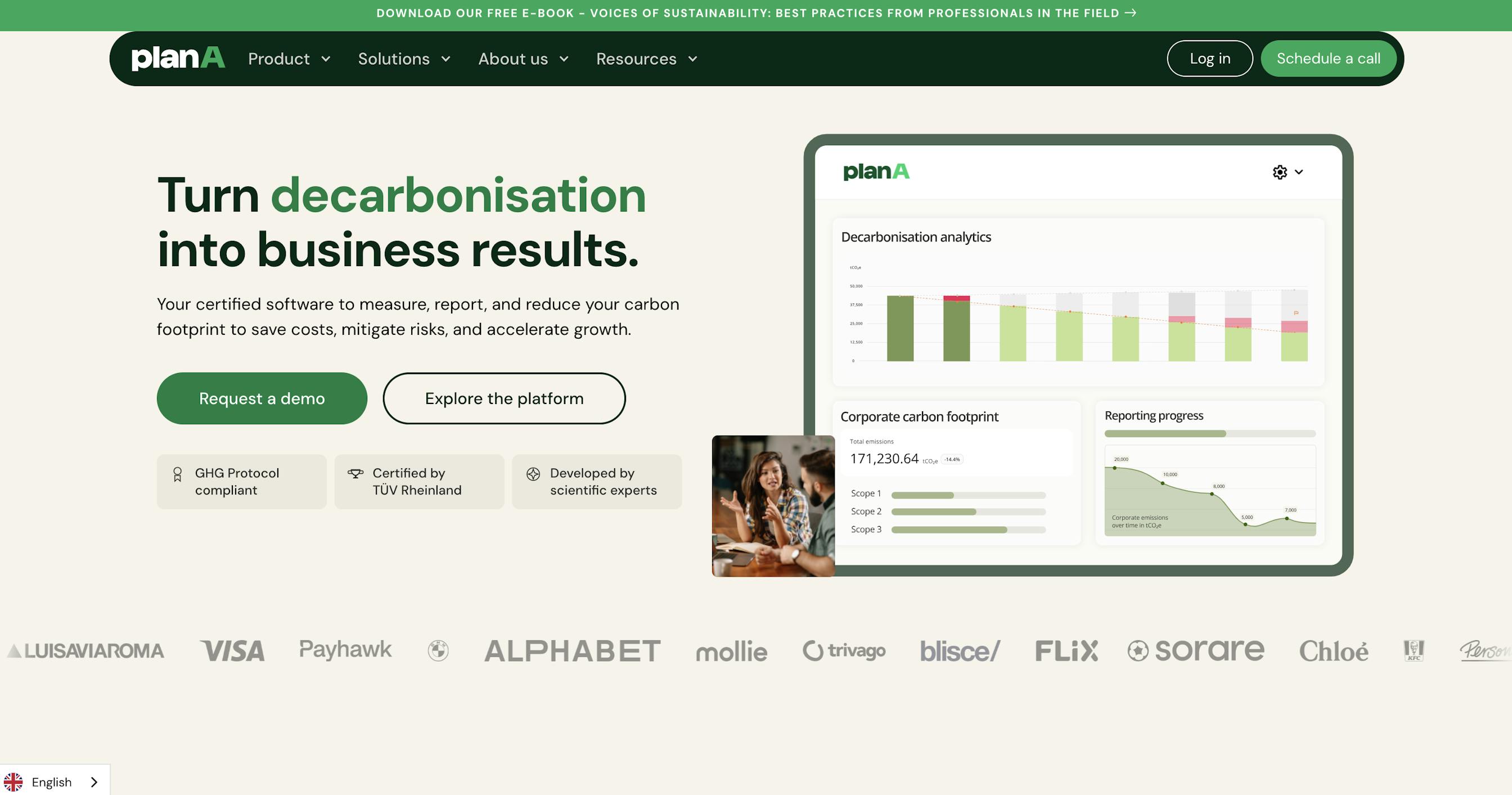
8. Plan A
Pricing: Customized plans based on company size, selected modules, and reporting scope
Location: Headquartered in Germany, with clients across Europe and expanding globally
Key features:
Modular ESG platform supporting IFRS S1 and S2 disclosures alongside CSRD, SBTi, and EU Taxonomy
Built-in double materiality assessments with stakeholder engagement workflows
Scope 1, 2, and 3 emissions tracking aligned with the GHG Protocol
Smart KPIs and pre-configured templates for seamless investor-grade reporting
Automated data workflows and visual dashboards to monitor sustainability performance in real time
Types of customers: Plan A is well-suited to SMEs and mid-sized companies looking for a flexible, all-in-one ESG suite that supports both IFRS and CSRD compliance. It’s especially valuable for businesses operating in Europe that want to prepare for future regulations while managing emissions, targets, and disclosures from a central platform.
7. Tracera
Pricing: Tiered SaaS pricing; available on request based on company size and reporting scope
Location: New York, US, with clients across Europe, North America, and Asia-Pacific
Key features:
Fully structured IFRS S1 and S2 reporting framework with a dynamic completion tracker
Collaborative disclosure workflows with real-time editing, comments, and approval chains
AI-assisted qualitative input for narrative sections like governance, strategy, and risks
System integrations with ERP, ESG, and supply chain tools for seamless data sync
Export-ready reports with audit trails, version control, and investor-facing outputs
Types of customers: Tracera is built for mid-sized to large companies that need a practical, collaborative way to structure and automate their IFRS S1/S2 disclosures. It’s especially valuable for teams managing complex data flows across departments or geographies, and for those looking to streamline qualitative reporting through AI.
6. CCH Tagetik
Pricing: Enterprise pricing available on request; typically modular depending on reporting needs and company size
Location: Global presence through Wolters Kluwer, with strong reach in Europe, North America, and Asia-Pacific
Key features:
End-to-end ESG and financial performance management aligned with IFRS S1 and S2
Automated data consolidation from ERP, ESG, and operational systems
Built-in audit trails, version control, and workflow approvals for compliance assurance
Pre-configured templates for climate risk disclosures, materiality, and GHG reporting
Integration with CSRD, GRI, SASB, and EU Taxonomy frameworks for multi-standard coverage
Types of customers: CCH Tagetik is best suited for large enterprises and multinational organizations that want to unify financial and sustainability reporting in one platform. Its robust financial integration and modular ESG capabilities make it ideal for CFO-led teams seeking IFRS alignment alongside broader corporate performance management.
5. IBM Envizi
Pricing: Custom enterprise pricing depending on scale, modules, and integrations
Location: Headquartered in the United States, with global availability and support
Key features:
Enterprise-grade platform for emissions management, ESG data capture, and regulatory reporting
Full support for IFRS S1 and S2, CDP, GRI, CSRD, and more
Streamlined data import from energy bills, ERP systems, and IoT devices
Strong visual dashboards, scenario modelling, and performance tracking tools
Seamless integrations with IBM’s broader AI and automation stack, including Maximo and Tririga
Types of customers: IBM Envizi is ideal for large organizations managing complex operations across geographies or business units. It’s particularly valuable for companies with mature sustainability programs that need granular control over data pipelines, predictive analytics, and enterprise system compatibility.
4. Novisto
Pricing: Custom pricing depending on modules, user tiers, and integrations
Location: Canada (with global clients across North America, Europe, and Asia)
Key features:
Built-in support for IFRS S1 and S2, with granular alignment to SASB, GRI, and CSRD
Centralized ESG data platform that supports structured disclosures and real-time insights
Powerful data governance capabilities, including audit trails, role permissions, and validation checks
AI-enabled tagging, metrics mapping, and content quality checks for high-assurance reporting
Seamless collaboration tools for cross-functional sustainability and finance teams
Types of customers: Novisto is particularly popular among mid-sized to large firms with ESG teams managing multi-framework reporting. It’s well-suited for organizations that want both control and flexibility – combining automated data flows with expert-led customization and high levels of assurance.
3. Persefoni
Pricing: Free ‘Pro’ tier available. Advanced and enterprise plans are priced on request.
Location: United States (with global reach)
Key features:
Native support for IFRS S1/S2, SEC, CSRD, and other global disclosure frameworks
Climate accounting engine built on the GHG Protocol, with embedded audit trails
Real-time dashboards, decarbonization modelling, and financed emissions tracking
Integrated data assurance workflows and pre-built templates for investor-grade reporting
Robust API and integrations with ERP, HR, and procurement systems
Types of customers: Large enterprises, financial institutions, and investment firms seeking an audit-grade carbon accounting and climate disclosure platform. Ideal for teams preparing for multiple regulatory frameworks or requiring third-party assurance support.
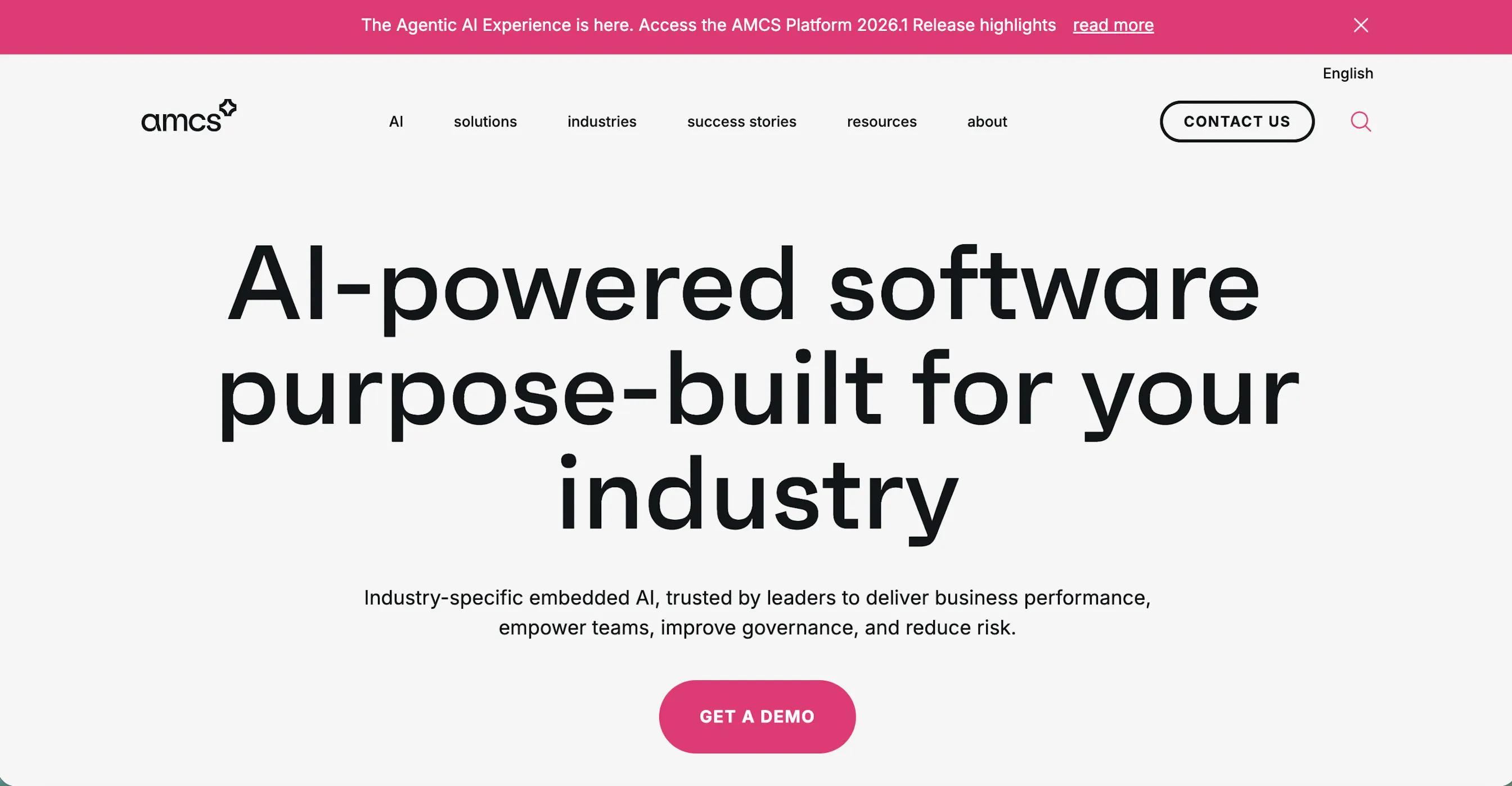
2. AMCS ESG (formerly FigBytes)
Pricing: Custom pricing based on organization size, modules selected, and implementation scope
Location: Global (Headquartered in Ireland via AMCS Group, with major hubs in Canada and Europe)
Key features:
Unified ESG platform covering emissions, water, social impact, and more
Full support for IFRS S1 and S2, with built-in alignment to CSRD, GRI, and SASB
“Impact-in-Motion” data visualization engine for real-time, dynamic storytelling
Policy management and integrated risk and governance features
Audit-ready outputs with strong controls and assurance functionality
Types of customers: Now part of the AMCS 'Environment and Sustainability' suite, it is the premier choice for heavy industries, utilities, and waste management firms that require IFRS-grade reporting integrated into their physical operational workflows and circular economy targets.
1. Greenly
Pricing: Pricing available on request – tailored to company size, scope, and support needs
Location: Headquartered in France, with a global client base across Europe, North America, and APAC
Key features:
TCFD-structured workflows mapped to California SB 253/261 and IFRS S2, as well as CDP and CSRD
Smart GHG accounting powered by EcoPilot, Greenly's AI feature, for fast, audit-ready reporting
Double materiality and climate risk assessments with dynamic dashboards
Scenario planning tools to test resilience across multiple climate pathways
Auto-filled ESG data fields across 15+ frameworks, with built-in audit trails and version control
Dedicated climate experts and personalized onboarding for every client
Types of customers: Ideal for small to large businesses needing TCFD-aligned climate disclosure mapped to SB 253/261 or IFRS S2, without redoing their data model each time a new requirement lands. Especially suited for companies in highly regulated sectors or those seeking investor-grade reporting with expert guidance at every step.
What are the benefits of TCFD-aligned reporting?
Switching from spreadsheets to a dedicated TCFD-aligned reporting platform isn’t just about meeting disclosure requirements – it’s about transforming how your organization approaches climate risk, strategy, and accountability. Here’s what you gain:
⏱️
Save time on TCFD-aligned climate disclosures
Automated reporting reduces the manual burden of climate disclosures
Save time by using software built for TCFD-aligned sustainability reports, without the spreadsheet stress.
📉
Understand risks and financial impacts
Identify transition and physical risks across your operations
Link climate risks to financial strategy with tools built around the TCFD pillars.
📊
Ensure data traceability and compliance
Use investor-grade tools to manage TCFD-aligned ESG data
Maintain audit trails and ensure consistency with the best reporting software for ESG disclosures.
🤝
Collaborate across departments
Make TCFD-aligned reporting a shared responsibility
Assign roles and manage workflows across sustainability, finance, and risk teams with a single platform.
📑
Generate investor-ready reports
TCFD-aligned disclosures at your fingertips
Produce version-controlled, stakeholder-grade reports that meet global climate disclosure expectations.
🔮
Be future-ready
A future-proof platform for sustainability disclosures
Start with TCFD's proven structure, then extend to IFRS S2, UK SRS, or CSRD as requirements evolve.
How to choose the right TCFD software for my business?
With more platforms now supporting TCFD-aligned sustainability disclosures, it can be tricky to know which solution is right for your organization. Here's what to look for when choosing a reporting tool:
1. Start with your business size and internal resources
Do you have a dedicated sustainability or ESG manager?
Will different team members need access to input data?
Are you looking for a one-time report or an ongoing sustainability strategy?
Smaller companies often benefit from intuitive platforms with step-by-step support. Larger or more complex businesses may need a modular, scalable solution with team-based permissions and integrations.
2. Look for TCFD-aligned functionality
Not all ESG software is purpose-built for TCFD-aligned reporting. The best tools for TVFD-aligned ESG data offer:
🔍
Dynamic Materiality
Smart filtering based on the TCFD pillars and IFRS S1/S2 requirements.
📝
Comprehensive Alignment
Frameworks for TCFD, IFRS S1/S2, UK SRS, and SB 253/261.
Agentic AI Guidance
Real-time gap analysis and automated drafting across TCFD, IFRS S2, and regional frameworks.
While some platforms repurpose CSRD or SEC modules, the most effective TCFD-aligned reporting platforms are designed specifically for global baseline compliance.
3. Consider collaboration and support needs
TCFD-aligned climate disclosures often require input from finance, legal, operations, and sustainability teams. Look for a platform that:
Enables cross-functional collaboration
Tracks edits and approvals across departments
Provides access to expert support or technical guidance
💡 Bonus: Some tools offer consultant-backed onboarding or embedded support for IFRS ESG disclosure requirements.
4. Weigh cost against compliance confidence
Prices for TCDF-aligned sustainability software vary widely. Be sure to:
💰
Understand the pricing model – per site, per report, or per user?
🧩
Avoid overpaying for frameworks you don’t need (like EU-specific modules)
📊
Ensure output matches the expectations of TCFD-aligned investors and regulators
5. Future-proof your platform
TCFD sustainability standards are evolving – and so are stakeholder expectations. Check whether your chosen software can:
Scale to support CSRD, SEC, or IFRS S2 frameworks
Incorporate new metrics from the ISSB or other global bodies
Integrate with finance, carbon, and supply chain software
Final tips before you choose:
✅ Is the platform built for TCFD sustainability compliance or just adapted?
✅ Are the export and audit outputs aligned with investor and regulator needs?
✅ Will it support collaboration across your finance, risk, and ESG teams?
✅ Is it flexible enough to evolve with global sustainability standards?
✅ Are AI-powered insights or automation features available to reduce workload?
What does TCFD stand for?
The Task Force on Climate-related Financial Disclosures — a body created by the Financial Stability Board in 2015 to develop a consistent way for companies to disclose climate-related financial risk to investors. It published its recommendations in June 2017 and formally disbanded in October 2023, once its work was folded into the IFRS Foundation's ISSB standards.
Is TCFD reporting mandatory anywhere?
TCFD itself was always voluntary, but three regimes show how differently "mandatory" plays out in practice. The UK was first to build it into binding rules, requiring premium-listed companies from 2021 to state in their annual report whether their disclosures are consistent with TCFD's recommendations, on a comply-or-explain basis (FCA Listing Rule LR 9.8.6R(8)), later extended to standard-listed and large private companies. New Zealand's is the one genuinely mandatory regime, legislating real disclosure obligations for roughly 200 large financial institutions from financial years starting January 2023. Japan's Tokyo Stock Exchange asks Prime Market-listed companies to enhance TCFD-based disclosure on a comply-or-explain basis too, under its Corporate Governance Code. Each of these regimes is now converging with IFRS S2 rather than referencing TCFD by name going forward.
How does TCFD relate to CSRD and ESRS?
The EU's CSRD doesn't reference TCFD directly, but its climate standard, ESRS E1, was built around the same four-pillar structure: governance, strategy, risk management, and metrics and targets. That's a deliberate design choice, not a coincidence, so companies already reporting under TCFD or IFRS S2 aren't starting from scratch when CSRD applies to them too.
What is the status of IFRS S3 and Nature-related disclosures?
In April 2026, the ISSB issued a Practice Statement on Nature-related Disclosures rather than a mandatory S3 standard. This provides a formal voluntary framework for companies to report on biodiversity, water, and ecosystems, heavily aligned with the TNFD (Taskforce on Nature-related Financial Disclosures). Leading 2026 IFRS tools now include these modules to help companies stay ahead of what is expected to become a mandatory S3 standard by 2027.
Is digital tagging (XBRL) required for IFRS sustainability reports?
Yes. To satisfy the requirements of digital-first regulators and AI-driven investment analysts, reports must now be machine-readable. This involves using the IFRS Sustainability Disclosure Taxonomy to apply XBRL tags to S1 and S2 data points. Modern IFRS software automates this tagging process, ensuring your sustainability data is as discoverable and searchable as your traditional financial statements.
What level of assurance is required for TCFD-aligned reports?
Requirements vary by regime, but the direction of travel is the same everywhere: toward third-party assurance. The UK and Australia, among others, have moved to limited assurance requirements for climate disclosures as mandatory regimes mature, meaning an external auditor must review the report. That makes a platform with a clear "meter-to-report" audit trail and transparent data lineage less of a nice-to-have and more of a practical necessity for avoiding greenwashing litigation risk.
Does TCFD cover Scope 3 emissions?
The original TCFD recommendations called for disclosing Scope 1 and Scope 2 emissions, with Scope 3 included "where appropriate" to the business, language IFRS S2 carries forward largely unchanged. In practice, most sectors now treat Scope 3 as expected rather than optional.
Is TCFD-aligned reporting relevant for US companies?
Less so at the federal level than it once looked: the SEC proposed rescinding its 2024 federal climate disclosure rules in May 2026, after signaling the year before that it wouldn't defend them in court. California is where the real weight sits instead. SB 253 and SB 261 both explicitly accept TCFD-aligned disclosure as a valid way to meet their requirements, alongside IFRS S2, so a US company already reporting on a TCFD structure isn't required to rebuild its approach from scratch to comply with California's climate laws.
Is there a TCFD certification?
TCFD was always a set of recommendations, not a certifiable standard, so there was never an accreditation process to complete. Companies and software align with the recommendations rather than getting certified against them, which is why you'll see providers (including this one) describe their platforms as TCFD-aligned rather than TCFD-certified.
SASB vs. TCFD — what's the difference?
TCFD and SASB solve different problems. TCFD gave companies a structure — the four pillars of governance, strategy, risk management, and metrics and targets — for organizing climate-related financial disclosure. SASB, by contrast, provides industry-specific metrics: the particular data points a software company should disclose versus, say, a mining company. Both were absorbed into the IFRS Foundation's International Sustainability Standards Board by August 2022, and IFRS S2 now draws on TCFD for its structure while directing companies to SASB standards for industry-specific detail.
What happens to companies that were already reporting under TCFD before it disbanded?
For companies with disclosures already built around the TCFD structure, nothing about the underlying work needs to change. The IFRS Foundation calls continuing to use the TCFD recommendations "a good entry point" for companies moving toward the ISSB standards, and IFRS S2 was built to fully incorporate them, so those existing TCFD-aligned disclosures carry over rather than needing a rebuild.
Greenly’s support for TCFD sustainability reporting
Greenly supports companies preparing for TCFD-aligned sustainability disclosure, with built-in templates, automated data integration, and guided workflows. Whether you’re adopting IFRS S1 or S2 voluntarily or in anticipation of regulation, our platform is designed to streamline ESG reporting and ensure that it's aligned with investor expectations.
What we offer
How it helps
1. TCFD-structured templates and workflows
Built around the four TCFD pillars, so disclosures map cleanly to UK SRS, SB 253/261, or IFRS S2 depending on what you need to report against.
2. Automated data integration
Sync data from your finance, risk, and ESG systems to reduce manual work and ensure consistency across reports.
3. AI-assisted disclosure drafting
Streamline your reporting process with AI-supported suggestions for key disclosure fields.
4. Guided reporting support
Follow step-by-step workflows that help you understand what's required — and how to meet it.
Close
Greenly, What is ESG data and how to use it
Greenly, What are IFRS Sustainability Disclosure Standards?
Greenly, What is the Corporate Sustainability Reporting Directive (CSRD)
IFRS Foundation, Homepage
IFRS Foundation, IFRS S1 – General Requirements for Disclosure of Sustainability-related Financial Information