


EU ETS: what you need to know about the EU carbon market
1 min
Level
In this article, we'll explore the EU Emissions Trading System (EU ETS), a European initiative for reducing greenhouse gases through a cap-and-trade scheme.


ESG / CSR

Industries

Disclaimer: The figures presented in this analysis are based on Greenly’s latest emissions factors, drawing on publicly available data and averaged assumptions covering production, transport, and consumption patterns. Emissions are expressed per euro spent to reflect real purchasing behaviour and enable comparisons across different types of Valentine’s Day gifts.
As with all environmental estimates, results depend on modelling choices and assumptions, and actual emissions may vary depending on factors such as sourcing, transport mode, and individual consumption habits. While exact values may evolve over time, this analysis provides a robust, order-of-magnitude comparison of the relative carbon impact of common Valentine’s Day purchases.
Let's be real: Valentine’s Day is usually about heart-shaped chocolates and grand gestures, but it also leaves behind a footprint that’s a lot less romantic than a candlelit dinner.
To see how our "I love yous" actually translate into CO2, the team at Greenly crunched the numbers on the carbon impact of February 14th. It turns out that the spike in flowers, jewelry, and last-minute getaways adds up to more than just a hefty credit card bill - it’s a massive surge in emissions.
It’s tough to imagine Valentine’s Day without a bouquet of red roses, but that classic romantic gesture usually carries some heavy "hidden" luggage.
In France, around nine out of ten flowers sold are imported, with the Netherlands acting as the largest supplier within Europe. At the EU level, about a quarter of imported cut flowers come from outside the Union - mainly from Kenya (38% of non-EU imports), Ecuador (17%), and Ethiopia (16%). It’s a clear reflection of just how globalized the flower trade has become.
The Imports: These are grown in naturally warm climates where greenhouses don’t need heating, but they have to endure long-haul flights to reach your vase.
The Locals: These travel much shorter distances, but they are often grown in energy-hungry heated greenhouses to survive the European winter.
In practice, both of these production models result in a high climate impact, just for different reasons.
Greenly’s latest data shows that the carbon footprint of imported flowers sits at 1.27 kg CO2e per euro spent. When you look at the price of a standard bouquet, those emissions add up fast relative to what you're paying.
However, local and seasonal flowers tell a much better story. When you buy blooms grown nearby and in their natural season, the footprint plummets to just 0.13 kg CO2e per euro. That’s nearly ten times lower than the imported alternative.
Jewelry is often seen as the ultimate symbol of a love that lasts, but its environmental footprint can be just as permanent. The extraction of precious metals like gold, platinum, and silver comes with a well-documented cost: water and soil pollution from mining chemicals, alongside serious social impacts like land degradation and the displacement of local communities.

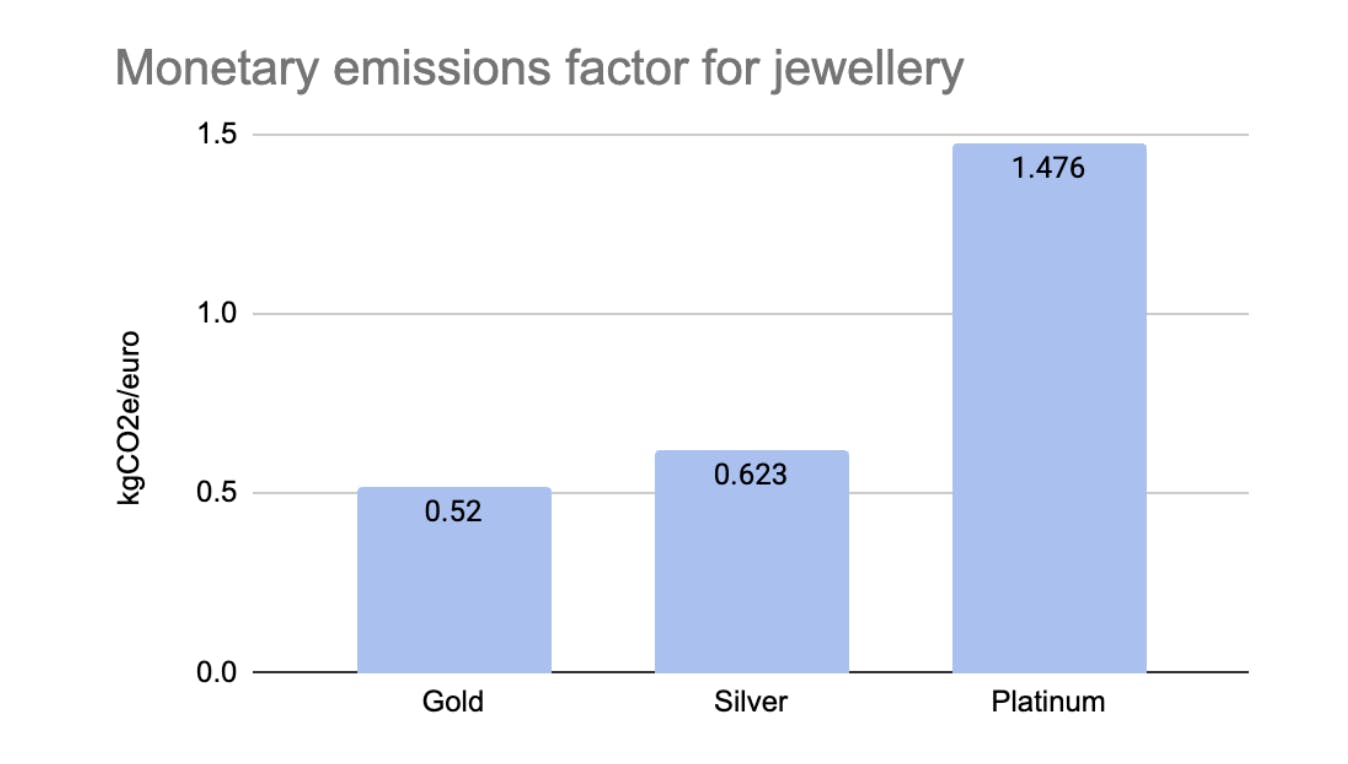
When it comes to the climate, the impact depends entirely on what’s in the box. To make these numbers easier to digest, Greenly has calculated the carbon footprint based on emissions per euro spent rather than weight. This gives a much clearer picture of how your purchase actually affects the planet.
Platinum: The heavyweight champion of emissions at 1.48 kg CO₂e per euro spent.
Silver: Comes in at 0.62 kg CO₂e/€.
Gold: Sits at 0.52 kg CO₂e/€.
Brass: By contrast, alternatives like brass have a footprint that is practically negligible in comparison.
This doesn’t mean you have to cross jewelry off your list entirely. Instead, it shows that the materials you choose make all the difference. You can significantly lower the carbon cost of your gift by opting for simpler designs, exploring alternative materials, or choosing high-quality pieces designed to be cherished for a lifetime rather than replaced.
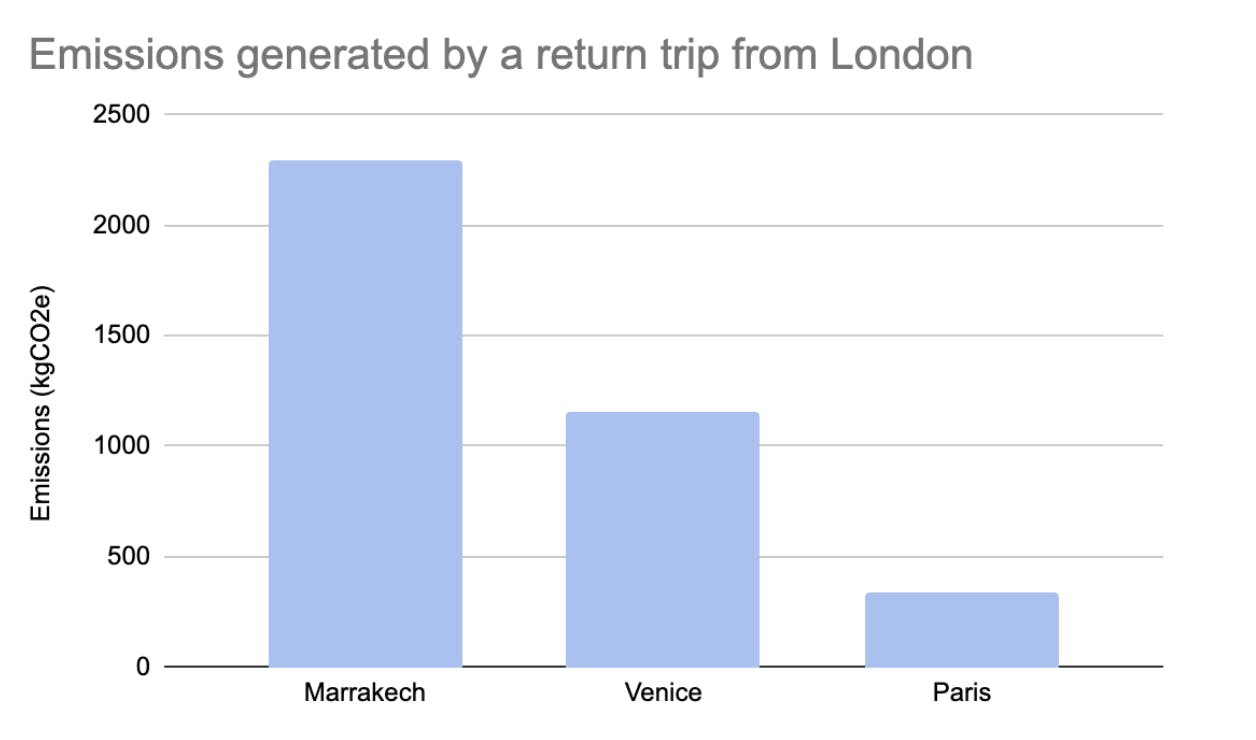
Lots of people go all out for Valentine’s Day by booking a surprise trip. Spots like Venice, Paris, and Marrakech are usually top of the list, and while flying might be the quickest way to get there, those short-to-medium flights come with a pretty heavy carbon price tag.
London to Venice: A return flight generates around 589 kg CO₂e
London to Marrakech: A return flight emits approximately 766 kg CO₂e
London to Paris by Eurostar: A return trip generates just 4 kg CO₂e

When you're planning a surprise, the way you travel is by far the biggest factor. For shorter hops, flying often results in a carbon footprint that feels way out of whack compared to the distance you’re actually covering. On a route like London to Paris, for example, taking the train instead of a plane can massively cut down your emissions - giving you a much more sustainable journey without losing any of the comfort or romance.
It’s not just about the journey; the stay matters too. A hotel’s impact depends on everything from its size to its catering and supply chain. Fortunately, more hotels are stepping up by adopting energy-efficiency measures and pursuing sustainability certifications. Choosing a responsible stay is an easy way to ensure your romantic break doesn't come at the expense of the environment
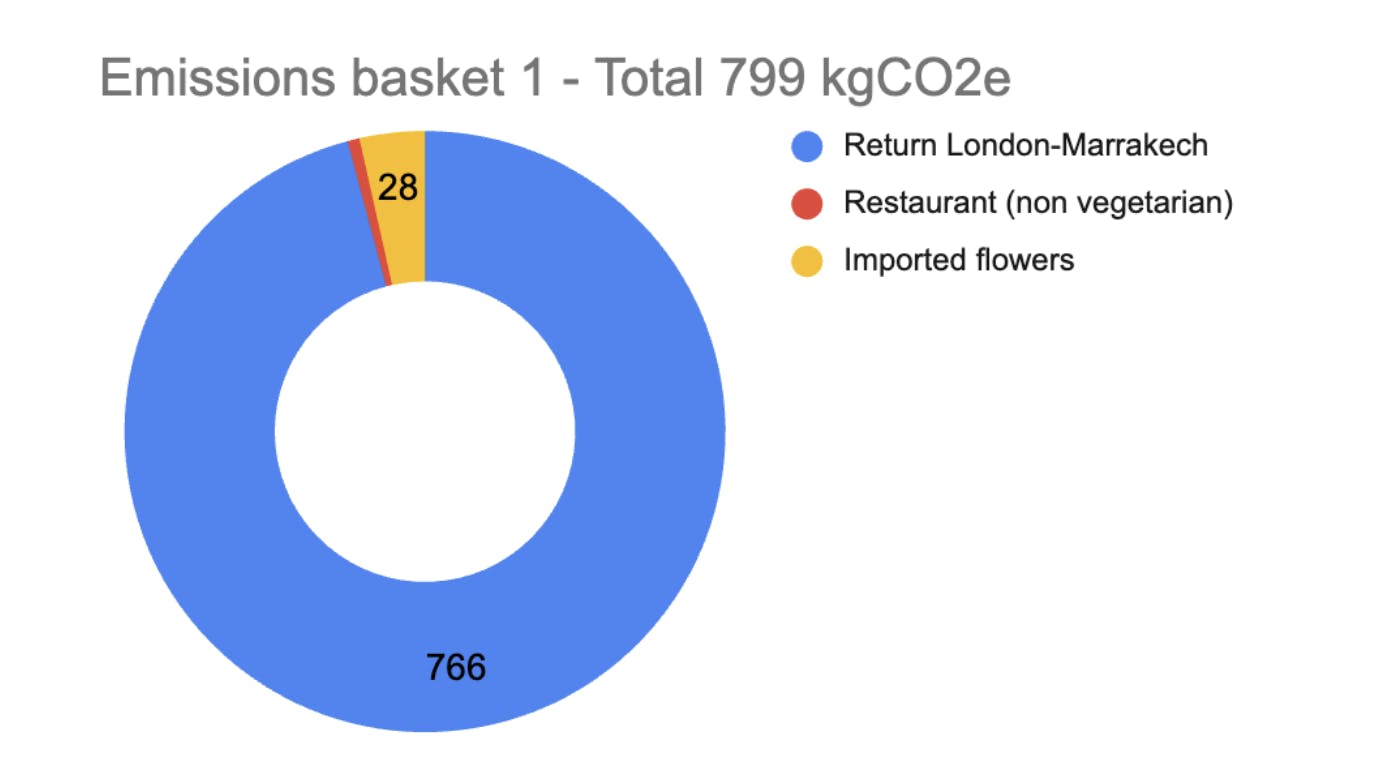
To show how much your choices matter, Greenly modeled three different ways to spend a €200 Valentine’s budget. While the price tag is the same, the climate outcomes couldn't be further apart.
This scenario is built around the classic romantic escape:
Return flights from London to Marrakech: €128 - 766 kg CO2e
A non-vegetarian dinner for two: €50 - 5 kg CO2e
A small bouquet of imported flowers: €22 - 28 kg CO2e
Total: roughly 799 kg CO₂e. Even though it might not break the bank, this option has a massive carbon footprint compared to the others. The flight alone is the real kicker here - it pumps out way more emissions than all the other gifts combined. It’s a pretty clear reminder of just how much air travel can hijack your total impact on a weekend trip.
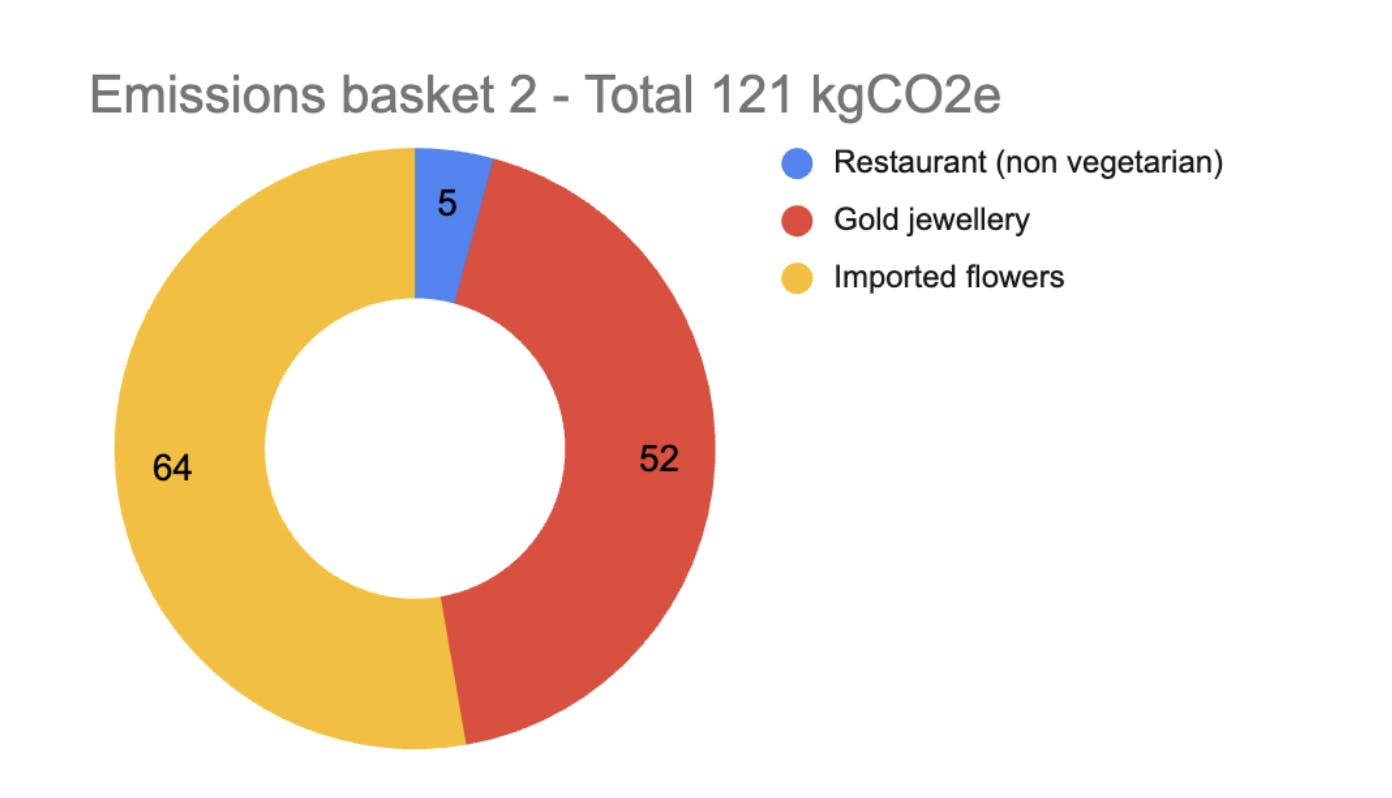
A piece of gold jewelry: €100 - 52 kg CO2e
A large bouquet of imported flowers: €50 - 64 kg CO2e
A non-vegetarian dinner for two: €50 - 5 kg CO2e
Total: Around 121 kg CO₂e. By staying grounded, the footprint drops significantly. However, emissions are still substantial because of the high carbon intensity involved in mining precious metals and flying in out-of-season flowers.
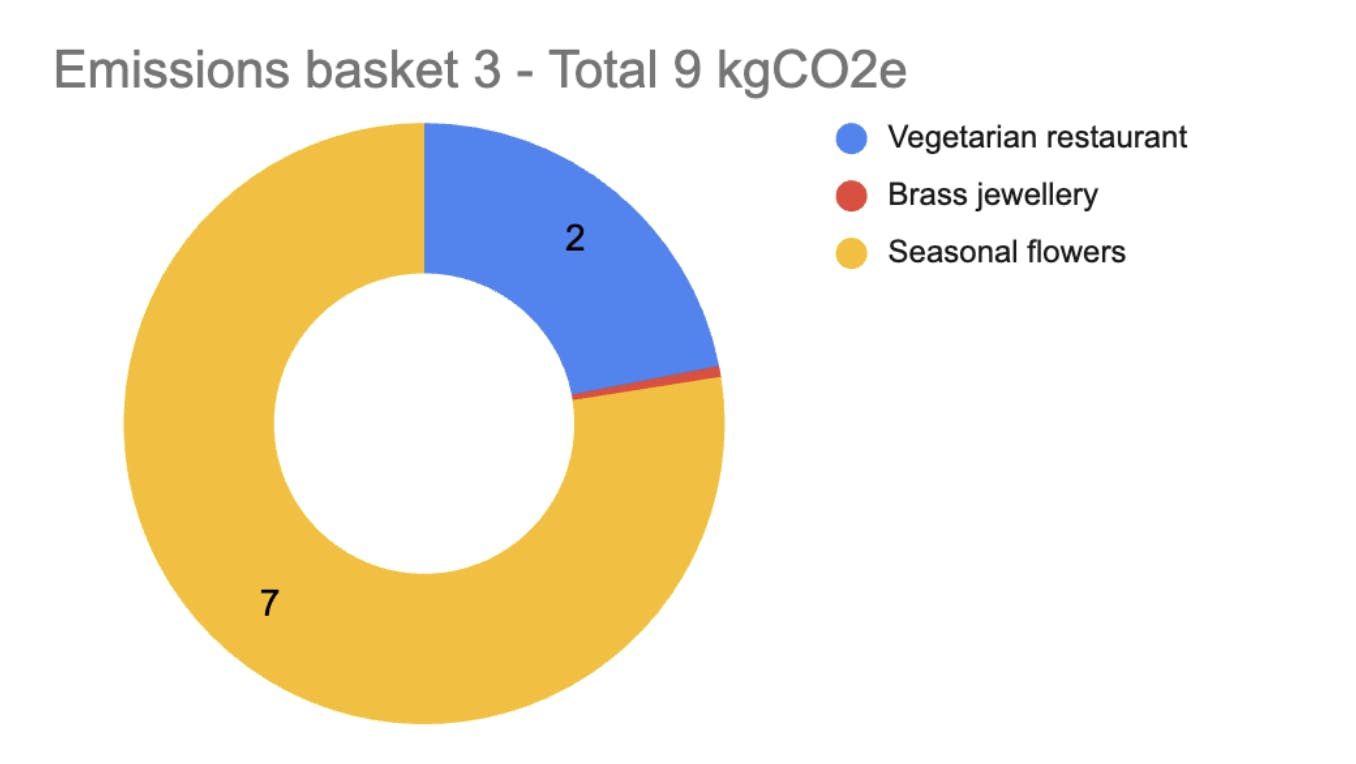
A piece of stylish brass jewelry: €100 - 0 kg CO2e
A bouquet of seasonal, locally grown flowers: €50 - 7 kg CO2e
A delicious vegetarian dinner for two: €50 - 2 kg CO2e
Total: Just 9 kg CO₂e. By making a few conscious swaps - choosing alternative materials, local blooms, and plant-based dining - the footprint plummets. This basket is more than fifty times cleaner than the travel-focused option.
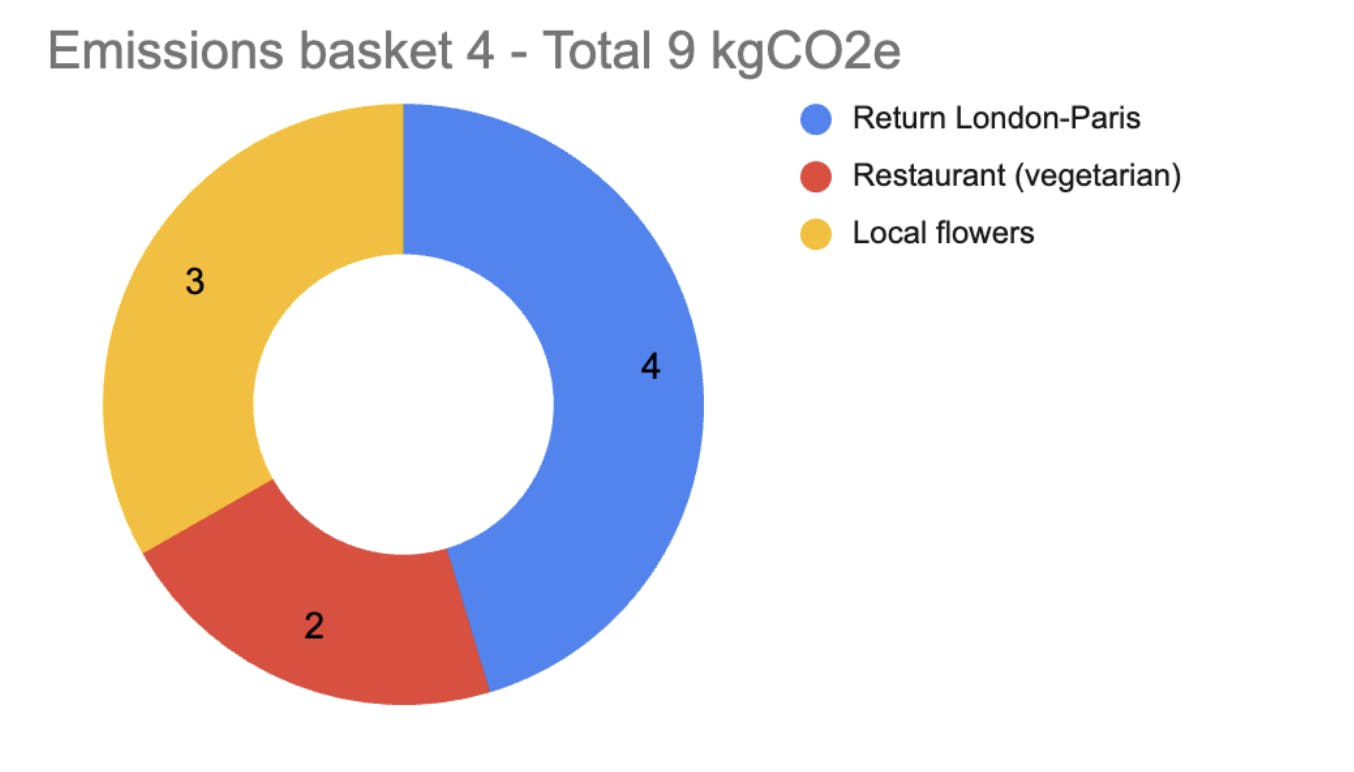
Round-trip from London to Paris via Eurostar (yay for electric rail!): €128 - 4 kgCO2e
A vegetarian dinner out: €50 - 2 kgCO2e
A bouquet of local, seasonal blooms: €22 - 3 kgCO2e
Total: Roughly 9 kg CO₂e. By hopping on the train instead of a plane and leaning into plant-based eats and local flowers, you’re seriously slashing emissions without losing any of the magic. The footprint is pretty evenly split between the travel, the meal, and the flowers, showing that a few mindful tweaks can keep your weekend trip totally sustainable.
These baskets prove that your carbon footprint isn't determined by your budget, but by your choices. You don't have to spend less to be sustainable; you just have to spend differently. Thoughtful alternatives allow you to keep the spirit of the celebration alive at a mere fraction of the climate cost!
 Sources:
Share this article


In this article, we'll explore the EU Emissions Trading System (EU ETS), a European initiative for reducing greenhouse gases through a cap-and-trade scheme.
