EU ETS: what you need to know about the EU carbon market
1 min
Level
In this article, we'll explore the EU Emissions Trading System (EU ETS), a European initiative for reducing greenhouse gases through a cap-and-trade scheme.


By Stephanie Safdie, US Copywriter, on 15/12/2025
The evolution of consumerism and its impact on climate change
Why consumerism poses such a threat to the planet
The realities on if its even effective to stray away from consumerism in our digital age of e-commerce and shopping
In today's world, consumerism has become the new norm – but it wasn’t always this way.
If you showed someone in 1959 the newest Apple Watch, they would be in awe of its ability to track your heart rate and answer phone calls – but someone today would realise that it is only a precedent for future gadgets to come.
An enormously productive economy demands political and economic power, which in turn – usually means further economic expansion through the development of consumer culture and encouraging people to purchase superfluous consumer goods. This type of consumer spending and perpetuate economic growth, serve only a restricted population, and encourage a target consumer market to be developed for conspicuous consumption.
However, what is most concerning about consumerism today is how it will continue to have an impact on climate change – but why?
In this article, we’ll explain what consumerism is, why it is detrimental to the environment, and how we could alter our current consumerism habits to create a more sustainable future.
Consumerism refers to an economic theory that without the inclination to purchase goods and services one does not need, that economic growth would never flourish. This is because if people only bought things when they needed them, businesses would never see the revenue that they currently do – such as Nike selling sneakers.
In fact, the immense productive powers created by consumer demand meant that U.S. consumer credit rose to $7 billion dollars by the 1920s – demonstrating how the economic system's orientation towards profit instead of survival may have awakened a new beast of mass production.

Without consumerism, countries with capitalist economies such as the United States, would suffer – as depicted during the Covid-19 pandemic when the U.S. handed out stimulus checks to “stimulate” the economy.
It is viable to presume that the excessive consumerism that we know today started with the Industrial Revolution – as it ignited the belief and passion amongst human beings that more productivity and creating will bring success and happiness.
After WWI, the U.S. tried to increase it's production rate to help urban middle class people to have access to a better economic life and to develop a steady state economy capable of allowing people to work less and make more to buy all their wonderful stuff.
Therefore, instead of allowing people to work less to allot more time for their creative or educational pursuits or other spiritual and pleasurable activities – many business leaders viewed such a trajectory as a way to push for rampant consumerism.
The vertical timeline below will reveal how consumerism has evolved in our society from the Industrial Revolution until now:
Mechanized factories enable mass production; urbanization grows and affordable, standardized goods begin replacing artisan wares.
Early 1900s–1920s: National brands emerge, print and radio ads shape desire, and consumer credit expands access to goods.
1950s–60s: Rising incomes fuel purchases of cars, appliances, and TV; malls spread and planned obsolescence takes root.
1980s–90s: Offshoring lowers prices, supply chains lengthen, and big-box stores and shopping centers dominate.
2000s: Online shopping, one-click checkouts, and free returns speed buying cycles; trend turnover accelerates.
2010s: Influencers and targeted ads personalize demand; same-day delivery and subscriptions normalize impulse purchasing.
2020s: Resale, repair, rental, and carbon-aware choices rise—balancing sustainability with convenience culture.
Late 2020s+: Generative AI curates products, custom manufacturing reduces inventory, and debates grow over data, waste, and digital goods.
However, it is important to note that consumerism gradually made its way into society – such as with ads during World War II that would entice Americans to buy products that convinced them would be useful in the midst of war.
The United States, China, and the United Kingdom are some of the most consumerism-centric countries on the planet – with countries like United States basing a lot of its culture around purchasing the newest gadgets, electronics, and flashy accessories as a symbol of status.
The table below will reveal which countries have the highest rates of consumerism:
| Country | Consumer Spending (2022, USD Billion) | Annual Growth Rate | Consumer Spending per Capita (USD) |
|---|---|---|---|
| 🇺🇸United States | 17,210 | 3.1% | 52,800 |
| 🇬🇧United Kingdom | 2,456 | 2.7% | 36,700 |
| 🇨🇳China | 9,872 | 6.0% | 7,000 |
| 🇯🇵Japan | 4,970 | 1.5% | 39,600 |
| 🇩🇪Germany | 3,482 | 1.8% | 41,600 |
| 🇮🇳India | 1,524 | 7.2% | 1,100 |
| 🇧🇷Brazil | 1,351 | 2.2% | 6,400 |
| 🇫🇷France | 2,760 | 1.9% | 41,200 |
Source: The World Counts
There are several examples of consumerism, such as buying a new pair of shoes you don't need or, one of the most popular examples of consumerism – when someone goes out and buys a new iPhone when their current mobile device still works fine.
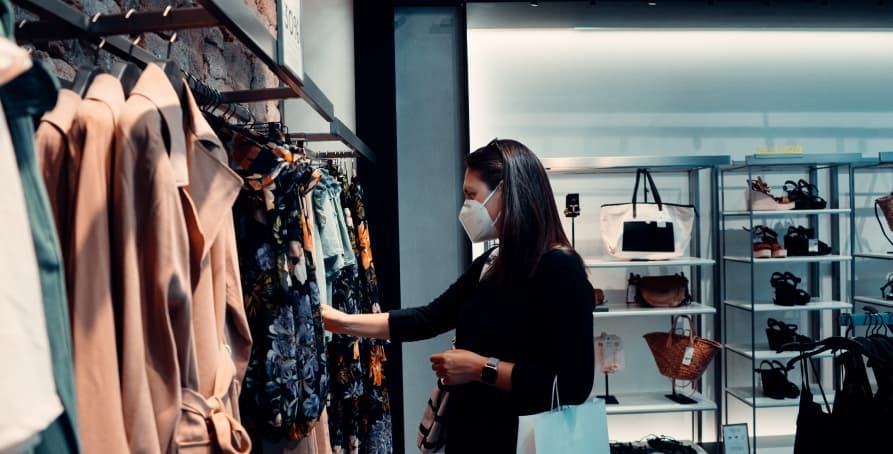
Consumerism refers to any purchase that is made when it is not absolutely necessary – which means that practically anytime you go shopping to the mall when you have some “cash burning a hole in your pocket” can qualify as practicing consumerism.
For instance, if you are one of the people that follows fashion or make-up trends and sets out to buy a new jacket or mascara even if your old jacket isn’t worn out and the old mascara tube is still full – you are subject to consumerism.
One of the hallmark examples of consumerism is Black Friday – which has been now adapted in other countries outside of the United States such as in France and the United Kingdom, which is centered around encouraging people to make purchases on goods they don't absolutely need.


The interactive flip cards below (move cursor over card to flip) will reveal additional examples of consumerism include:
Unbeknownst to most, consumerism is one of the major contributing factors to climate change – as billions of tonnes of ribbons, holiday cards, and trite gifts are thrown away in the U.S. every year, with even enough paper to fill ten football stadiums.

The relationship between consumerism and climate change may not be evident. However, the reality is that even if you aren’t a business owner responsible for hundreds of tonnes of carbon emissions on an annual basis – your consumerism habits probably still contribute to climate change.
Psychology isn’t off when it claims that much of our behavior is learned rather than intrinsic to our genetic being. In other words, humans have learned to consume in excess – it isn’t a trait we are biologically born with.
In fact, mankind's primary instinct is survival – which ironically, is the antithesis of consumerism.
Therefore, consumerism has become a learned behavior – one that becomes more difficult to shake the more companies take advantage of their customers for profit. For example, according to a survey by CIRP – 45% of Gen Z iPhone users aged 18 to 24 replace their iPhone before the two-year mark.
As a result, people end up tossing their “outdated” cell phones even if they remain in perfectly working condition – and with over 5 billion mobile phones thrown away in 2022 alone, it’s clear that consumerism is linked to this type of superfluous waste.
The overview cards below will reveal some of the additional impact of excess consumerism on the planet and society:
High demand accelerates extraction of metals, minerals, timber, and fossil fuels — shrinking finite natural reserves.
Short product lifecycles create mountains of trash and e-waste that leach toxins and overwhelm local landfills.
Manufacturing, shipping, and returns increase energy use and transport miles — driving climate change.
Intensive production consumes vast water and releases dyes, microplastics, and chemicals into rivers and seas.
Race-to-the-bottom pricing can fuel unsafe working conditions, low wages, and widening global inequality.
Expanding mines, farms, and factories fragment habitats — threatening wildlife and ecosystem resilience.
Evidently, it isn’t necessary to replace a smartphone every other year – but consumerism has convinced us that we are missing out on vital features if we don’t upgrade, even when that isn’t the case.
Every time you make any sort of unnecessary purchase, whether it be a laptop, set of wrapping paper, pair of boots, or shower curtains – if your old item is still functioning, it means your purchase ultimately contributes to excessive consumerism and therefore climate change. This is because once you buy the new item, the old item has to be disposed of – often creating excess waste that otherwise wouldn’t have been created.
If we want to lessen the impact that consumerism currently has on climate change, we need to start sending a new message to the everyday consumer. However, considering the way marketing works in countries like the United States – this won’t be an easy task.
The problem with enticing sales such as these is that they encourage customers to buy more of what they need, and this predicament is especially apparent in the United States – where it’s next to impossible to go shopping without being presented with some sort of special offer or discount.
This is one of the many reasons why the average American produces five times the amount of carbon emissions in comparison to someone from another country.

Did you know that in the U.S. it’s common for the cashier to ask you if you want to apply for a credit card specifically for their store in order to receive a discount? This serves as another well-known example of consumerism.
Ultimately, marketing tactics must change if we want to persuade consumers that they do not need to buy things unless they are essential to their basic needs – but consumers themselves will also need to be more mindful when shopping as it is unlikely that these marketing mechanisms will change overnight.
We know that the way products are advertised and put up for sale will need to change in capitalist countries if we ever want to bring the consumerism epidemic to an effective halt. However, seeing as this is unlikely – it will be up to the shopper themselves to make wiser decisions when pursuing what’s on sale.
First off, it’s important to note that retail therapy doesn’t need to stop entirely, but change the way in which we engage with spending for pleasure does. In other words, we should seek to change the way we make “guilty pleasure” purchases and aim to rationalise them. For instance, spending money on an experience with your friends or family could prove itself as a more valuable impulse buy than a new face cream you’ll later decide you dislike.
The overview cards below will reveal how on ways that popular industries like restaurants, travel, car, electronics, and more could modify their business models to reduce negative effects of consumerism:
Shift toward plant-based menus, reduce portion sizes, and minimise food waste through composting and local sourcing.
Encourage carbon offset programs, promote rail or shared transit, and prioritise eco-certified accommodations and tours.
Focus on electric or hybrid fleets, shared mobility options, and long-lasting vehicles designed for repair and reuse.
Adopt modular design for easy repairs, use recycled materials, and offer trade-in or refurbish programs to reduce e-waste.
Transition to slow fashion, ethical sourcing, and circular models like clothing rentals, resale, and recycling programs.
Offer durable, repairable goods, reduce packaging waste, and incentivise eco-friendly materials in furniture and decor.
Here are some additional, more in-depth examples of how consumerism can be modified in high-impact industries:
One of the biggest industries plagued by consumerism and its poor environmental impact is fashion. As fast fashion slowly makes its way out of the foreground, consumers will still be responsible for making an effort to reduce their redundant shopping habits.
In fact, it has been researched that up to 50% of clothes don’t ever leave a person’s wardrobe – further demonstrating how consumerism has dictated much of our spending habits. In order to rectify this, clothing shoppers should strive to methodically think through a purchase.
An example question could be, “If you buy this new dress for your friend’s wedding, how likely is it that you’ll wear it again to another event?” – and if the answer is no, the purchase is probably not worth the negative consequences of consumerism.

As for companies, it’s still possible to advertise and convince customers to buy their product without encouraging consumerism. For example, eco-friendly trade-ins are a good incentive. However, it’s best to offer even more value for customers for those who can prove they haven’t bought a new laptop or smartphone for a considerable amount of time – which yes, would mean well more than two years in between a tech upgrade.
In addition to this, some countries with capitalist economies could benefit by implementing some socialist values as an option – such as healthcare to lessen the financial burden and demonstrate the value of being granted access to basic necessities to curb consumerism.
Ultimately, it is clear that consumerism will continue to contribute to excessive waste and greenhouse gas emissions – and while we wait for the media to catch up to speed, it’s time for you and your business to play your part and remain mindful when making new purchases.
If reading this article about how your company’s consumerism habits could alter the current mechanisms you have in place to slow climate change has made you interested in reducing your carbon emissions to further fight against climate change – Greenly can help you!
It can be difficult to identify which consumerism patterns are most detrimental to your company in the midst of climate change, but don’t worry – Greenly is here to help! Click here to book a demo and get personalised expertise on how you can start to reduce your own emissions and decrease your environmental impact.
Greenly can help you make an environmental change for the better, starting with a carbon footprint assessment to know how much carbon emissions your company produces.

Pscyhology Today

CIRP Apple Report
Phone Arena
Fashion United BBC
Columbia
PBS
Share this article


In this article, we'll explore the EU Emissions Trading System (EU ETS), a European initiative for reducing greenhouse gases through a cap-and-trade scheme.
