
Impacts, Risks, and Opportunities (IRO) for CSRD Reporting
1 min
Level
In this article, we’ll break down what IROs are, how to identify and assess them, and what CSRD requires in terms of disclosure.

By Stephanie Safdie, US Copywriter, on 10/16/2026
Updated by Agnès Potier-Murphy
The right carbon footprint management software gives a company one place to collect emissions data, calculate Scope 1, 2 and 3 totals, and produce audit-ready reports. Carbon accounting software and carbon tracking tools handle the measuring, and many platforms add reduction planning and supplier engagement on top. They differ mainly in who they serve: some fit large enterprises with complex supply chains, others suit teams that already work inside an ERP or a cloud suite. In 2025, more than 22,100 companies disclosed environmental data through CDP, according to CDP’s Disclosure Data Factsheet. This guide compares ten platforms, Greenly among them, so US sustainability and finance teams can build a shortlist quickly. Answers to common questions, including what the software costs, are in the Q&A at the end.
What carbon footprint management software is and why companies use it
Which features to look for in carbon tracking and GHG accounting software
How ten carbon emissions management software platforms compare on scope coverage, reporting and fit
How to match a platform to your size, systems and reporting needs

Carbon footprint management software is a platform that measures a company’s greenhouse gas emissions across Scopes 1, 2 and 3, tracks them over time, and supports reduction targets and regulatory reporting. It is also known as carbon management software, carbon footprint software, carbon accounting software or GHG accounting software.
Carbon footprint software automates the complex work of calculating emissions, providing businesses with a clear overview of their greenhouse gas emissions across all operations.
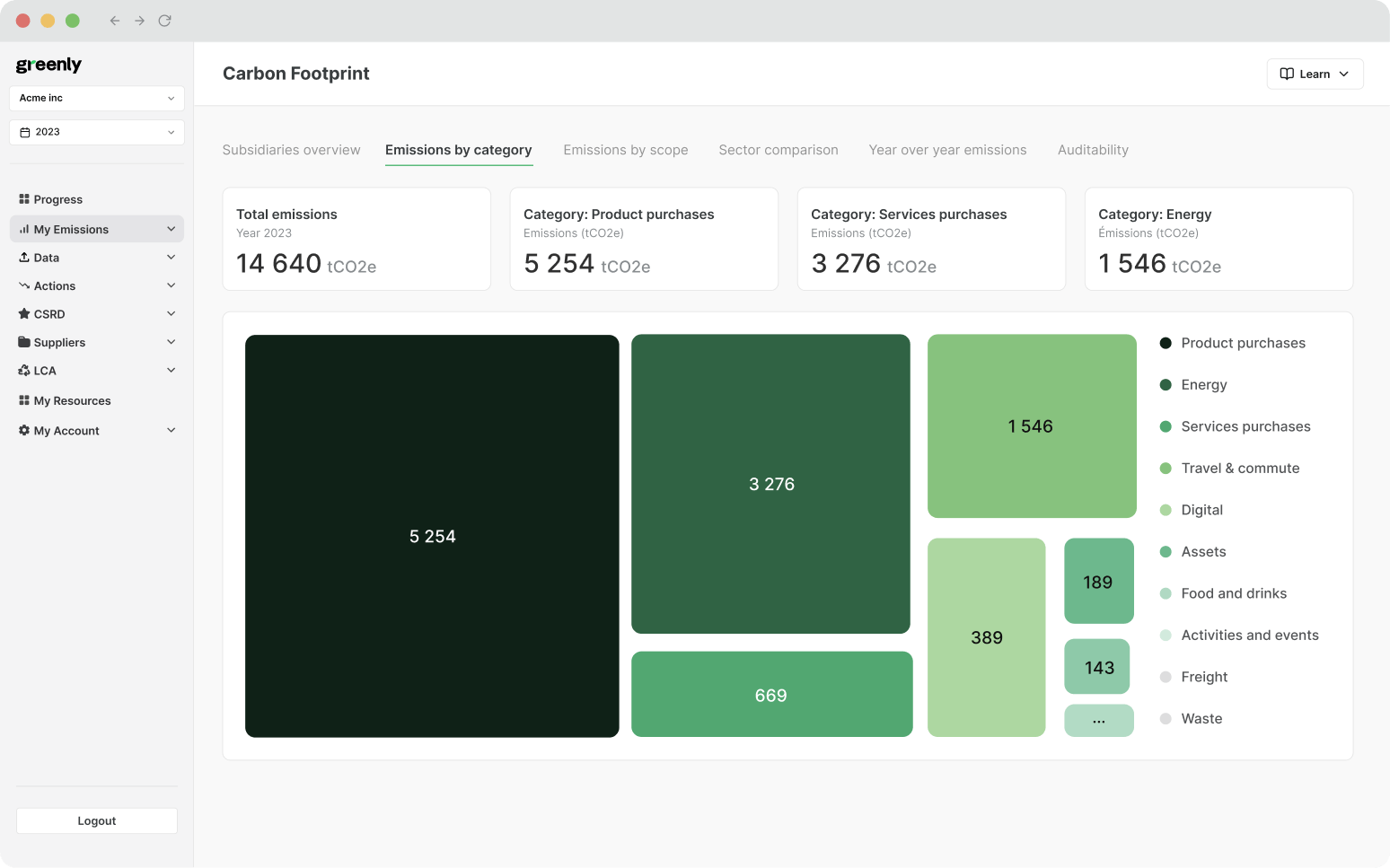
Carbon accounting solutions such as Greenly provide user-friendly, intuitive dashboards that can allow companies to more easily ensure precise carbon emissions calculations in addition to various carbon accounting tools such as:
These platforms help businesses comply with international frameworks like the GHG Protocol and ISO 14064 and set science-based decarbonization targets. By providing insights into where emissions are coming from and suggesting actionable steps for reduction, carbon management software plays a crucial role in the fight against climate change.
As climate change accelerates, customers, investors, and regulators increasingly expect companies to measure and report their emissions.
National net-zero targets covered 77% of global GDP as of September 2025, or 83% when US state targets are included, according to the Net Zero Tracker. That coverage gives companies a continuing reason to disclose their corporate carbon footprint, accelerate sustainability progress, and set emission reduction targets.
But why is it so important for businesses to measure their carbon emissions?
Here’s why tracking emissions and adopting carbon management tools is essential for businesses committed to ESG goals and long-term sustainability:
Governments and international bodies are introducing rules that require companies to report their greenhouse gas emissions. The EU’s CSRD (Corporate Sustainability Reporting Directive) and California’s SB 253 are examples. The GHG Protocol sets the accounting standards behind such reports. Carbon management software helps businesses prepare for regulatory reporting by automating data collection.
The EU’s 2026 Omnibus amendment narrowed the CSRD’s scope. It now applies to EU companies with more than 1,000 employees and more than €450 million in net annual turnover, and to non-EU groups with more than €450 million in EU turnover and an EU subsidiary or branch above €200 million, according to the Council of the EU.
California’s SB 253 applies to companies with more than $1 billion in annual revenue that do business in California. They must disclose their Scope 1, 2, and 3 emissions each year, according to the California Air Resources Board.
As global net-zero targets become a priority, businesses need to track their emissions to understand where reductions can be made. Without accurate data, companies risk missing critical reduction opportunities. By using carbon management software, businesses can measure emissions across Scope 1, 2, and 3, identify areas for improvement, and create realistic decarbonization plans aligned with science-based targets.
Consumers, employees, and investors are increasingly prioritizing sustainability. Companies that can demonstrate their commitment to reducing their environmental impact are more likely to attract environmentally conscious customers and investors. Measuring emissions provides transparency and accountability, showing stakeholders that a company is actively working towards reducing its carbon footprint.
A recent PwC survey found that 83% of consumers believe companies should be helping to contribute to improved ESG practices, such as by working to build greater supply chain transparency and ensuring organizations prioritize reducing their environmental footprint.
A 2021 PwC survey of consumers in five countries, including the US, found that 83% think companies should be actively shaping ESG best practices.
By identifying emission hotspots, carbon management software helps companies optimize their operations, reducing energy consumption and costs. From better energy management to more sustainable supply chains, tracking emissions can lead to long-term financial savings while aligning business practices with sustainability goals.
In short, carbon management software supports compliance, drives operational efficiency, increases investor confidence, and supports the transition to a low-carbon future. This makes calculating your organization's carbon footprint a strategic investment for business growth.
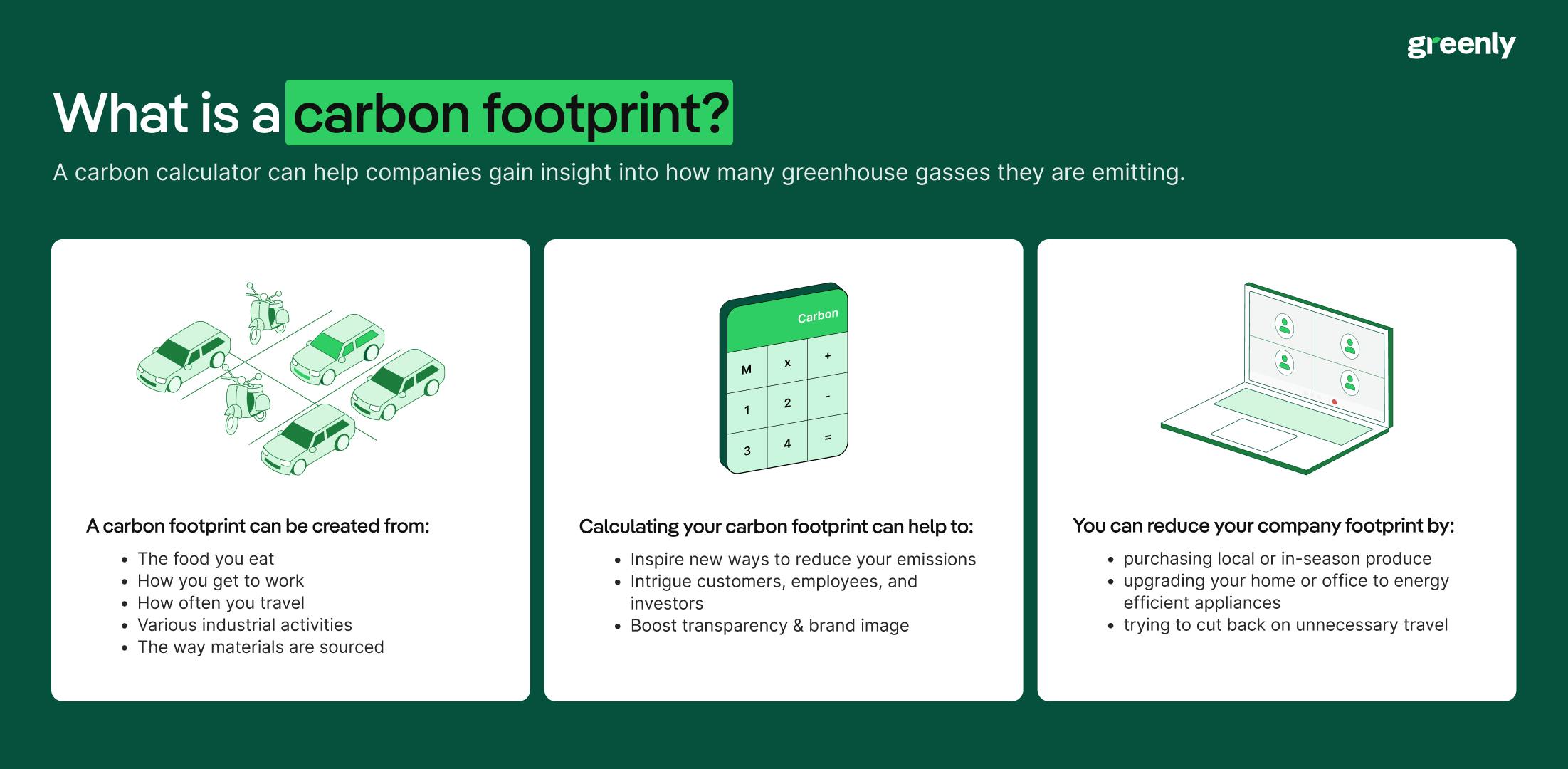
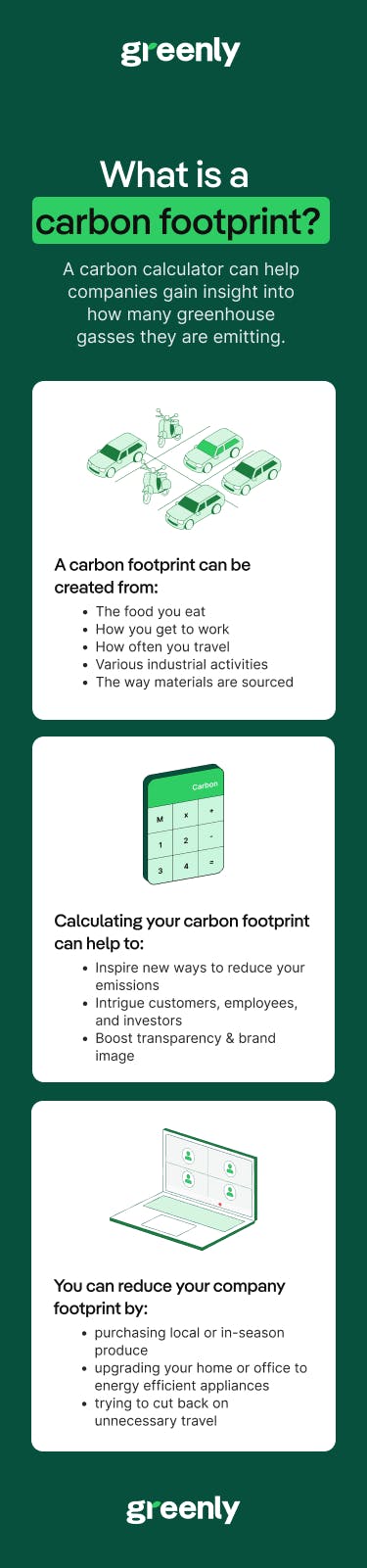
Choosing the right carbon management software is crucial for accurately measuring your business's emissions and implementing effective decarbonization strategies. But with so many platforms available, how do you know which one is the best fit for your company? Here are the key features to look for when selecting carbon management software:
Comprehensive carbon management software should allow you to track all three scopes of emissions.
Scope 1 covers direct emissions from company-owned sources, Scope 2 accounts for indirect emissions from purchased energy, and Scope 3 involves emissions from your supply chain and other indirect sources. Being able to measure emissions across all scopes provides a complete view of your company’s carbon footprint. According to the GHG Protocol, emissions from the value chain often represent a company’s biggest greenhouse gas impact.
Managing emissions data can be complex, especially if it's coming from various sources. A good carbon management platform utilizes automated data capture to help avoid costly reporting errors, ensures audit-readiness, and builds investor confidence. This can reduce the time and effort needed for manual input in emissions measurement and carbon footprint calculations. Additionally, integration with your existing tools, like ERP systems or energy monitoring software, ensures seamless data flow and more accurate emissions reporting.
Carbon management software should provide in-depth analytics and customizable reports, offering insights into your emissions data. Look for platforms with intuitive dashboards that allow you to visualize progress toward sustainability goals, highlight emission hotspots, and generate reports aligned with international frameworks such as CDP, the GHG Protocol, ISO 14064, and IFRS S2, which incorporates the TCFD recommendations. These reports are essential for both internal assessments and external sustainability reporting.
The summary cards below will provide a synopsis for each of these international frameworks:
Beyond just tracking emissions, the best carbon management software should offer actionable insights into how your company can reduce its carbon footprint. Decarbonization pathways provide tailored recommendations for emission reductions, from energy efficiency improvements to supply chain adjustments.
For example, a food company might receive insights to reduce energy from the use of refrigerants or how to utilize local suppliers to reduce Scope 3 emissions. These tools help companies transition from measuring emissions to actively reducing them.
As regulations around carbon reporting grow, it’s important that your chosen software is built to support compliance. Whether it’s aligning with the GHG Protocol or ensuring your reports meet the requirements of CSRD, GHG accounting software needs a strong regulatory framework for both compliance and transparency. The software should also offer regular updates as regulations evolve.
By focusing on these key features such as full-scope tracking, automated data integration, and regulatory compliance, businesses can choose a carbon management software that helps them track and measure emissions effectively, take strategic climate action, boost business credibility and support their long-term sustainability goals.
Now that we’ve covered why carbon management software matters and which features to look for, here are ten carbon emissions management software platforms that help businesses tackle their emissions challenges.
Each of the nine other platforms was checked against the vendor’s own website in October 2026. Greenly is one of the ten, so its entry reflects our own view of the product. The entries follow the same format so you can compare them side by side.
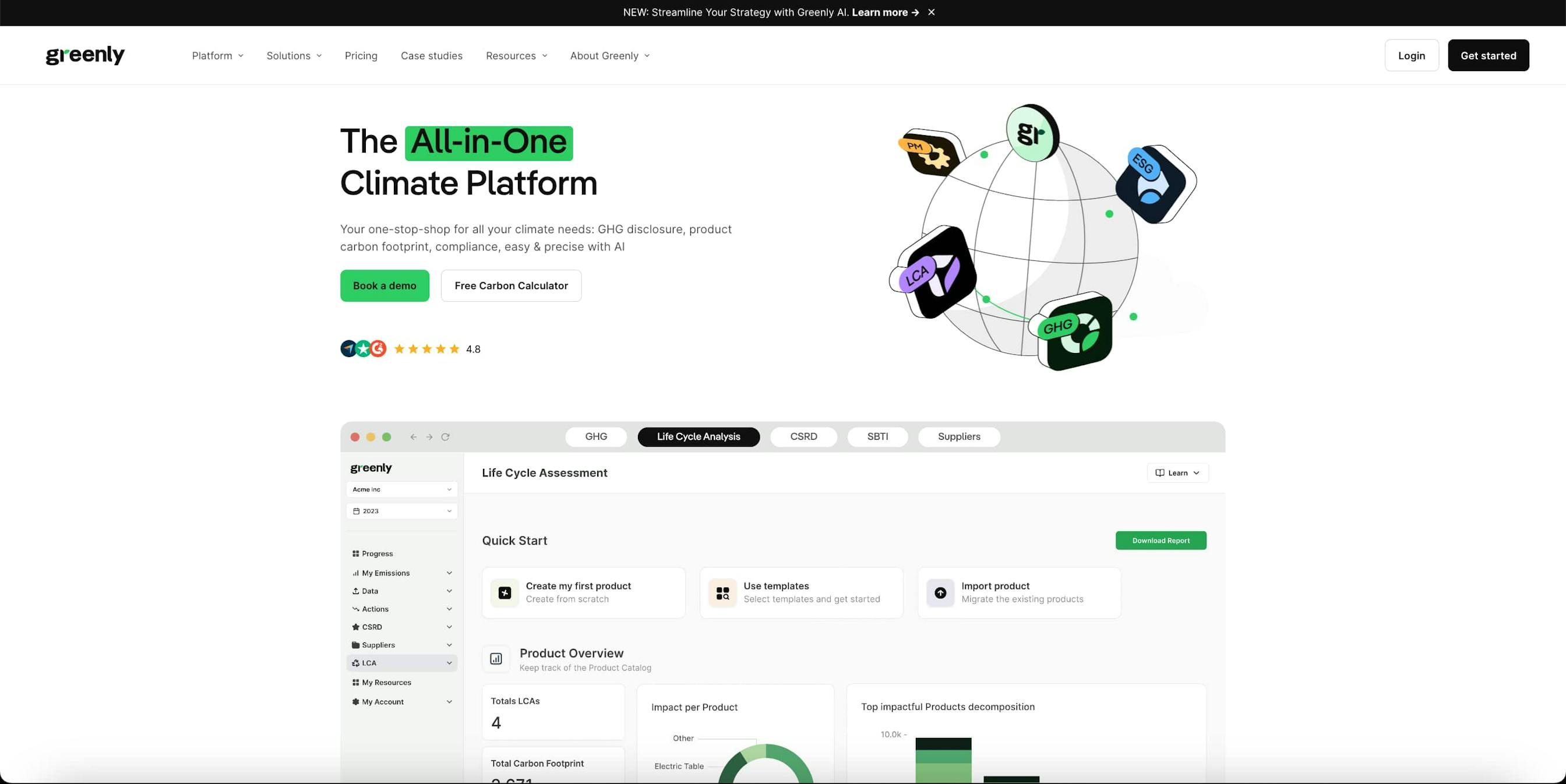
Overview: Greenly offers a comprehensive carbon management platform that helps businesses of all sizes measure and reduce their carbon emissions across Scopes 1, 2, and 3. Developed with ease-of-use, powerful analytics, and accuracy in mind, Greenly is trusted by 4,000 clients, from SMBs to enterprises, across industries such as finance, retail, and manufacturing. Greenly provides businesses with the tools they need to understand their carbon footprint and take action toward decarbonization.
Key Features:
Our methodology is aligned with the GHG Protocol, and Greenly is accredited by CDP.

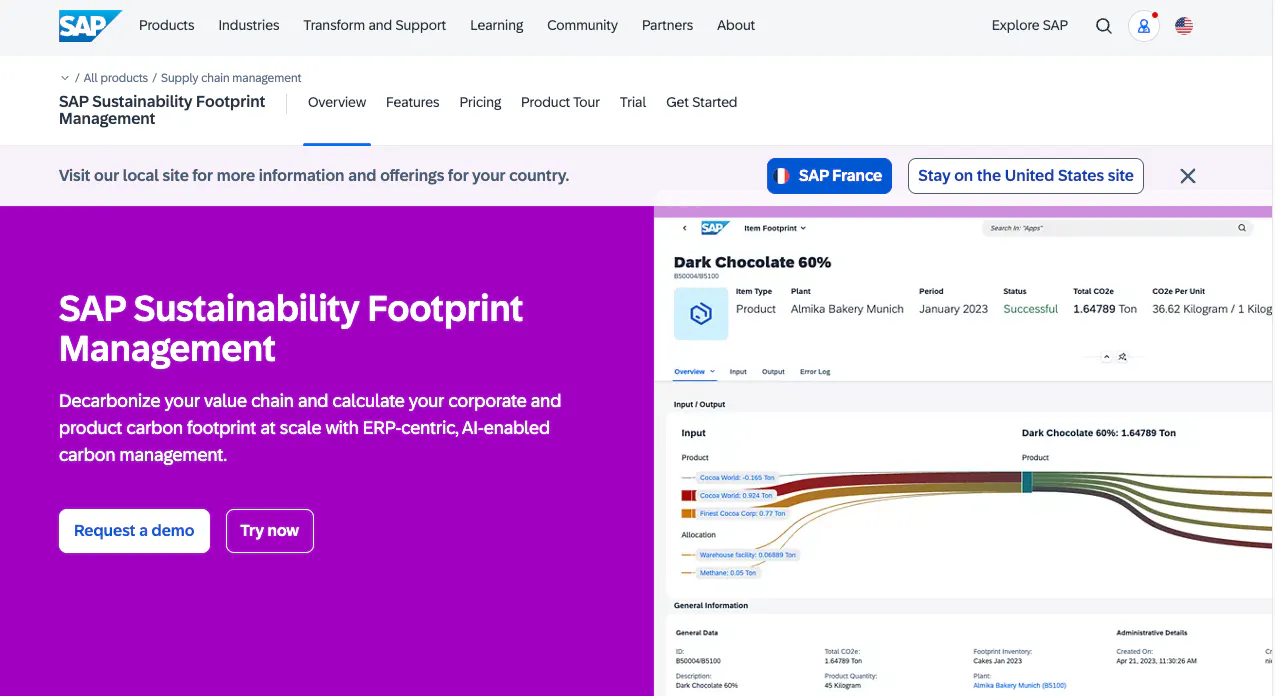
Overview: SAP Sustainability Footprint Management is an ERP-centric carbon management solution that calculates corporate and product carbon footprints at scale, including Scope 1, 2, and 3 emissions. It reuses business data from SAP Cloud ERP and connects any ERP system through public APIs.
Key Features:
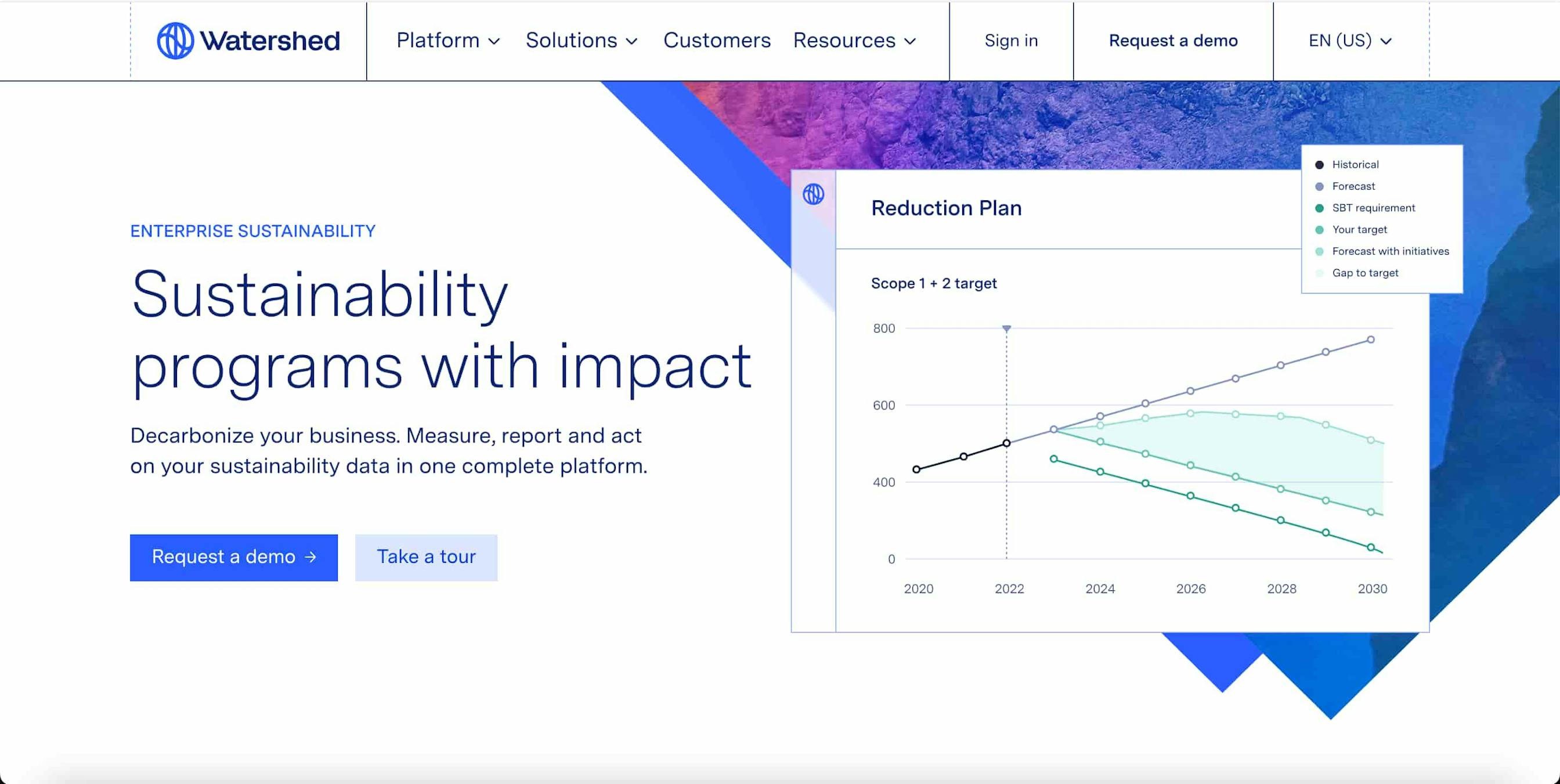
Overview: Watershed is a robust carbon management platform designed for large enterprises with complex supply chains. It offers tools for carbon, water, and land use accounting, making it a comprehensive sustainability solution that excels in Scope 3 emissions management. Watershed’s platform is trusted by businesses across sectors, including finance, technology, and logistics.
Key Features:
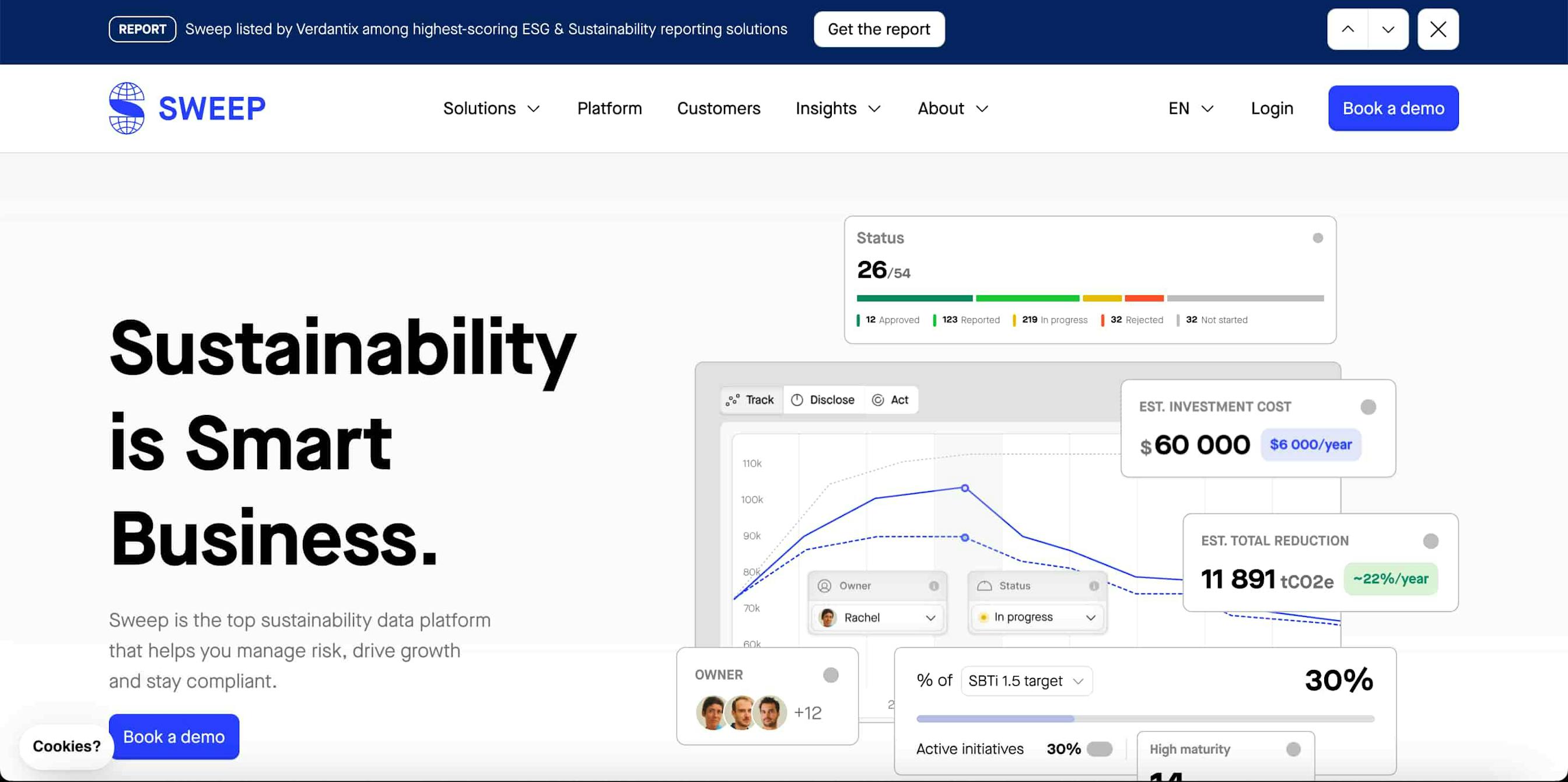
Overview: Sweep is a highly customizable platform designed to simplify supplier engagement and carbon data management. Its flexibility makes it suitable for organizations of all sizes, from SMEs to large corporations seeking personalized emissions tracking and supplier engagement tools.
Key Features:
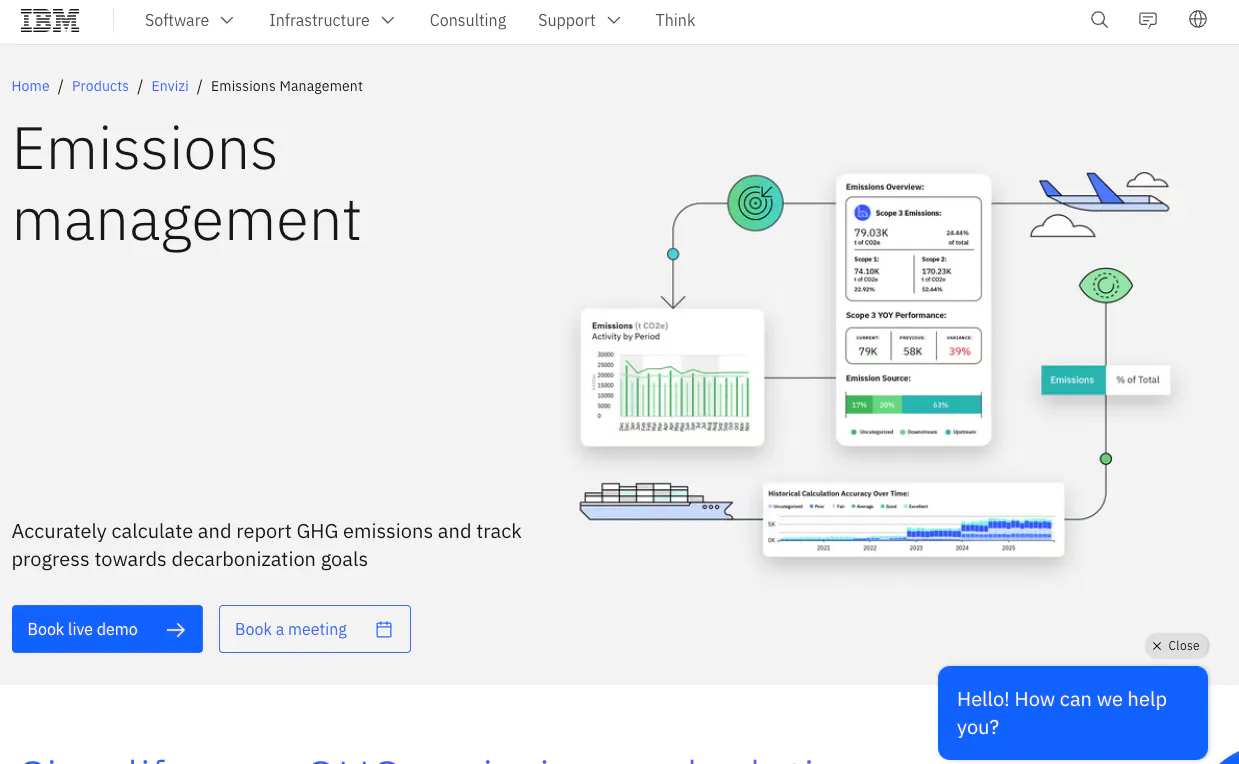
Overview: IBM’s Envizi ESG Suite provides emissions management software to calculate and report Scope 1, 2, and 3 greenhouse gas emissions, built on the GHG Protocol. It offers enterprise-grade, fully managed carbon accounting, an Excel add-in, and an Emissions API.
Key Features:
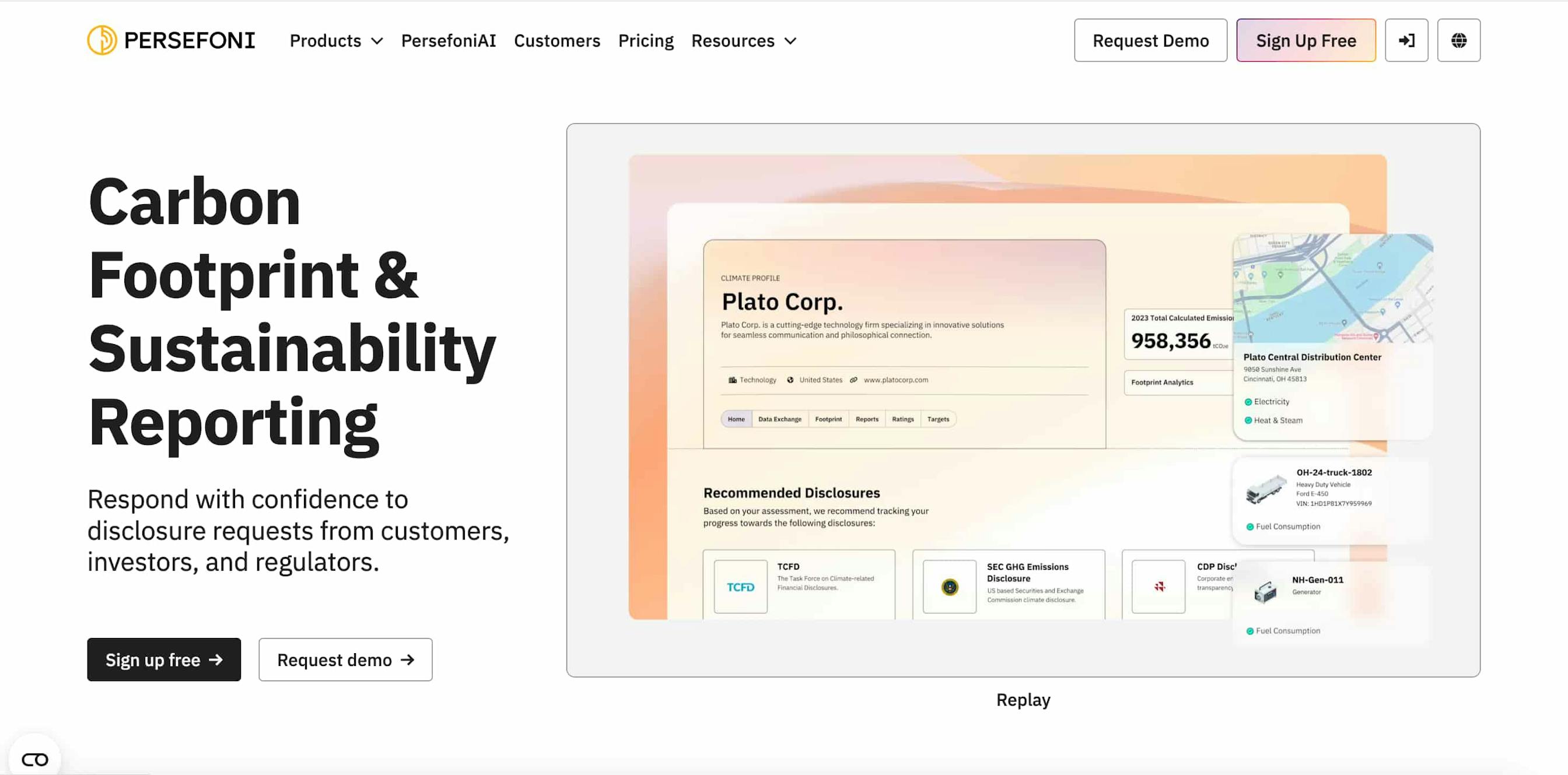
Overview: Persefoni offers assurance-grade carbon measurement, disclosure, and reduction for businesses, with a separate product for financial institutions.
Key Features:
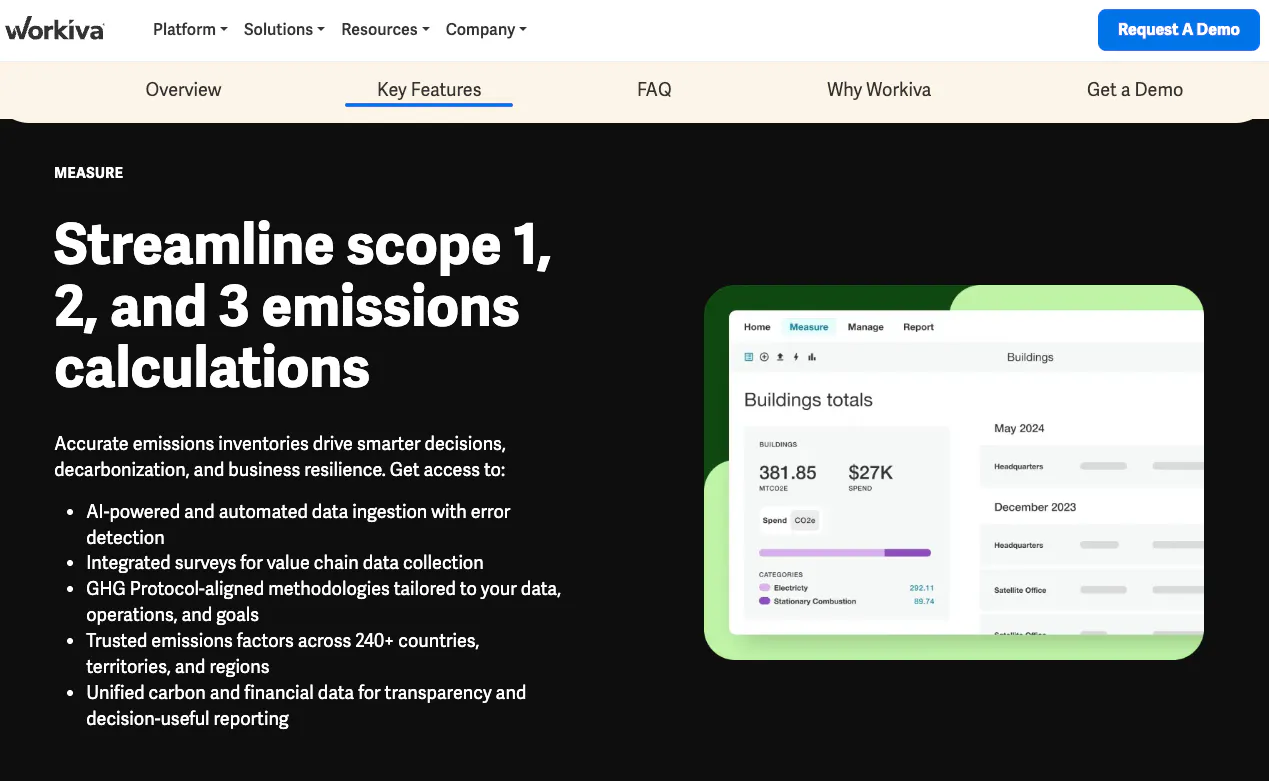
Overview: Workiva Carbon is the carbon accounting solution from Workiva, a US reporting and compliance software company. It automates Scope 1, 2, and 3 emissions calculations and connects carbon data with financial and sustainability reporting on one platform built to support audit and assurance.
Key Features:
Overview: Sphera offers carbon management software that helps companies collect Scope 1, 2, and 3 emissions data, calculate their organization’s carbon footprint, and measure product carbon footprints using life cycle assessment (LCA) software and data.
Key Features:
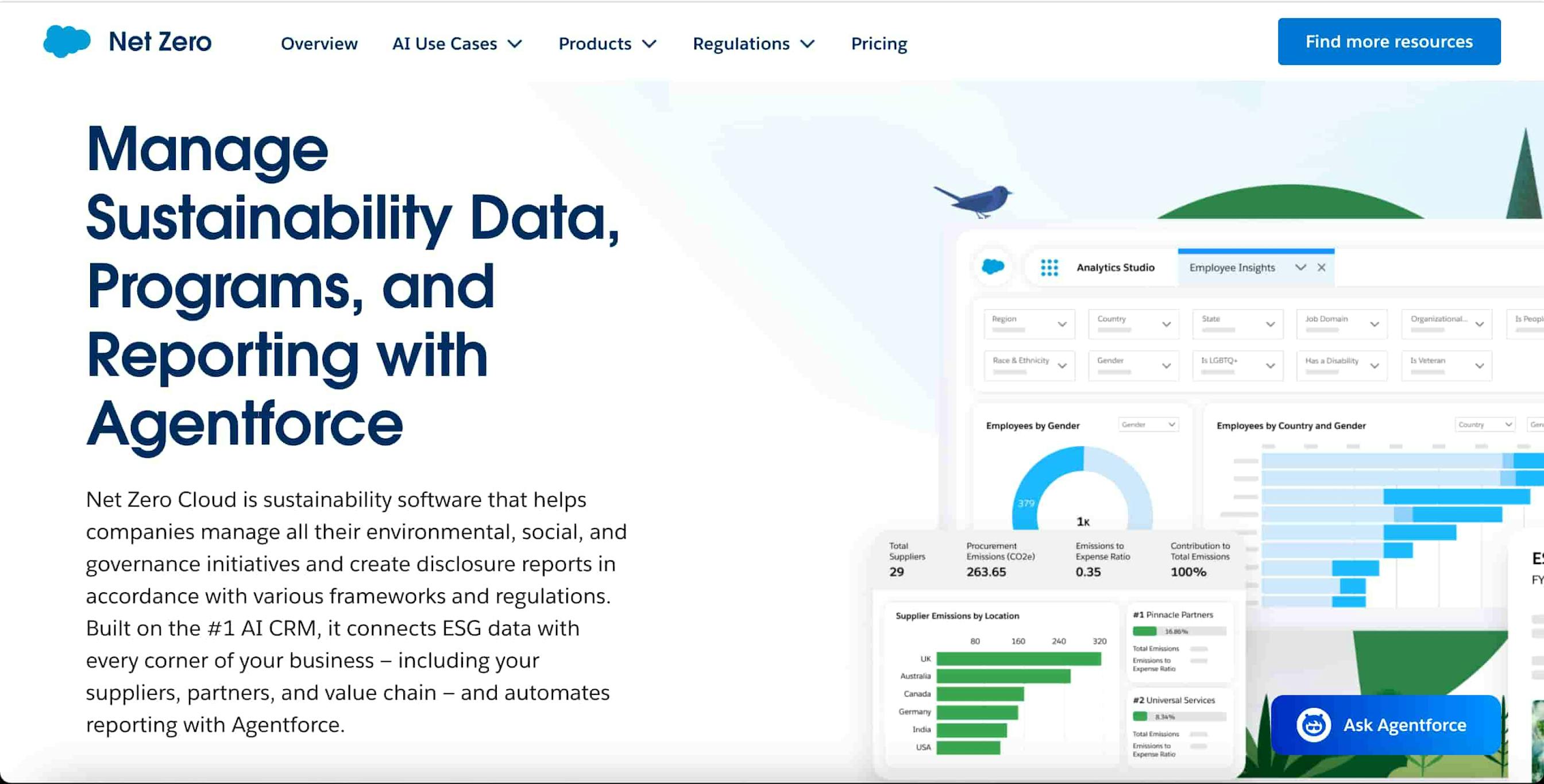
Overview: Developed by Salesforce, Net Zero Cloud helps organizations collect and track emissions data, generate ESG reports, and surface sustainability insights, using Salesforce’s workflow automation and integrations.
Key Features:
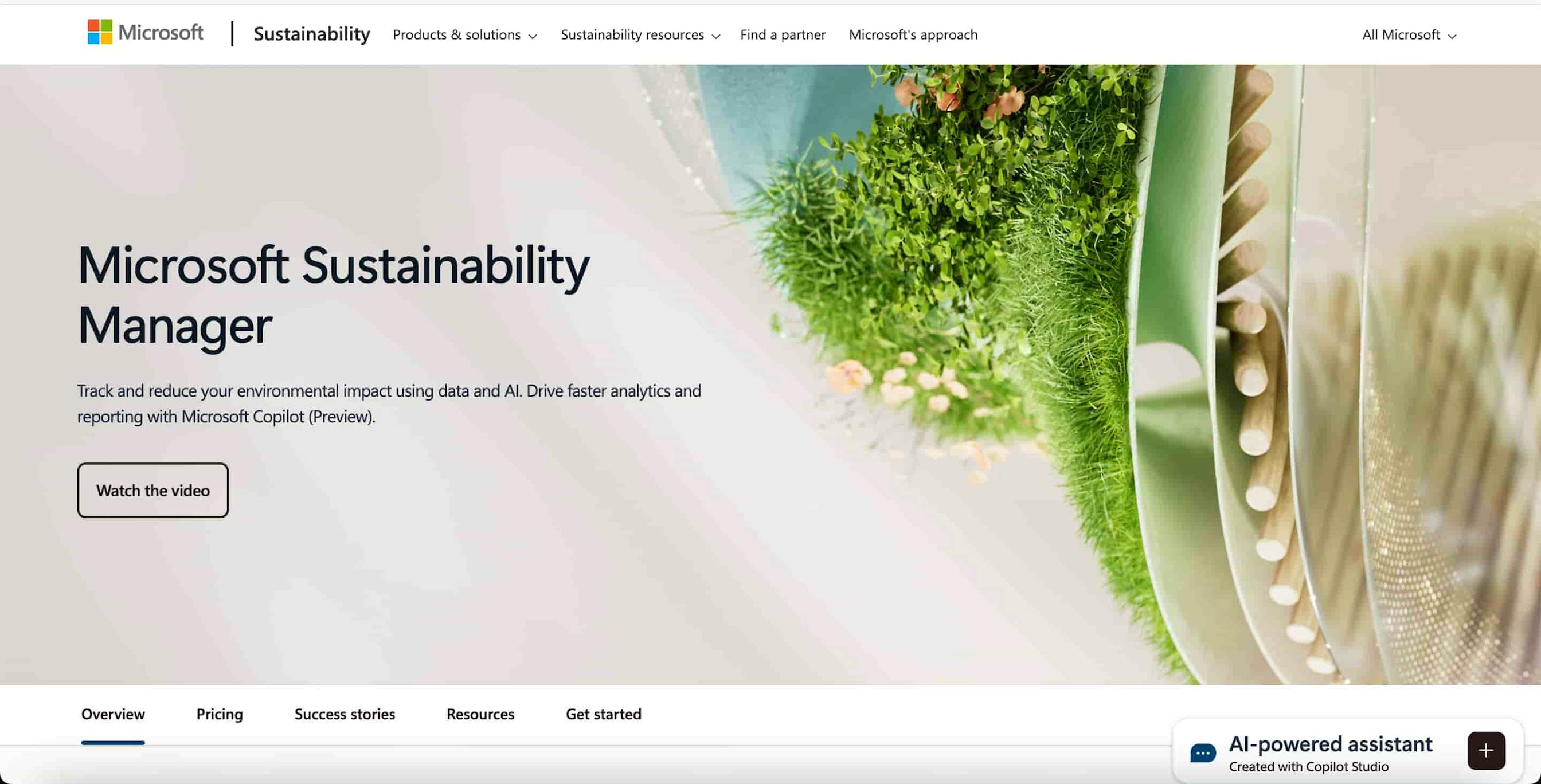
Overview: Microsoft Sustainability Manager, part of Microsoft Cloud for Sustainability, helps organizations record, report, and reduce emissions and water or waste impact. Built with Azure and Power Platform tools, it can integrate with any business system.
Key Features:
The table below will compare and contrast these carbon accounting platforms:
| Platform | Overview | Key Strength | Best For |
|---|---|---|---|
| Greenly | Comprehensive platform focusing on Scope 1, 2, and 3 emissions tracking, tailored strategies, and supply chain decarbonization. | User-friendly platform with tailored action plans and comprehensive supply chain decarbonization tools. | Businesses of all sizes looking to track and reduce carbon emissions with expert support. |
| SAP Sustainability Footprint Management | ERP-centric carbon management that calculates corporate and product footprints across Scope 1, 2, and 3. | Reuses SAP Cloud ERP data and connects any ERP system through public APIs. | Companies that run on SAP and want footprint results inside business processes. |
| Watershed | Robust platform for large enterprises with a focus on managing complex supply chains and multi-category environmental impacts. | Specializes in Scope 3 tracking and sustainability across supply chains, water, and land use accounting. | Large businesses with complex supply chains and multi-category environmental impacts. |
| Sweep | Highly customizable platform, suitable for businesses of all sizes, with supplier engagement and reporting tools. | Customizable reporting and supplier emissions tools for businesses of all sizes. | Companies seeking flexible, customizable tools for detailed carbon management. |
| IBM Envizi ESG Suite | Enterprise-grade carbon accounting for Scope 1, 2, and 3 emissions, with target tracking and supplier tools. | Managed platform, API, or Excel add-in for emissions calculations. | Large organizations needing flexible, enterprise-grade carbon accounting. |
| Persefoni | Assurance-grade carbon measurement, disclosure, and reduction, with a separate product for financial institutions. | Footprint measurement across operations, supply chain, and value chain, plus decarbonization planning. | Companies needing assurance-grade disclosures for California, CSRD, and SECR reporting. |
| Workiva | Carbon accounting that connects emissions data with financial and sustainability reporting on one audit-ready platform. | Automated Scope 1, 2, and 3 calculations with data lineage and audit trails. | Organizations that already report financial and sustainability data and want carbon data in the same workflow. |
| Sphera | Carbon management software that combines corporate carbon accounting with product carbon footprints and LCA data. | LCA expertise and a Managed LCA Content library of 20,000 annually updated datasets. | Manufacturing-intensive companies seeking product-level carbon insights and LCA training. |
| Net Zero Cloud by Salesforce | Salesforce’s carbon and ESG platform helps organizations collect emissions data, report, and surface insights using Salesforce workflows. | Agentforce-assisted ESG reporting and Salesforce integration. | Salesforce-centric businesses centralizing carbon, CRM, and ESG data in one platform. |
| Microsoft Sustainability Manager | Built on Microsoft Power Platform, a solution that helps organizations record, report, and reduce emissions and water or waste impact. | Social, governance, and environmental data in one application, with Power BI reporting. | Microsoft-based organizations seeking automated sustainability tools integrated with existing software. |
Choosing the right carbon management software is about finding the platform that best aligns with your business’s specific goals, operations, and sustainability ambitions.
Here’s how you can approach the decision-making process to ensure you make the right choice:
For businesses looking to take meaningful steps toward reducing their carbon footprint, Greenly offers comprehensive carbon management solutions tailored to your unique needs.
Our advanced platform allows companies to:
Book a demo to see how Greenly handles carbon assessment, supplier engagement and reporting for your business.
Carbon footprint management software is a platform that measures a company’s greenhouse gas emissions across Scopes 1, 2, and 3, tracks them over time, and supports reduction targets and regulatory reporting. It is also called carbon management software or carbon accounting software.
Companies use it to meet reporting rules such as the CSRD and California’s SB 253, to answer investor requests for emissions data through programs such as CDP, and to find reduction opportunities.
There is no single best option, because the right choice depends on company size, existing systems and reporting needs. Enterprises that run on an ERP or cloud suite can look at SAP, Microsoft and Salesforce, teams focused on audit-ready reporting can compare Workiva and Persefoni, and Greenly covers companies from SMBs to enterprises.
The terms overlap. Carbon accounting software, also called carbon tracking software, focuses on measuring and reporting emissions, while carbon management software usually adds reduction targets, planning, and supplier engagement. Most platforms in this guide offer both in one product.
Costs depend mainly on the size of the company and the depth of the scopes measured. Requesting quotes from two or three vendors for the same scope makes the prices comparable.
SAP Sustainability Footprint Management reuses SAP Cloud ERP data and connects other ERP systems through public APIs. Microsoft Sustainability Manager is built on Microsoft Power Platform and integrates with business systems, and Salesforce Net Zero Cloud runs on the Salesforce platform and its integrations.
Greenly is an excellent choice for carbon management. We offer broad support to both reduce your emissions and build long-term sustainability: personalized climate experts to help you engage stakeholders, user-friendly dashboards to monitor and manage progress, and help complying with the latest regulations. You’ll also get step-by-step assistance for complex standards such as the CSRD or applying to the SBTi.
Yes! Greenly is well suited to SMEs. Our platform supports improved supplier engagement, LCA assessments, guidance for regulatory compliance, and additional resources, giving growing companies the tools to launch and scale sustainable strategies the right way. Greenly’s platform is also designed to support organizations of all sizes, including large enterprises managing complex emissions data across multiple teams, entities, and supply chains.
Greenly ensures accuracy using a hybrid of the spend-based and activity-based methods, combined with streamlined, verifiable data collection. This helps ensure nothing is missed and that calculations across all scopes are precise and audit-ready.
Greenly offers automated data collection, supplier engagement via a user-friendly portal, and structured surveys/questionnaires to keep data current, so your carbon reduction strategy can be adjusted as needed. In addition, our Quick Carbon Calculator provides a free 5-minute assessment of your CO2 emissions.
The Quick Carbon Calculator can’t guarantee real-time data because its output depends on the responses provided. However, a full Greenly subscription enables real-time data visualization and monitoring, supporting the most approachable and robust carbon-reduction roadmaps possible.
Council of the EU, Council signs off simplification of sustainability reporting and due diligence requirements to boost EU competitiveness

California Air Resources Board, Corporate Disclosure of Climate Data
CDP, Keeping Pace: Disclosure Data Factsheet 2025
Net Zero Tracker, Net Zero Stocktake 2025
PwC, PwC Survey: Three quarters of consumers would discontinue their relationships with companies that treated the environment, employees or the community poorly
GHG Protocol, FAQ on the Corporate Value Chain (Scope 3) and Product Standards
IFRS Foundation, TCFD
SAP, SAP Sustainability Footprint Management
SAP, SAP Sustainability Footprint Management features
Watershed, Watershed: The sustainability AI platform
Sweep, Software helping companies track and act on their ESG and carbon emissions
IBM, Emissions Management Software, IBM Envizi
Persefoni, Persefoni for Business
Workiva, Carbon Accounting & Emissions Management Software
Sphera, Product Carbon Footprint
Sphera, LCA Database
Salesforce, ESG AI for Net Zero Cloud: Top Use Cases
Microsoft, Microsoft Sustainability Manager overview
Share this article


More articles
View allImpacts, Risks, and Opportunities (IRO) for CSRD Reporting
In this article, we’ll break down what IROs are, how to identify and assess them, and what CSRD requires in terms of disclosure.

Decarbonization: what it is and why it matters
What is decarbonization, and why is it urgent? Learn practical steps companies can take to support the global move toward net zero emissions.
